 Vietnamnet.vn

 Podcast


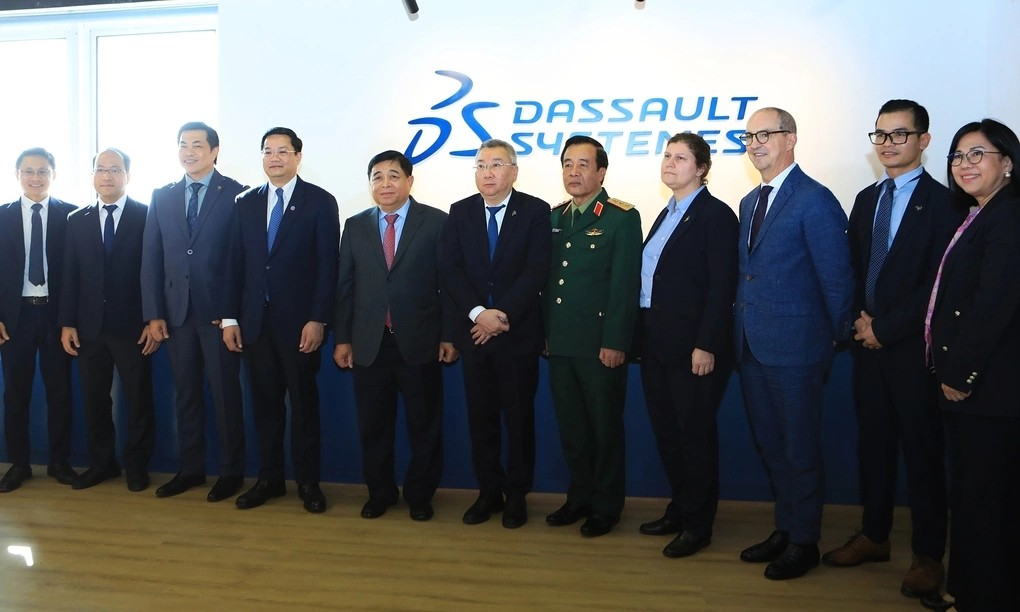
On the sidelines of the first 3DEXPERIENCE Forum held in Hanoi, Samson Khaou, Senior Vice President for Asia-Pacific at Dassault Systèmes, shared his views on how industrial artificial intelligence (AI) and virtual twin technology could enhance the competitiveness of Vietnam's manufacturing and infrastructure sectors.
The French technology group specializes in 3D design, engineering software and related digital technologies.
According to Khaou, Vietnam was selected to host the forum because of its impressive economic growth during the first three quarters of the year, placing it among Southeast Asia's leading economies.
Through its partnership with the National Innovation Center (NIC) to operate the Center of Excellence for Artificial Intelligence and Digital Twins, Dassault Systèmes is pursuing three objectives: supporting economic growth, developing a digitally skilled workforce ready for industrial AI, and accelerating the digital transformation of manufacturing.
Connecting virtual and physical worlds to develop intellectual property

After 20 years of operating in Vietnam, Dassault Systèmes' technology ecosystem has evolved from supporting basic 3D design to deploying advanced virtual twin solutions.
According to Khaou, businesses are moving beyond simply designing products to conducting detailed simulations in virtual environments before beginning mass production.
This approach allows manufacturers to improve quality control, minimize waste and optimize production costs.
He emphasized that the key to helping Vietnamese enterprises escape the low-value assembly trap and attract long-term investment lies in their ability to create intellectual property (IP) from their own proprietary data.
Khaou cited the experience of Penang, Malaysia's electronics manufacturing hub, where companies have faced increasing technological convergence across industries, from automotive manufacturing to drones and aviation.
"When a country demonstrates supply chain resilience through intellectual property it has developed itself, international investment will naturally follow," he said.
Patrick Ong, Senior Sales Director for AP South at Dassault Systèmes, recalled the supply chain disruptions caused by the COVID-19 pandemic.
During that period, companies in Penang using integrated digital platforms were able to rapidly simulate product designs on computers and switch component sourcing from China to India.
By maintaining comprehensive control over design data, they could ensure technical compliance, sustain uninterrupted production and strengthen supply chain resilience.
In large-scale infrastructure development, Khaou estimated that 80% of key sustainability performance indicators, including material efficiency, workplace safety and carbon dioxide emission reductions, are determined during the design stage.
He pointed to South Korean construction companies that use virtual twins to optimize costs and win contracts in the Middle East and Latin America.
Vietnamese contractors, he suggested, could adopt similar AI and virtual twin ecosystems for major national projects, including the high-speed railway, to improve integrated project management and operations.
Advancing industrial AI and developing a skilled workforce
Despite its considerable potential, Khaou acknowledged that industrial AI adoption faces two major challenges worldwide: the accuracy of input data and the high cost of computing resources when companies develop AI systems independently.
To address these issues, Dassault Systèmes has introduced a Virtual Companion model through its interactive platform.
Engineers can communicate directly with the AI assistant through prompts to learn from global engineering standards and best practices.
At the same time, feedback from engineers can help refine AI models to suit the specific processes and requirements of individual factories.
Addressing concerns that AI could replace technical workers, William Lee, Senior Sales Director for AP South at Dassault Systèmes, said the technology would change how engineers work rather than eliminate their roles.
Previously, an engineer might have needed to coordinate with dozens of suppliers and manually prepare 20 to 30 different manufacturing drawings.
With AI, engineers can now standardize data using templates and automatically generate files, reducing repetitive tasks and allowing them to focus on more complex engineering challenges.
To address the gap between academic training and practical industrial experience, Dassault Systèmes has introduced the SOLIDWORKS Skills Force Program.
The initiative provides free access to commercial computer-aided design (CAD) software during internships lasting three to six months.
This allows businesses to take on interns without incurring software licensing costs, while students gain hands-on experience solving real manufacturing problems.
Vietnam currently leads Southeast Asia in the number of SOLIDWORKS certifications awarded.
Beyond technology, Dassault Systèmes executives highlighted Vietnam's young population and digital capabilities as important competitive advantages.
However, they stressed the need for closer cooperation among research institutes, universities and businesses.
They pointed to the multi-tiered training model adopted in Sarawak, Malaysia, as an example, while also emphasizing the importance of competitive compensation policies to retain skilled professionals in Vietnam.
"Vietnam should avoid becoming overly dependent on mass production with low added value and instead selectively develop higher-value segments," the company representative recommended.
The executive cited Vietnam's domestic electric vehicle (EV) industry as an example of how a stronger supporting components supply chain could attract related industries and expand technical capabilities into semiconductors and other advanced technologies.
Such a shift, according to Dassault Systèmes, would help Vietnamese manufacturers move beyond contract assembly, develop their own technological capabilities and secure stronger positions in global supply chains.
Du Lam

