 Vietnamnet.vn

 Podcast



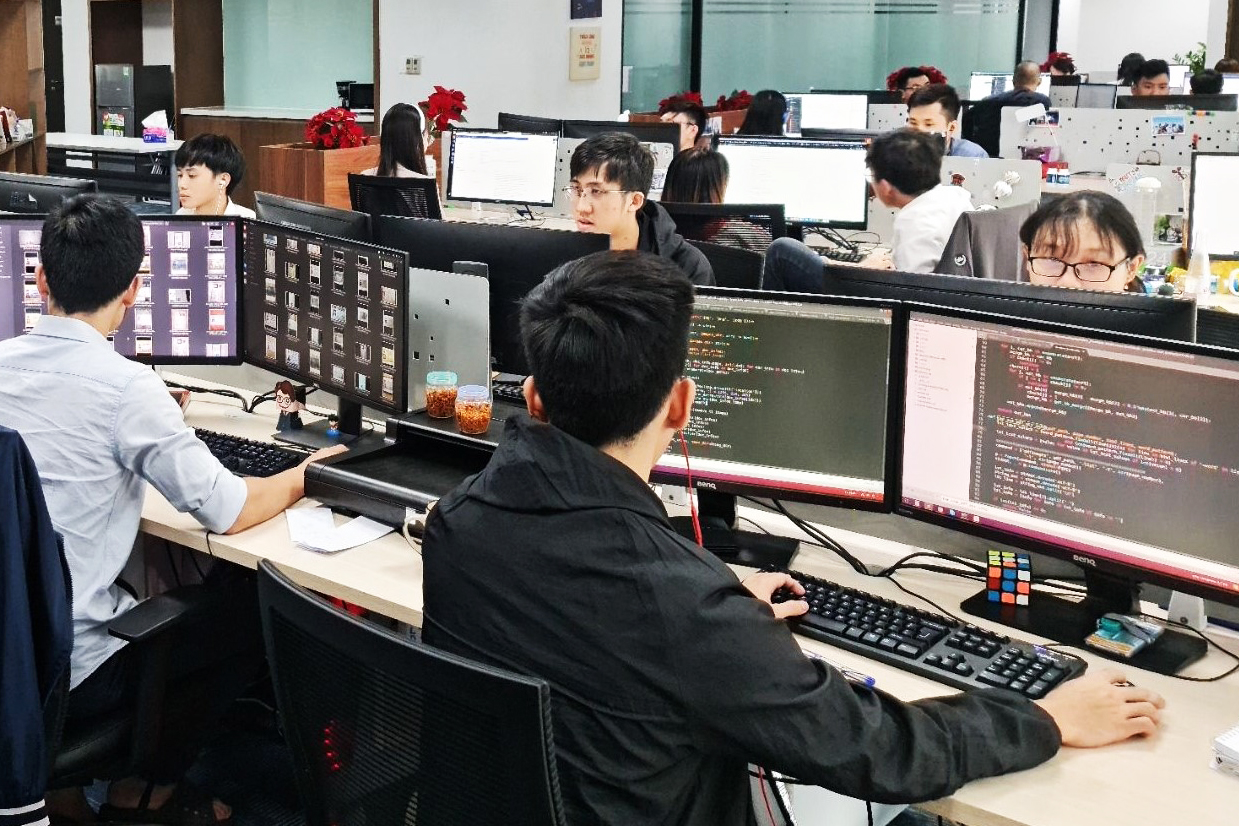
Vietnam’s economy is standing before new opportunities, with GDP growth projected to exceed 8 percent. However, the labor market is facing a dual challenge stemming from a shortage of high-skilled talent and the wave of artificial intelligence (AI) that is deeply reshaping all professions.
The sixth annual recruitment market report titled “Recruitment trends 2026: being proactive in an era of multiple transformations”, conducted by TopCV Vietnam, provides a comprehensive picture of labor supply and demand through a transparent quantitative analysis approach.
The data were compiled and analyzed based on feedback from more than 3,000 recruitment representatives from enterprises and workers in various business fields in the third quarter of 2025, combined with nearly 300,000 job postings on the platform and references from other sources.
IT average income
IT & Software maintains its position as the industry with the highest average salary. To attract digital talent amid intense competition, companies are willing to offer exceptional compensation packages for highly specialized positions.
Specifically, the Solution Architect role with over five years of experience recorded a median salary as high as VND56.329 million per month. Senior management positions such as IT department heads or deputy heads also reached a high median level of VND53.572 million per month. Notably, roles closely tied to technology waves such as AI Engineers and Data Engineers enjoy median incomes above VND38.532 million per month even without holding managerial positions.
Beyond IT, sectors such as Legal & Audit (VND45 million) and Business Management (VND40.087 million) are also among the market’s top income earners at the management level.
Within IT & Software, the five most difficult positions to recruit included AI Engineer, Bridge Engineer, Solution Architect, Mobile App Developer, and Software Architect.
The main reasons include a shortage of highly skilled candidates (55 percent), fierce competition with large technology companies (49.6 percent), and a limited candidate supply (34.3 percent).
However, not IT, but Business/Sales which was the sector most prioritized for recruitment by employers, accounting for 47.5 percent of total market demand.
The 2026 recruitment landscape shows a clear shift from quantity to quality. According to TopCV, instead of mass hiring, 52.2 percent of enterprises prioritized the strategy of “maintaining headcount while optimizing performance.”
Other business fields with sustained high recruitment demand included IT – Software (8.64 percent), Marketing/Communication/Advertising (8.22 percent), and Customer Service (6.1 percent).
The vulnerable fields
AI is no longer an unfamiliar concept as up to 40.7 percent of businesses have integrated this technology into their development strategy for the new era. However, the development of AI also poses displacement challenges for professions with a high rate of repetitive tasks.
The report pointed out the 5 most vulnerable occupational groups due to AI, including Customer Service (30.1 percent), Marketing/Communication/Advertising (27.51 percent), Business/Sales (18.32 percent), IT - Software (16.92 percent), and Finance/Accounting (14.97 percent).
These are considered leading industries where AI may partially replace or reduce staff size due to a high proportion of repetitive tasks. This requires workers in these fields to constantly learn and cultivate new skills to adapt to technological changes, the report emphasized.
TopCV experts recommend that workers build a “dual competency framework”, combining solid professional expertise with AI utilization skills, to maintain their competitive position. As many as 59.1 percent of enterprises are prioritizing internal AI skills training for employees, opening opportunities for those willing to upskill and reskill to become “digital talent” in the new era.
In addition, workers should not focus solely on technical expertise but develop both digital capabilities and soft skills. The report shows that many candidates today, especially in IT, still lack key skills such as communication and presentation (47.3 percent), critical thinking (39.7 percent), and product thinking (33.6 percent). Strengthening these competencies will help individuals become high-quality talent with business acumen.
For the IT sector in particular, enterprises place strong emphasis on candidates’ practical capabilities demonstrated through concrete projects and experience with relevant tech stacks.
In related news, Viettel topped the list of the best places to work in the technology sector, according to the 100 Best Places to Work in Vietnam 2025 survey. This annual study was conducted by Anphabe, a pioneering consulting firm specializing in Employer Brand solutions and Happy Working Environments. The study was released in late November 2025.
Du Lam
.svg)
