 Vietnamnet.vn

 Podcast



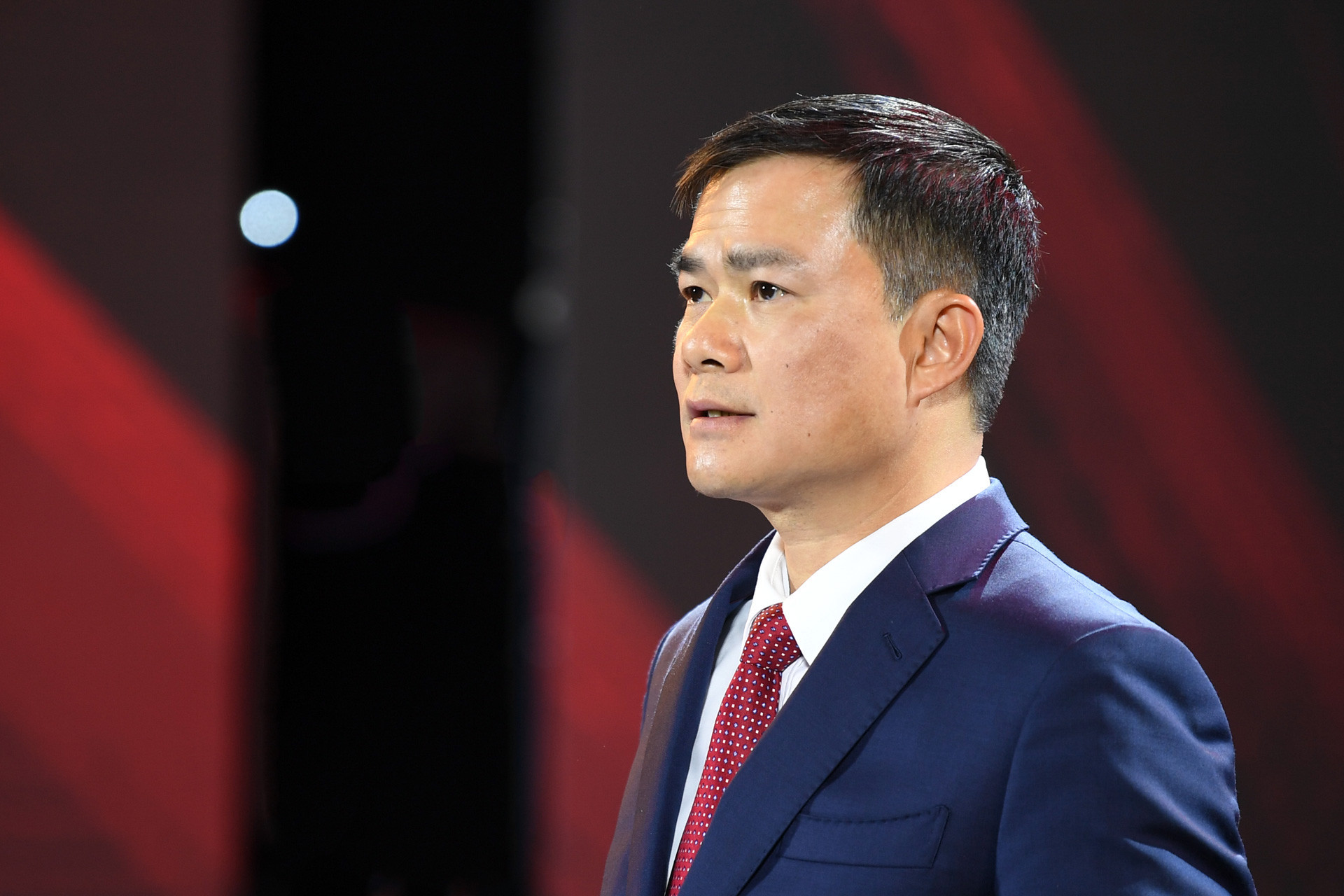
Lieutenant General Tao Duc Thang, chair of Viettel Group, emphasized that innovation should not be solely dependent on research grant capital, but instead follow policy that enables businesses to accept risks, guarantee a market for their products, and protect them when piloting unprecedented initiatives.
Resolution 57 emphasizes that science, technology, innovation, and digital transformation are the primary drivers of the new development and growth model.
Thang noted that the essence of innovation is to drive change for the better. Innovation is not arbitrary alteration. It must result in better products, more advanced technologies, and higher efficiency.
Thang argued that for latecomer businesses, choosing the same path as predecessors makes it highly difficult to build a competitive advantage. Thus, enterprises are forced to find different paths, do things differently, and create new values.
This is why Viettel chooses bold directions, such as leapfrogging straight into new technologies instead of following the sequential roadmap of most telecom operators worldwide.
However, for innovation to become a core capability, the most crucial factor remains that leaders must continuously search for new growth engines. According to Thang, the old only generates growth based on inertia, whereas the new serves as the foundation for shaping future development strategies.
Accepting risks but managing them effectively
One of the biggest barriers to innovation in Vietnam is the fear of making mistakes.
According to the Viettel chair, every change carries risks. Therefore, the issue is not avoiding risk, but building an appropriate risk management mechanism.
At Viettel, every new idea is put through small-scale trials before large-scale deployment. Tests may be conducted in a single commune, a specific area, or with a targeted group of customers to assess the actual impact.
If the results are positive, the business scales up. If signals emerge that spiral out of control, the project is adjusted or halted.
According to Thang, innovation always requires trial and error. Employees must have the right to experiment to find the correct path. However, this can only happen when a business builds a risk management system robust enough to control potential consequences.
More importantly, leaders must boldly delegate tasks and instill confidence in their research teams.
"If the correct procedures and regulations are followed, individuals will not be held liable, even if the experiment does not succeed.” This is one of the principles Viettel applies to R&D projects, especially for new and strategic technologies.
According to Thang, the most terrifying thing is not failure, but not daring to act or failing to go all the way.
To encourage business investment, create product demand
Thang believes that policies supporting innovation need a strong shift toward a market-centric approach.
He noted that for many years, policies have often focused on supporting inputs, such as research funding, science and technology funds, or financial incentives. However, the decisive factor for long-term business investment is the capacity to consume products.
"When there is an output market, businesses will naturally invest their own money," Thang asserted.
Accordingly, the State should use tools such as technical standards, regulations, or demand-stimulus mechanisms to create a market for domestic technology products.
He cited an example of a voucher mechanism that supports customers/buyers instead of granting research funds directly to businesses. When customers receive support to choose domestic products, businesses are forced to improve quality and optimize costs to compete.
This approach not only creates a real market for innovative products but also prevents the scenario where businesses focus solely on securing research funds without caring about commercialization prospects.
For long-term strategic foundational technologies like semiconductors, satellites, or nuclear technology, the State still needs to play a direct investment role to elevate national capabilities. However, for products with clear, existing markets, policy should prioritize demand creation rather than merely supporting inputs.
In addition, Thang pointed out institutional bidding barriers that make it difficult for many "Make in Vietnam" products to access the market.
Requirements regarding similar contracts or years of experience inadvertently create a vicious cycle, depriving domestic tech enterprises of opportunities to prove their capabilities.
To foster innovation, Vietnam needs to create more substantive preferential mechanisms for domestic products. At the same time, it must refine its evaluation and acceptance mechanisms based on actual product outcomes rather than just processes.
Only then can a foundational environment for innovation take shape - one where businesses are encouraged to experiment, allowed to take controlled risks, and given the opportunity to commercialize their research results.
Thai Khang
.svg)
