 Vietnamnet.vn

 Podcast



What users truly expect from the upcoming iPhone 18 Pro and its Pro Max counterpart may not be a sweeping redesign, but rather a continuation of incremental improvements that define today’s premium smartphone market.
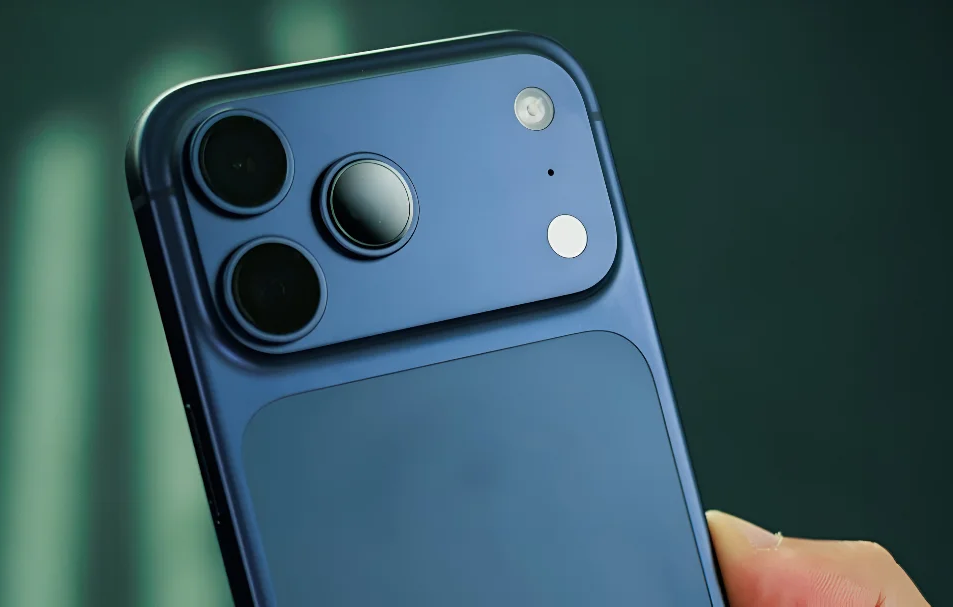
Annual, modest upgrades are increasingly becoming the norm. As the high-end smartphone segment approaches saturation, manufacturers are shifting from dramatic transformations to fine-tuning existing designs. This approach appears to align closely with Apple’s strategy for its next-generation iPhone.
Last year, the iPhone 17 Pro lineup marked a rare and significant redesign, bringing notable changes to both aesthetics and hardware structure. However, early reports suggest that this year’s model will largely retain that design, focusing instead on smaller, targeted upgrades. Surprisingly, this direction is gaining broader acceptance among users.
Users lean toward refinement over reinvention
A recent survey on expectations for the iPhone 18 Pro reveals that most users are comfortable with incremental updates. Around 33% of respondents said they would be satisfied with minor improvements, provided the price remains similar to the previous generation - the highest share among all options.
Meanwhile, 29% expressed interest in a major redesign, though they acknowledged it could come with a higher price tag. This suggests that while innovation is still valued, it is no longer the dominant priority.
Nearly 25% of respondents indicated they were not planning to upgrade at all, reflecting a lengthening replacement cycle for smartphones. Another 12% said even small additions, such as new color options, would be enough to meet their expectations.
These figures point to a broader shift in consumer behavior: users are no longer demanding radical changes each year, especially as devices have reached a high level of maturity.
A transitional generation before bigger changes
Supply chain reports and industry sources suggest that the iPhone 18 Pro could be a relatively understated milestone in Apple’s product history. Without major breakthroughs, it may serve as a transitional generation ahead of more ambitious developments.
Apple is reportedly working toward a more radical design for a future model, potentially the iPhone 20 Pro, which could feature a truly edge-to-edge display without any cutouts. Earlier expectations that the iPhone 18 Pro would introduce under-display Face ID now appear to have been scaled back, reinforcing the idea that this generation will focus on incremental progress.
Should users skip this generation?
Given current information, some analysts suggest that users may consider skipping the iPhone 18 generation altogether. This aligns with reports that Apple could adjust its release schedule, introducing the standard iPhone 18 and a potential iPhone Air 2 early next year, alongside an iPhone 18e variant.
Such changes could make the product lineup more complex, but also indicate that Apple is experimenting with new strategies in a market where breakthrough innovations are becoming harder to deliver annually.
At the same time, the most anticipated device of the year may not be the iPhone 18 Pro, but Apple’s first foldable iPhone. Even so, foldable technology remains in its early stages and is likely to come with a high price, making it less accessible to mainstream users despite its novelty.
A broader industry trend
Apple’s approach reflects a wider trend across the smartphone industry. As hardware capabilities reach maturity, improvements are increasingly focused on performance, camera systems, battery life and software optimization, rather than fundamental design changes.
For users, this shift offers certain advantages. Incremental upgrades help maintain price stability and provide a consistent experience, reducing the need to adapt to new designs each year while still benefiting from gradual enhancements.
In that context, the iPhone 18 Pro may not be a device that dazzles at first glance, but it could prove to be precisely what many users are looking for - a reliable, refined evolution rather than a disruptive reinvention.
Hai Phong
.svg)
