 Vietnamnet.vn

 Podcast



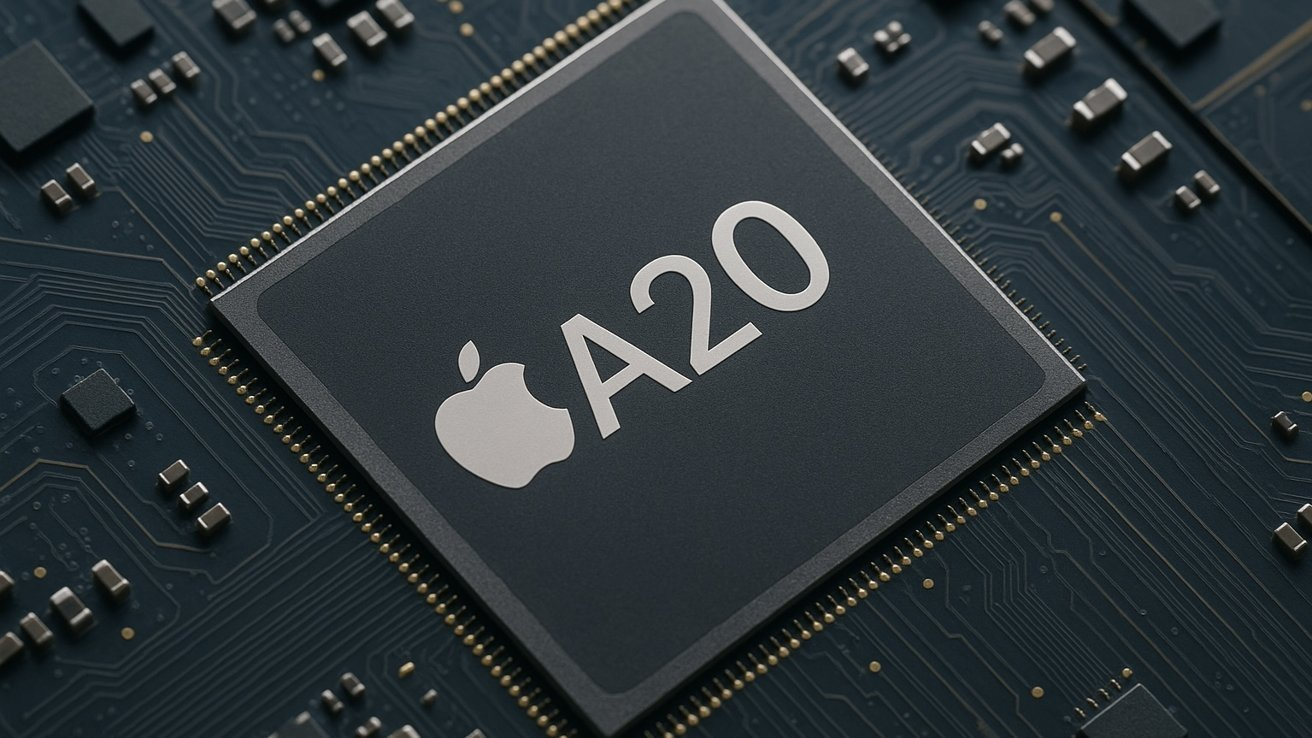
Apple’s rumored A20 Pro chip could deliver major gains in speed, efficiency and sustained performance, potentially giving buyers a compelling reason to spend more than $1,000 on the iPhone 18 Pro lineup.
If the latest leaks prove accurate, the iPhone 18 Pro and iPhone 18 Pro Max will bring more than the usual camera and design upgrades. At the heart of the new models could be one of Apple’s most consequential leaps in mobile processing performance in years.
The A20 Pro is expected to be manufactured using TSMC’s 2-nanometer process, promising significantly higher performance while consuming less power.
According to a leak on Weibo, the A20 Pro could be up to 18% faster and consume as much as 30% less power than the A19 Pro used in the iPhone 17 Pro.
If those figures materialize, the benefits could extend well beyond headline benchmark scores. The iPhone 18 Pro could gain an important advantage in its ability to sustain demanding workloads for longer without excessive power consumption or heat.
Apple’s move to 2nm could also help the company widen its technological lead over some Android rivals.
While the Pixel 11 is still expected to use a 3nm processor, Apple could again be among the first smartphone makers to bring TSMC’s most advanced chip manufacturing technology to a commercial handset.
The jump from 3nm to 2nm could change the game
The biggest technological shift behind the A20 Pro is expected to be TSMC’s N2 2nm process, replacing the N3P technology used for the A19 Pro.
Based on published information about N2, TSMC expects the process to deliver a 10-15% performance improvement at the same power level.
When optimized for efficiency, meanwhile, a chip built on N2 could consume 25-30% less power while delivering performance comparable with N3E.
N2 is also expected to increase transistor density by up to 20%.
For Apple, that could mean packing more processing capability into a similar chip area, providing greater headroom for increasingly demanding workloads involving artificial intelligence, computational photography and smartphone graphics.
Another important change is the introduction of nanosheet Gate-All-Around, or GAA, transistors on the new process.
Unlike the previous FinFET architecture, GAA provides greater control over electrical current, helping improve performance while reducing energy leakage.
That efficiency could prove just as important as raw processing speed.
One of the fundamental challenges facing modern smartphone processors is that greater performance typically generates more heat. A more power-efficient A20 Pro could help Apple address part of that problem.
If a processor uses less energy to perform the same workload, it can also generate less heat.
That could be particularly valuable during demanding activities such as gaming, high-resolution video recording, AI-powered image processing or running artificial intelligence models directly on the device.
TSMC is also reportedly using high-performance metal-insulator-metal capacitors known as SHPMIM in its N2 technology. According to Tom’s Hardware, the technology could further improve chip speed and power efficiency.
Taken together, these advances suggest the A20 Pro may be more than simply a faster processor.
If Apple can take full advantage of the technology, it could become the foundation for more consistent real-world performance across the iPhone 18 Pro and iPhone 18 Pro Max.
Apple may also rethink packaging and memory
The processor itself may not be the only major hardware change.
Previous reports suggest Apple could adopt Wafer-Level Multi-Chip Module, or WMCM, packaging for the A20 Pro, allowing the processor to be more directly integrated with RAM.
Such an approach could improve thermal performance while reducing the time required to move data between the processor and memory - an increasingly important consideration as smartphones handle enormous volumes of information for AI features.
Apple is also rumored to be moving from 64-bit LPDDR5X memory to 96-bit LPDDR6.
If accurate, the change could deliver a substantial increase in memory bandwidth and help the iPhone 18 Pro maintain better performance during demanding workloads.
The benefits would not necessarily be confined to benchmark results.
In everyday use, greater bandwidth could translate into faster image processing, smoother performance in resource-intensive applications and, crucially, stronger support for AI workloads that depend heavily on rapid data transfer.
Galaxy S27 Ultra could still be faster
Even with a promising 2nm processor, the iPhone 18 Pro may not become the fastest smartphone on the market.
Current leaks suggest Qualcomm’s Snapdragon 8 Elite Gen 6 Pro, expected to power the Galaxy S27 Ultra, could be around 35% faster than the A20 Pro.
If that figure proves accurate, Samsung could retain an advantage in peak performance and benchmark testing.
But maximum speed does not tell the entire story.
Extremely high performance can also generate substantial heat. As temperatures rise, smartphones may reduce processor speeds to protect their components - a phenomenon known as thermal throttling.
A phone that produces spectacular benchmark results but loses much of that performance after several minutes under heavy load may not necessarily deliver a better experience than one with lower peak performance that remains consistently fast.
That is where the iPhone 18 Pro could potentially distinguish itself.
If the A20 Pro genuinely consumes up to 30% less power and Apple pairs it with an effective thermal system, the phone could maintain high performance for longer periods.
The more meaningful advantage, in that case, would not be the highest benchmark number, but how much performance remains available when people actually push their phones hard.
Performance gains could come at a price
None of these upgrades is likely to be inexpensive.
Moving to a 2nm manufacturing process, introducing GAA transistors, changing the memory architecture and adopting WMCM packaging could all substantially increase chip production costs.
That matters because Apple is already rumored to be considering a higher price for the iPhone 18 Pro.
A possible $1,399 price tag would inevitably give prospective buyers more to think about.
Yet if the A20 Pro delivers a meaningful combination of higher performance, better battery efficiency and stronger sustained performance, Apple may have a powerful argument for convincing customers that the premium is worth paying.
For the iPhone 18 Pro, the most important upgrade may ultimately be one users rarely see: the silicon inside.
Hai Phong
.svg)
