 Vietnamnet.vn

 Podcast



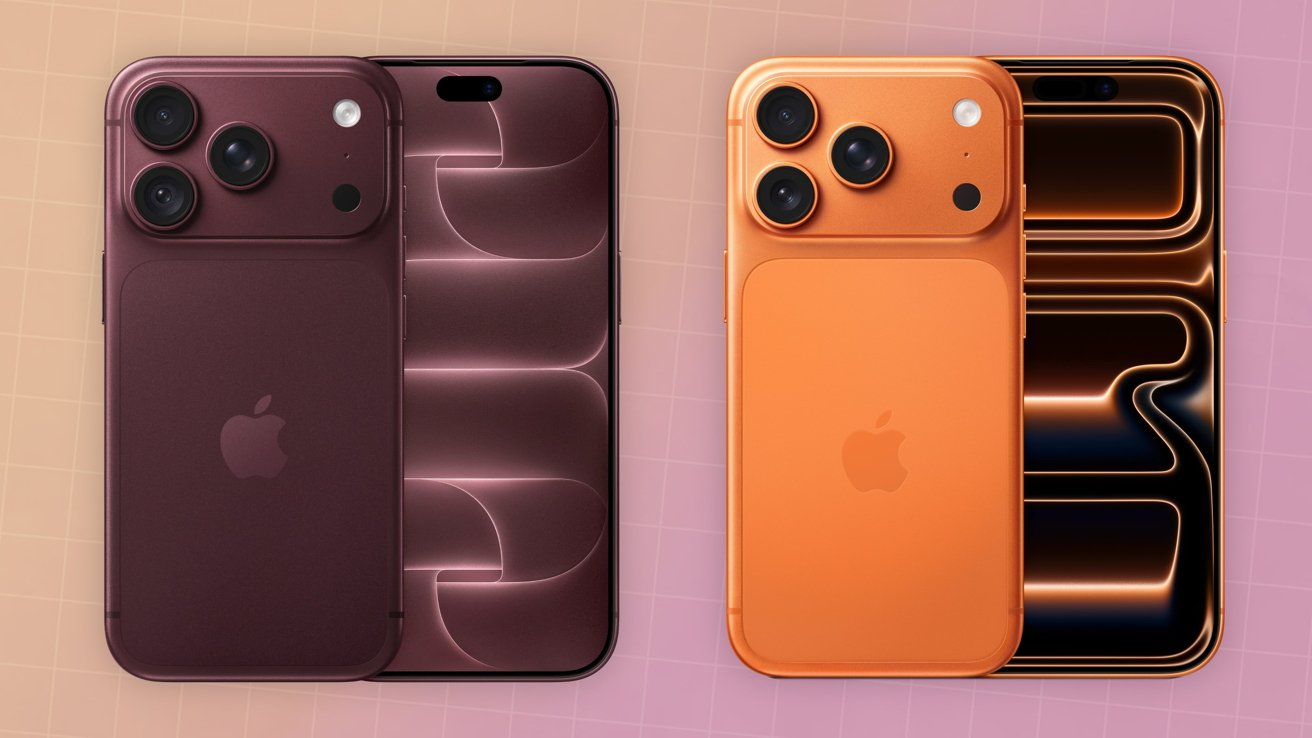
Here are the key differences between the two generations of Apple’s Pro iPhone: the iPhone 18 Pro and iPhone 17 Pro.
Design largely unchanged, but with new colors
The iPhone 17 Pro measures approximately 150.1 x 71.9 x 8.6mm and weighs around 206 grams.
On the iPhone 18 Pro, the overall dimensions remain virtually unchanged. It retains roughly the same height, width and thickness as its predecessor, although its weight has edged up to around 211 grams.
Apple has also retained the elongated Camera Plateau design across the rear, first introduced with the iPhone 17 Pro.
The most noticeable change is the color palette. The iPhone 17 Pro comes in Cosmic Orange, Deep Blue and Silver, while the iPhone 18 Pro is available in Black, Silver, Glacier and Burgundy.
The iPhone 17 Pro features a 6.3-inch Super Retina XDR OLED display with a resolution of 2,622 x 1,206 pixels and a pixel density of 460 ppi.
The display supports ProMotion with an adaptive refresh rate of up to 120Hz, along with Always-On Display, Wide Color, HDR and True Tone.
Peak outdoor brightness reaches 3,000 nits, while typical brightness is around 1,000 nits and can rise to 1,600 nits when displaying HDR content.
The iPhone 18 Pro retains the same 6.3-inch display, with a similar resolution and pixel density. ProMotion, True Tone, HDR, Wide Color and peak brightness of 3,000 nits also remain unchanged.
However, Apple has made a small but notable change at the top of the display. The TrueDepth camera system is now more compact, allowing the Dynamic Island to shrink.
As a result, iOS can display up to three Live Activities simultaneously. It is not a major upgrade in terms of panel quality, but it marks another step toward a display with less screen space occupied by hardware components.
Variable-aperture camera: The most worthwhile upgrade
If there is one feature that clearly sets the iPhone 18 Pro apart from the iPhone 17 Pro, it is the main camera.
The iPhone 17 Pro uses a Pro Fusion Camera system with three 48MP sensors. Its Fusion Main camera has a fixed f/1.78 aperture, supports 100% Focus Pixels and features second-generation sensor-shift optical image stabilization.
The iPhone 18 Pro retains the triple 48MP camera system, but its Fusion Main camera gains one particularly significant feature: a variable aperture.
Instead of being fixed at f/1.78 as on the iPhone 17 Pro, the iPhone 18 Pro’s main camera can adjust its aperture from f/1.48 to f/4.0.
This is an especially important upgrade for serious photographers.
A variable aperture gives users greater control over depth of field, allowing selected areas of a subject to remain sharp while the background falls out of focus.
The six-blade aperture system also helps produce more natural bokeh in portrait photography.
For everyday users, the difference may not be particularly dramatic, as the iPhone already relies on computational photography to create background blur.
For photographers, content creators or anyone who regularly runs up against the limitations of software-generated blur, however, genuine aperture control represents a meaningful step forward.
Apple has also added Pro Controls, giving users greater control over photography settings.
Another feature designed for the AI era is Apple Reference Image. The system uses cryptographically signed sensor data sent to Private Cloud Compute to create an “immutable reference image,” which can be viewed in the Photos app much like a digital negative.
The feature may make little difference to most users, but it could prove particularly useful for journalists, photographers and others who need to demonstrate that an image is authentic rather than AI-generated.
Front camera remains at 18MP, while Dynamic Island gets smaller
The iPhone 17 Pro introduced an upgraded 18MP Center Stage front camera. The iPhone 18 Pro retains the 18MP Center Stage camera and Face ID, with the main change being the smaller Dynamic Island surrounding the TrueDepth system.
Video capabilities also remain highly advanced. The iPhone 17 Pro supports 4K Dolby Vision recording at up to 120 fps, Cinematic Mode in 4K Dolby Vision at 30 fps, as well as multiple slow-motion recording options and Action Mode.
The iPhone 18 Pro continues to support professional features including ProRes, ProRes RAW, Apple Log 2 and Genlock.
Notably, Cinematic Mode can now apply its effects at 4K 60 fps, up from the 30 fps limit on the previous generation.
A20 Pro takes performance and AI to the next level
The iPhone 17 Pro uses the A19 Pro chip with a six-core CPU comprising two performance cores and four efficiency cores.
With the iPhone 18 Pro, Apple has moved to the A20 Pro, manufactured on a 2nm process and using new packaging technology designed to improve both performance and energy efficiency.
The CPU remains a six-core design but now integrates Neural Accelerators directly into its CPU cores. The GPU has been expanded to seven cores, with Apple claiming performance of up to 40% faster than the A19 Pro.
The Neural Engine has also received a substantial upgrade. Instead of a 16-core Neural Engine, the A20 Pro features a dual 16-core Neural Engine architecture, providing the equivalent of 32 processing cores — twice as many as the previous generation.
Memory bandwidth has also increased by 50%.
More notably, Apple has further expanded its vapor-chamber cooling system. The new system has three times the surface area of the original design, while the memory is positioned alongside the main chip rather than stacked on top of it, allowing both components to be cooled more effectively.
C2 modem and improved battery life
The iPhone 17 Pro supports 5G mmWave and sub-6GHz, Wi-Fi 7, Bluetooth 6, second-generation Ultra Wideband, NFC and satellite communication features.
The iPhone 18 Pro retains Wi-Fi 7, Bluetooth 6 and Apple’s N1 wireless networking chip. The most notable addition is Apple’s in-house C2 modem, which is said to deliver faster upload speeds than the C1X while consuming less power.
Battery life has also improved significantly. The iPhone 17 Pro offers up to 30 hours of streamed video playback, while the iPhone 18 Pro raises that figure to 36 hours.
Fast charging has improved as well. The iPhone 18 Pro can reach 50% charge in around 15 minutes when using a USB-C power adapter rated at 60W or higher, compared with roughly 20 minutes for the iPhone 17 Pro using a 40W adapter.
iPhone 18 Pro gets a price hike and a new 2TB option
The iPhone 17 Pro starts at $1,099 for the 256GB model and tops out at $1,499 for the 1TB version.
By comparison, the iPhone 18 Pro starts at $1,199 for 256GB, a $100 increase. The 512GB version costs $1,399, while the 1TB model is priced at $1,799. For the first time, the iPhone 18 Pro is also available with 2TB of storage, priced at $2,399.
Should you upgrade from the iPhone 17 Pro to the iPhone 18 Pro?
With just one generation separating the two models, the iPhone 18 Pro is not an essential upgrade for every iPhone 17 Pro owner.
The biggest changes are the A20 Pro chip, enhanced AI processing, improved cooling system, variable-aperture main camera and longer battery life. All are meaningful improvements, but their real-world value will depend heavily on how the phone is used.
For those who frequently use AI features, shoot video, take professional-level photos or want deeper control over camera settings, the iPhone 18 Pro is an upgrade worth considering.
For users who mainly browse social media, make calls, take casual photos and handle everyday tasks, however, the iPhone 17 Pro remains an exceptionally capable smartphone. In that case, spending more to upgrade after just one year may be difficult to justify.
Hai Phong
.svg)
