 Vietnamnet.vn

 Podcast



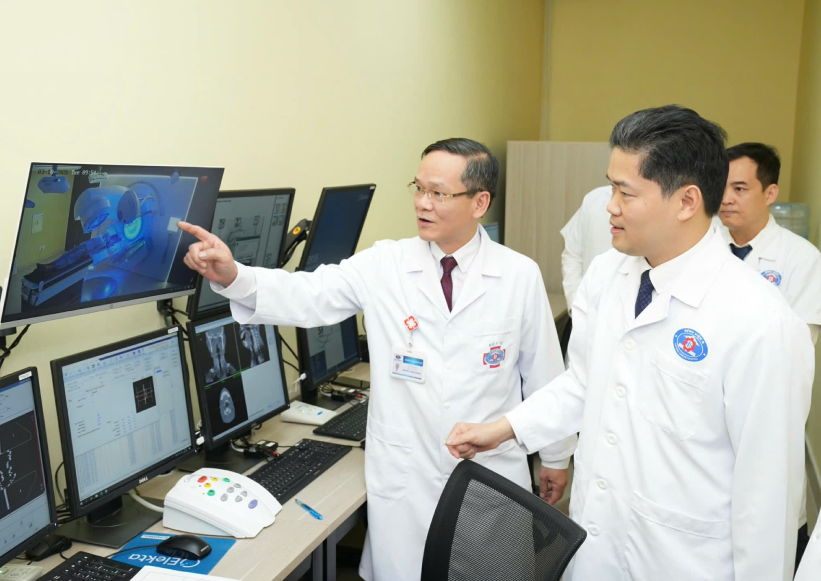
On March 10, K Hospital in Hanoi) inaugurated two modern radiotherapy systems along with other medical equipment worth VND1,000 billion to serve medical examination and treatment at the Quan Su facility.
Professor Le Van Quang, director of K Hospital, said with the attention of the government, the Ministry of Health and support from Japan International Cooperation Agency (JICA), the hospital has received more than VND1,000 billion to upgrade infrastructure and equipment. So far, the hospital has put hundreds of modern medical devices into operation at its first facility to meet the growing demand for medical examination and treatment.
The hospital director said cancer treatment today uses a multimodal approach, combining surgery, systemic therapy and radiotherapy. Among these, radiotherapy plays a particularly important role and delivers high effectiveness for many types of cancer.
As of January 2026, K Hospital has nine linear accelerator radiotherapy machines installed at its facilities. However, as the number of patients continues to rise, the hospital has equipped with more next-generation linear accelerator systems to improve treatment capacity.
According to Quang, the new-generation systems enable the full deployment of advanced radiotherapy techniques currently available, such as 3D radiotherapy, IMRT, VMAT, SRS/SRT radiosurgery and SBRT.
As a result, treatment time can be shortened from around 10 minutes to just 2–3 minutes, while the radiation field is extremely small, allowing the maximum radiation dose to be concentrated on tumors and minimizing damage to surrounding healthy tissues. The system can also track tumor movement according to each breath of the patient, making radiotherapy more precise, non-invasive and safer.
In addition, the radiotherapy system is synchronized with a 4D CT simulation machine and the Monaco radiotherapy planning software integrated with artificial intelligence, which supports automatic lesion contouring and online consultations. The entire process from simulation and treatment planning to therapy is carried out in a closed system, ensuring quality control in line with international standards.
Vu Manh Ha, permanent deputy minister of the Ministry of Health of Vietnam, said Vietnam records about 182,000 new cancer cases and more than 122,000 deaths each year, increasing the demand for medical examination and treatment and placing significant pressure on specialized hospitals. K Hospital alone receives more than 500,000 patient visits annually, and its radiotherapy systems must operate continuously.
According to Ha, the operation of the two new-generation linear accelerator radiotherapy machines is an important step in improving treatment quality, allowing patients to access advanced technologies within the country while reducing costs and easing the burden on the healthcare system.
Phuong Thuy
.svg)
