 Vietnamnet.vn

 Podcast



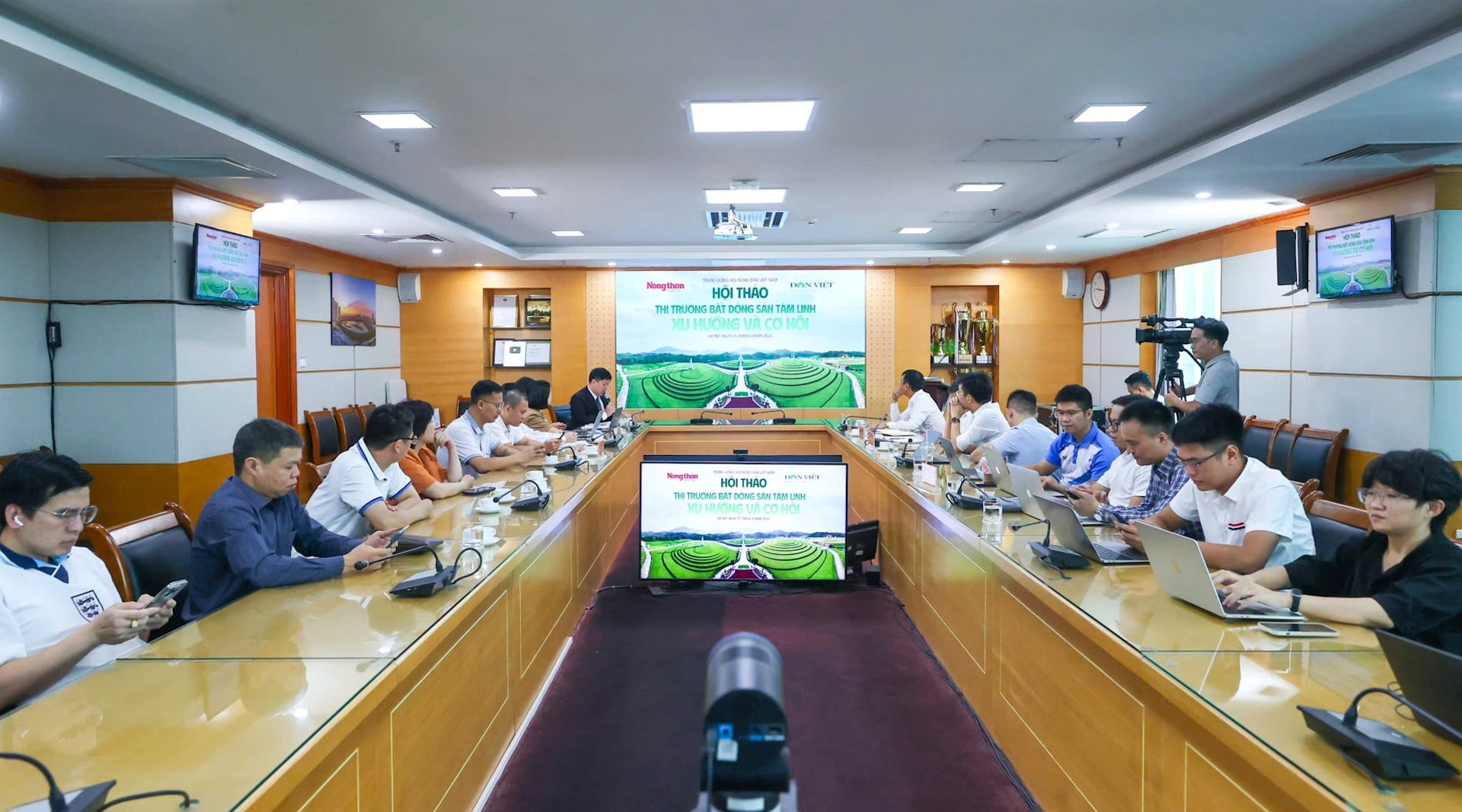
At the seminar “Spiritual real estate market – Trends and opportunities” organized by Dan Viet newspaper on August 25, Pham Thi Mien, Deputy Director of the Institute for Research and Evaluation of Vietnam’s Real Estate Market (VARS IRE), noted that surveys have shown that most transactions between buyers and developers are currently conducted through service contracts.
Although many projects are designated for long-term land use, buyers are often only recorded on a common land-use certificate covering the entire project, rather than receiving individual certificates.
Mien said it is necessary to clarify buyers’ rights, the mechanism for issuing separate certificates, transfer rights and the possibility of using the property as collateral.
On this issue, Vu Sy Kien, Deputy Director of the Department of Land Administration under the Ministry of Agriculture and Environment, said separate certificates for individual areas or plots within cemeteries have not yet been widely issued in practice.
However, Kien said land laws already provide a general framework for issuing certificates for individual land plots within a project.
Specifically, Article 143 of the Land Law regulates granting certificate for each land parcel. If a cemetery project is properly planned and subdivided into specific areas and plots, separate certificates could in principle be issued for each plot.
Upon certificate issuance, for land allocated for grave construction, land users will establish land use rights under corresponding regimes, including cases of stable and long-term land use.
If a separate certificate is issued, land users will have rights provided by law, including the right to transfer, mortgage, gift and inherit the land. In practice, transfers do occur, but remain limited, while mortgages have barely been recorded on any significant scale.
Although separate certificates may be possible, Kien cautioned that this is a special type of land use and cannot simply be treated as an ordinary land plot.
A cemetery project also includes infrastructure, landscaping, greenery, roads, management systems and accompanying services. These facilities must be maintained throughout the period of use.
“People are not simply buying the right to use a piece of land; they are also using an entire system of products and services. Therefore, contracts between developers and customers need to be viewed from two aspects at the same time: land-use rights and the quality and responsibility involved in providing services,” Kien said.
Spiritual real estate market
This was also an issue highlighted by lawyer Hoang Ngoc, head of Nhiet Tam and Associates Law Office under the Hanoi Bar Association.
According to the lawyer, when businesses invest in cemetery projects, a number of new legal relationships arise. Existing regulations, including Decree 23/2016 and other relevant provisions, already provide a fairly comprehensive framework for cemetery investment, construction and management.
“It is necessary to clarify what rights buyers have after developers transfer the rights to them, including whether those rights can be inherited, transferred or handed over to another person,” the lawyer said.
Ngoc gave the example of a person representing an extended family purchasing a large plot to serve as a shared burial area. If that person dies, who will have the right to manage and use the site? Can those rights be transferred to other members of the family? These are issues that are difficult to resolve through a service contract alone.
Another issue concerns long-term management and maintenance responsibilities. If a customer makes a one-time payment but the developer later dissolves, goes bankrupt or transfers the project, who will continue to manage and maintain the cemetery?
Lawyer Hoang Ngoc said authorities could consider adding regulations at the decree or implementing-guidance level to clarify buyers’ rights, developers’ responsibilities and mechanisms for managing funds for long-term maintenance and operation.
“The spiritual real estate market does not necessarily need a separate law, but the legal framework needs to be clearer about the nature of the products, buyers’ rights and developers’ long-term responsibilities. If these issues remain unresolved, the risk of disputes emerging in the future will be very high,” the lawyer said.
Regarding the development of spiritual real estate, Pham Thi Mien said the sector is expected to have some room for growth in the coming period. However, there is no need yet to define it as a separate real estate segment because “compared with residential, industrial or tourism real estate, this market is still relatively small in scale and has yet to become truly widespread,” she said.
Hong Khanh
.svg)
