 Vietnamnet.vn

 Podcast



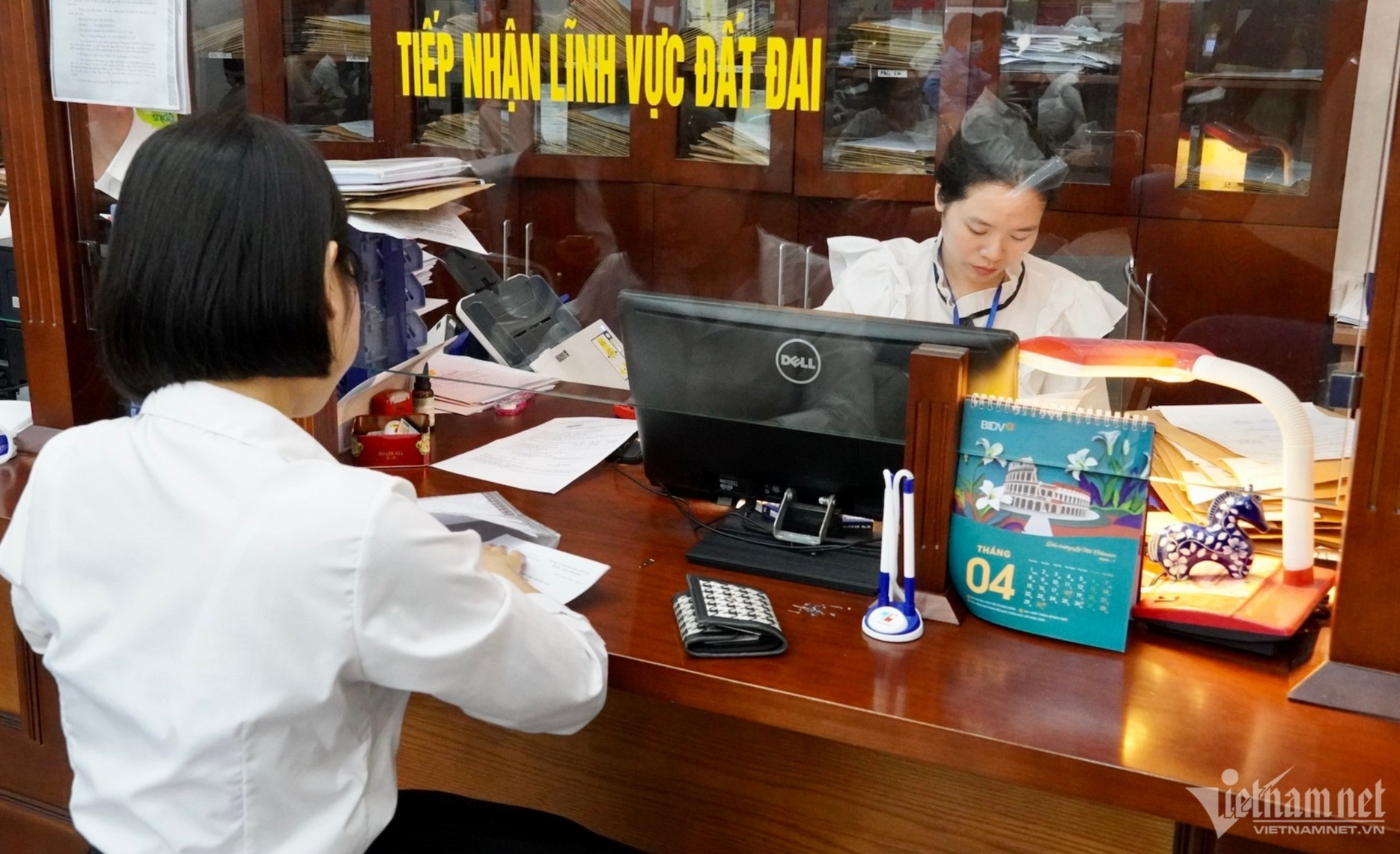
Recently, many differing opinions have emerged about the proposal to transfer more than 700 branches of land registration offices to the commune level.
At the end of last year, the HCMC Institute of Resource Economics and Environment (IEER) proposed that the provincial-level land registration office should be the sole focal point for handling all matters related to resources and land, including the issuance of first-time land-use right certificates.
Under the proposal, commune-level authorities would not handle procedures related to resources and land, except for tasks involving land clearance, land allocation and lease under decentralization, and changes in land-use purpose within a commune or inter-commune area.
IEER argued that maintaining the provincial-level land registration office (LRO) as the provider of technical land resource services is essential due to the sector’s specific characteristics. From a socio-economic perspective, this model delivers significant efficiency and is suitable for the national digital transformation phase in managing land and resource data.
In the event of adjustment to the commune level, a clear roadmap would be required, particularly regarding infrastructure, staffing, coordination mechanisms among specialized land agencies, and qualified technical human resources for deployment across 3,321 commune-level administrative units. This approach would be highly costly, increasing staffing and recurrent expenditures estimated at trillions of dong each year.
Options for transfer of offices
Meanwhile, some opinions suggest transferring land registration offices to the commune level to better facilitate public access.
Experts supporting this option argue that the two-tier local government model ultimately aims to bring the administrative apparatus closer to the people and improve public services. Therefore, transferring land procedures, including the issuance of land-use right certificates (red books), to ward and commune levels is considered reasonable.
Professor Dang Hung Vo, former Deputy Minister of Natural Resources and Environment, said a clear separation of functions is needed between provincial and commune levels.
Specifically, both levels should have staff under the land registration office responsible for preparing dossiers for first-time certificate issuance. The issuance of first-time certificates for households, individuals, and residential communities should be handled at the commune level.
He explained that under the current regime, a commune-level unit is equivalent to about one-quarter of a former district, meaning land-related tasks previously handled by districts could be transferred to communes.
Subsequent procedures such as adjustments and reissuance after the first-time certificate issuance would continue to be centrally handled by the provincial-level land registration office.
Maintaining land-registration office branches
The Ministry of Agriculture and Environment recently issued a document integrating all decrees guiding the implementation of the Land Law, clearly defining the functions and duties of land registration offices and their branches.
Accordingly, the land registration office is responsible for land registration, operating under the provincial-level land management authority and functioning as a public service unit.
The land registration office performs multiple tasks, including land registration; issuance of land-use right certificates and certificates of ownership of land-attached assets (red books); and surveying, updating, building, and managing cadastral maps.
At the same time, it is responsible for building, operating, and exploiting the land information system, as well as providing land-related public services across the entire province.
In terms of organizational structure, the land registration office consists of specialized departments and a system of affiliated branches.
Thus, the land registration office model and its branches remain unchanged, rather than being transferred to commune-level People’s Committees.
Land registration offices and their branches have legal entity status, their own seals, are permitted to open accounts, and operate in accordance with regulations applicable to public service units; they conduct accounting as decided by provincial-level People’s Committees.
The activities of land registration offices and their branches cover the entire process of handling housing and land dossiers, from registering land managed by the State; registering land-use rights and ownership of land-attached assets to carrying out procedures for changes after certificate issuance such as sales, transfers, and donations.
In addition, these units also perform technical tasks such as surveying, updating, and extracting cadastral maps; issuing new certificates, making corrections, revoking or canceling certificates; canceling results of registered changes; checking cadastral survey extracts; certifying asset diagrams provided by organizations and individuals; and registering security measures in accordance with the law.
Duy Anh
.svg)
