 Vietnamnet.vn

 Podcast



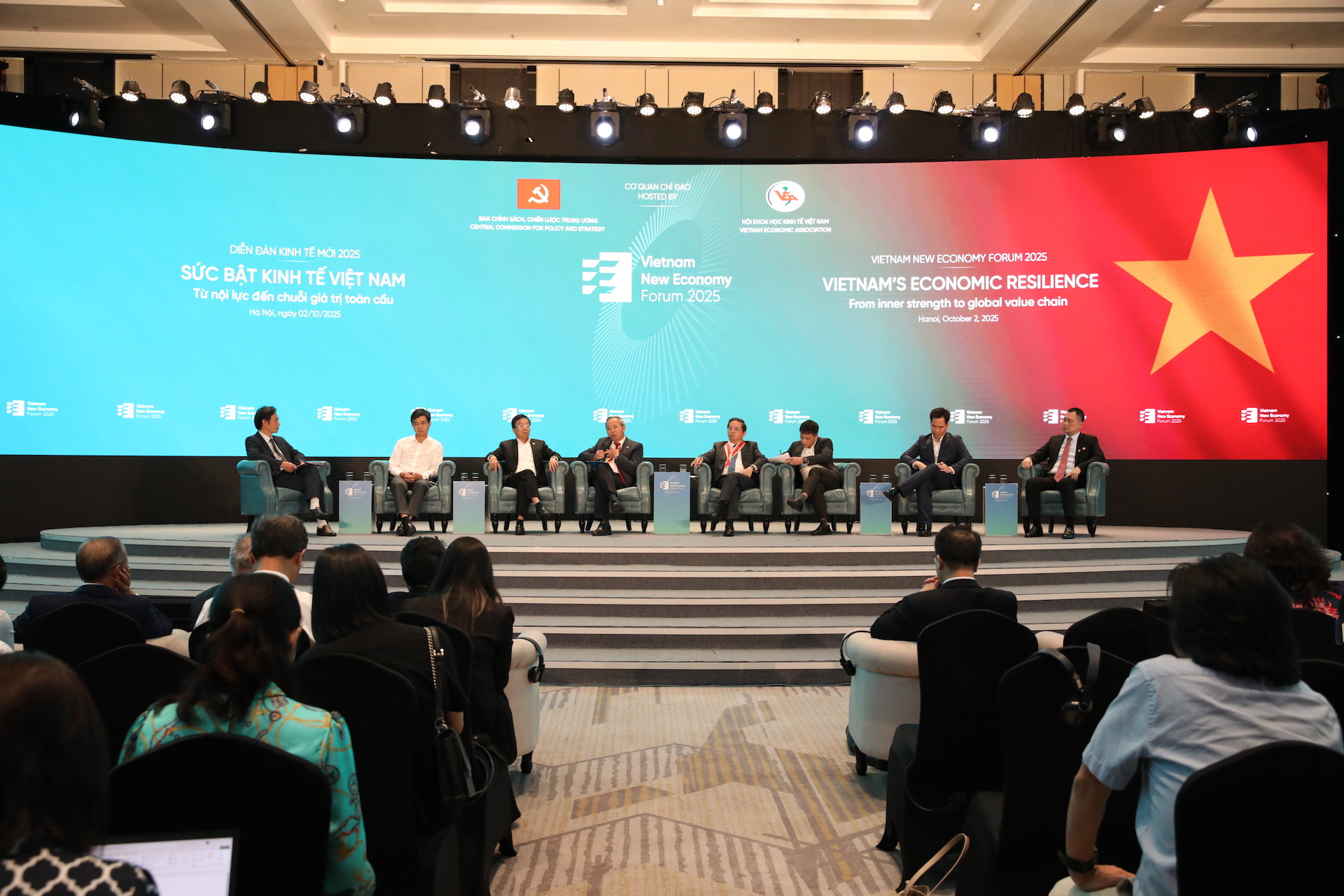
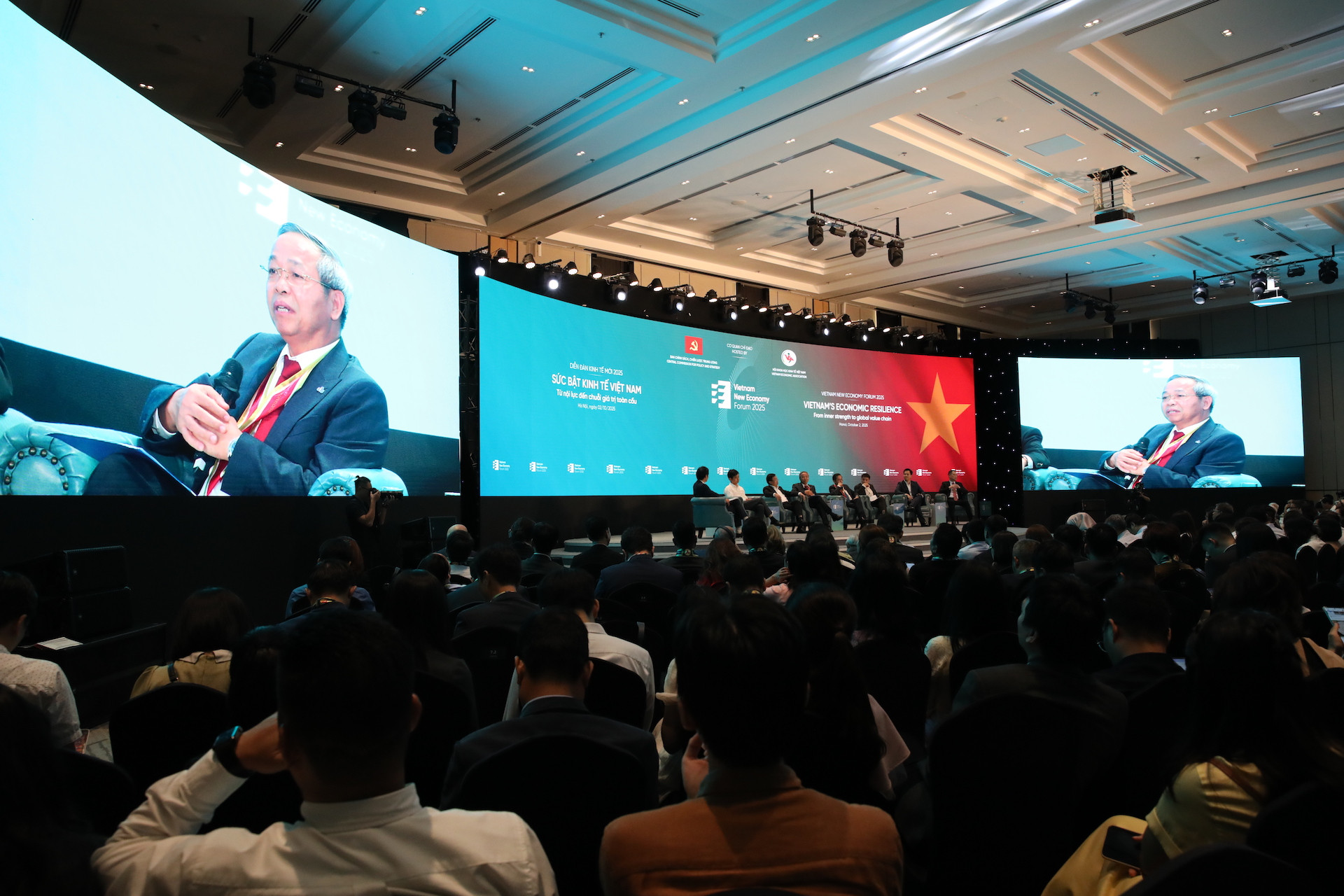
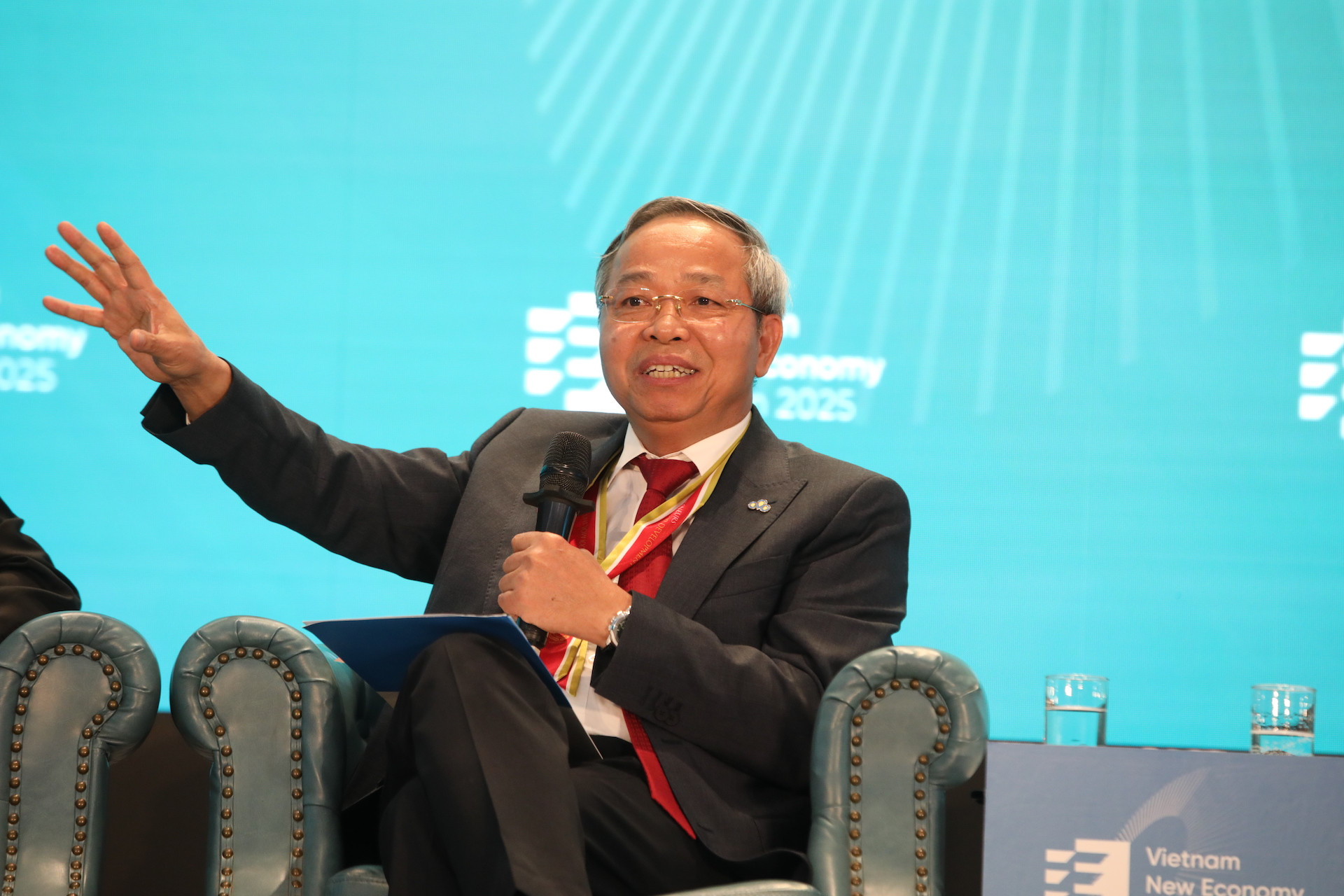
On October 2, 2025, at the 3rd Vietnam New Economy Forum (VNEF) themed “Vietnam’s Economic Momentum: From Internal Strength to Global Value Chains”, Nguyen Trung Chinh, Chairman of CMC Technology Group, shared significant perspectives during the panel discussion “Solutions to strengthen internal capacity, develop new economic models, and enhance position and value in global supply chains.”
The forum was jointly directed by the Central Policy and Strategy Committee and the Vietnam Economic Science Association, with coordination from the Institute of Policy and Strategy Research, Department of General Economics, and Vietnam Economic Times/VnEconomy. It gathered leaders of major corporations including Hoa Phat, Vinatex, CMC, CT Group, Grab Vietnam, and Vietravel, alongside leading financial and economic experts.
Clear policies, fast implementation is the key
Speaking at the event, Chairman Nguyen Trung Chinh highlighted the importance of Resolutions 57-NQ/TW and 68-NQ/TW. Resolution 57 prioritizes science, technology, digital transformation, and innovation as breakthrough drivers, while Resolution 68 affirms the private sector as the most vital economic force.
“These resolutions answer the question of how we can change the country,” he emphasized.
“Transformation must come from new approaches, where science, technology, digital transformation, and innovation become the core drivers. They directly address productivity, added value, and Vietnam’s capacity to integrate more deeply into global value chains.”
Chinh added that since the adoption of the four cornerstone resolutions (57, 59, 66, and 68), technology enterprises like CMC have been greatly encouraged. With the addition of two more (71 and 72), forming a six-pillar resolution framework, Vietnam now has a comprehensive policy system shaped by the strategic vision of the Party and State.
“The challenge now is no longer direction, but how quickly and effectively these policies are implemented,” he stressed.
Large enterprises as “locomotives”
In China and South Korea, large enterprises often act as locomotives, leading smaller businesses forward.
In Vietnam, however, small and medium-sized enterprises face many difficulties. Interest subsidies or preferential incentives alone are not enough. Vietnam requires strong leadership from major corporations to generate breakthroughs for the wider ecosystem.
Chinh reflected on India’s journey, noting that it transitioned from being an outsourcing nation to becoming a global IT powerhouse. “The outsourcing phase is not inherently negative, but the key lies in transformation – moving from hired worker to owner.”
According to him, true added value comes from knowledge, branding, and creativity – areas where Vietnamese enterprises remain weak, particularly in building international brands.
He pointed out that China rapidly shortened its outsourcing phase and focused on developing products and building global brands. Vietnam must also aim to master technology, create intellectual products, and establish internationally recognized brands instead of being locked into the role of “the hired worker.”
The “trap” of measuring added value
“When CMC introduced its AI technology in Japan in 2024, many partners were surprised, admitting it was the first time they realized Vietnam had a company developing AI. This proves that with knowledge, we can build value and affirm our position with international peers,” Chinh recalled.
However, he also warned of a “trap” in measuring added value.
In the textile industry, for instance, focusing solely on producing raw materials to raise domestic content in the value chain risks creating pollution while delivering little real value. Instead, he urged Vietnamese companies to invest in building global-scale brands.
Similarly, in assessing the digital economy, it would be misleading to conclude low added value simply because of high imported hardware ratios.
Vietnam currently ranks 5th globally in software production and 3rd in software exports, behind only China and India. This demonstrates a solid foundation and potential in technology.
“Vietnam’s position today is vastly different from 30 years ago,” he emphasized.
CMC itself began with outsourcing and technology learning. Today, the group has tech products ranked among the Top 12 worldwide by the American National Standards Institute and has implemented digital transformation for leading Japanese corporations such as Honda, helping revamp design processes and boost productivity by up to 30%.
Chinh highlighted artificial intelligence as a key driver of the future, projected to generate up to USD 15.7 trillion in added value for the global economy by 2030 and expected to boost productivity by 40% by 2035.
“AI is not only for technology companies. Any business or individual can leverage it to enhance productivity and create new value,” he concluded.
PV
.svg)
