 Vietnamnet.vn

 Podcast



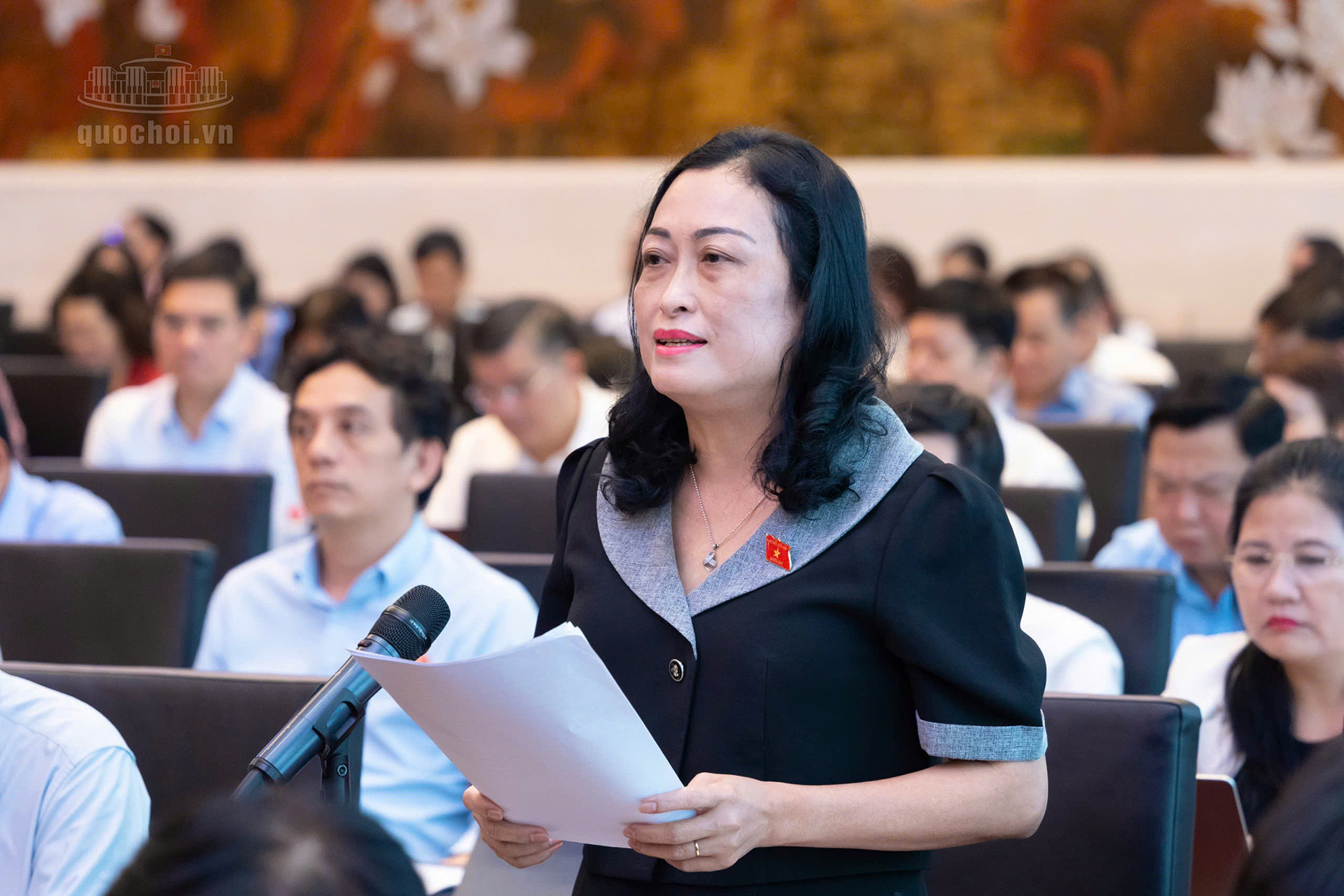
The draft law proposes adding several cases in which people may donate human tissues and organs, including allowing those aged 15 to under 18 to donate regenerable tissue while alive to treat a family member when no suitable adult donor is available. This would be done only after receiving counseling and with the consent of both the donor and their legal representative.
Deputy Tran Thi Hoa Ry from Ca Mau said this policy needs to be regulated cautiously because minors are a group that requires special legal protection. At the same time, family relationships in such cases can serve as the basis for a humanitarian act of donation but may also create psychological and emotional pressure on the donor.
She said that the consent of a legal representative alone is not enough. More importantly, the law must establish the donor's independent wishes and intentions.
She proposed that the draft law set out three conditions. First, the minor must give direct and voluntary consent and have the right to change their decision before the tissue is donated and retrieved.
Second, the donor must be provided with full information and receive age-appropriate counseling about the benefits, risks and possible consequences.
Finally, there should be an independent assessment and monitoring mechanism to ensure that the donation and retrieval do not result from coercion, pressure or conflicts of interest within the family.
“For minors, the principle should be that the interests and safety of the donor must be given priority, even when the purpose of the donation is to save a relative,” the deputy said.
Deputy Truong Ho Hai from An Giang said the term “family member” is too broad and should be narrowed to specifically cover biological brothers and sisters.
Hai said children under 15 can still donate tissue to treat malignant blood disorders, blood cancers and bone marrow failure, which require a very high degree of clinical compatibility, with the highest compatibility rate found among biological siblings.
If a six-year-old child has acute leukemia and the only compatible donor is a 10-year-old biological sister, retrieving bone marrow or cells and donating regenerable tissue may not cause permanent harm to the sister but could be the sick child's only chance of survival. Therefore, setting the age threshold at 15 could deprive a child of a chance to survive even when a suitable donor is available.
The deputy cited international experience, noting that the US and Europe still allow children to donate tissue and stem cells to their biological siblings, provided that independent medical and psychological assessments are conducted and the legal representative gives consent.
He proposed allowing children under 15 to donate regenerable tissue while alive, but only to biological brothers or sisters, with the consent of their parents or guardians. He also called for an independent psychological and medical assessment process to ensure the best interests of the child.
Donors' wishes after death should be respected
Deputy Ly Anh Thu from An Giang later expressed support for the views of the two deputies. Regarding respect for a person's wishes to donate organs after death, Thu said the draft law does not clearly establish the legal validity of a stated wish expressed verbally.
She proposed revising the provision along the following lines: “For a person aged 18 or older who has registered to donate organs after death, the retrieval of organs shall be carried out within the scope of the registered donation and in accordance with other conditions prescribed by law. Medical facilities shall be responsible for notifying and explaining the matter to the donor's family and coordinating with them.
“If a person has not registered to donate, their wishes expressed before death must be documented in writing or recorded in medical records in the presence of a witness who has no relevant interest. Organ retrieval must be approved in writing by the family representative.”
The deputy said that clearly defining these rules would help medical staff act promptly, respect the donor's wishes and protect families from potential disputes.
Tran Thuong
.svg)
