 Vietnamnet.vn

 Podcast



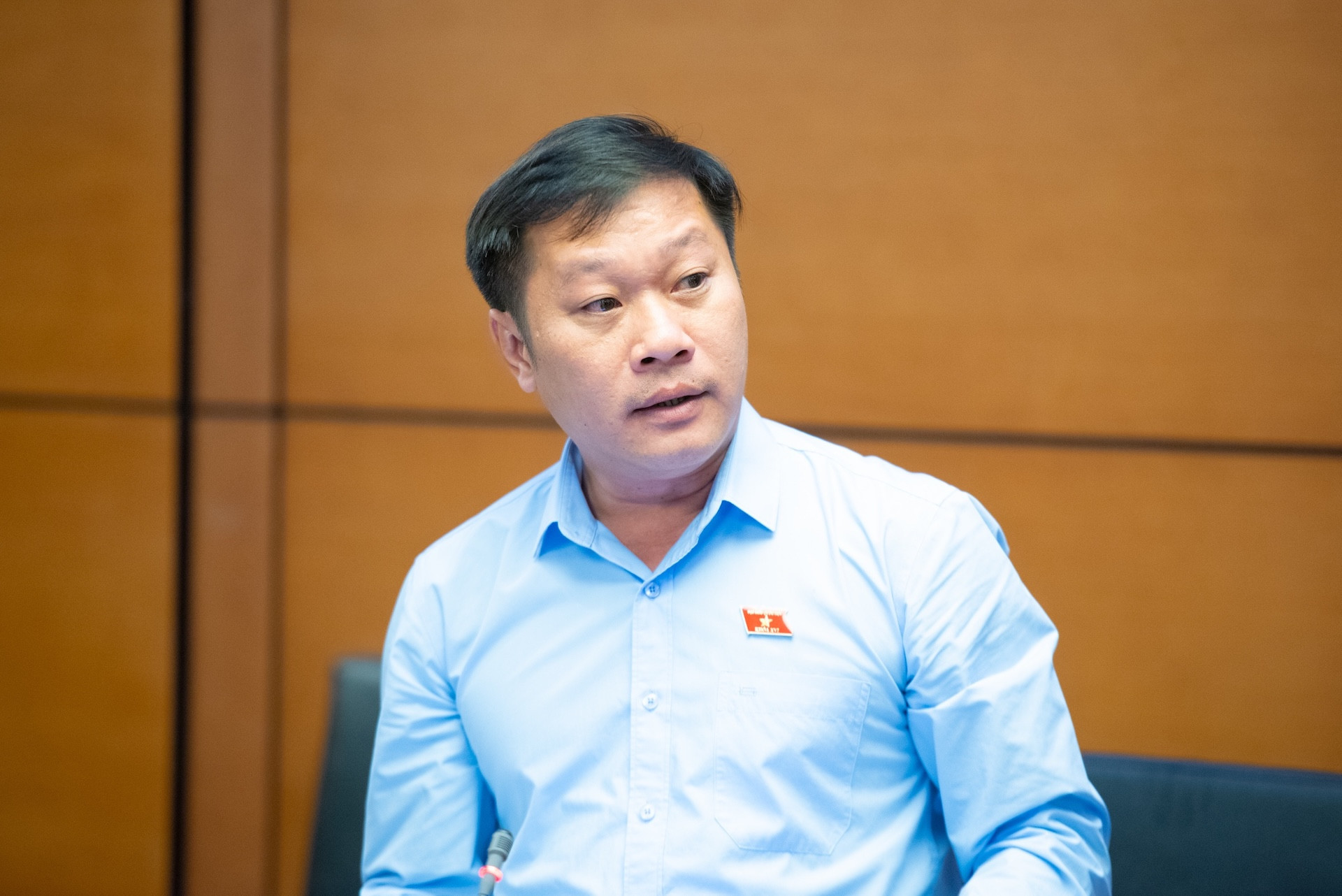
Nguyen Khanh Vu, NA Deputy from Quang Tri Province, noted that the draft law proposes a five-year licensing restriction on legal representatives of overseas manpower sending agencies (labor export companies) whose licenses have been revoked. However, businesses could circumvent this penalty simply by replacing their legal representative, while actual owners and dominant shareholders remain unchanged.
"I propose extending the five-year licensing restriction to include beneficial owners, capital-contributing members, and controlling shareholders of revoked companies to ensure the regulation truly closes legal loopholes," Vu said.
He also expressed concern that the draft law requires contracts between enterprises and workers on preparing labor sources to include content on the responsibilities of parties if workers are not selected or their participation is terminated before the deadline. He noted that the draft leaves it entirely up to the two parties to agree themselves, without setting minimum protection principles.
"Workers represent the most vulnerable group in this process, having already spent money and time on preliminary screening and training, only to end up unselected. I propose incorporating a statutory principle: labor export companies must refund all collected training and skill-enhancement fees if workers are not selected through no fault of their own," Vu said.
Regarding workers departing under direct individual labor contracts, the deputy identified this group as facing the highest risk of fraud, particularly via social media platforms.
However, while the draft transfers responsibility for contract registration from one authority to provincial-level People's Committees, it does not require those authorities to provide appropriate counseling or risk warnings.
He recommended assigning explicit responsibilities to provincial People's Committees to provide specific risk-counseling and warnings to workers submitting individual contract registrations.
The Quang Tri representative commended the addition of obligations requiring service enterprises to help workers access legal assistance when experiencing abuse, violence, or discrimination.
He suggested explicitly referencing Vietnam's overseas representative missions in the relevant provision, so that workers can seek assistance directly rather than relying solely on companies to report incidents.
Public database of licensed recruitment companies
Nguyen Dinh Xuan, an NA Deputy from Tay Ninh Province, focused on measures to combat illegal recruitment brokers and online scams.
He said the draft adds several prohibited acts, but in reality, most recruitment scams now occur through Facebook, Zalo, TikTok, fake websites, and freelance recruiters.
Meanwhile, the draft law primarily regulates licensed recruitment companies.
Xuan urged the government to clarify how it plans to deal with organizations and individuals operating outside the licensed recruitment system.
He also proposed requiring closer coordination among the Ministry of Home Affairs, the Ministry of Public Security, information management authorities, and local governments to detect, prevent, and promptly handle illegal recruitment brokerage activities.
In addition, he recommended publicly disclosing key information about licensed recruitment companies through the national database, including valid operating licenses; the number of workers sent overseas; recorded violations; complaints that have been resolved; and permitted recruitment fees.
According to Xuan, such transparency would better protect workers without creating additional administrative procedures.
The Tay Ninh lawmaker also welcomed the draft's shift from viewing overseas employment as simply "labor export" toward “developing Vietnam's national human resources”.
However, he said the bill still focuses mainly on business conditions, licensing, administrative procedures, and sanctions for violations.
Earlier, presenting the government's proposal, Minister of Home Affairs Nguyen Tien Hai said the draft law introduces several new provisions aimed at strengthening worker protections and preventing individuals or organizations from exploiting overseas employment services for illegal gain.
Specifically, the bill introduces the concept of "direct recruitment." Licensed labor export companies must conduct recruitment themselves, or jointly with overseas employers. They must not recruit workers through third parties.
For the first time, the draft also explicitly prohibits allowing others to use an operating license. It would be illegal for a licensed company to allow another company, organization, or individual to use its license, under any arrangement, to send Vietnamese workers abroad under the licensed company's name.
Beyond prohibiting solicitation and enticement, the draft explicitly bans making false promises, providing inaccurate or misleading information, engaging in deceptive advertising or counseling, or using other schemes to defraud workers.
Thu Hang
.svg)
