 Vietnamnet.vn

 Podcast



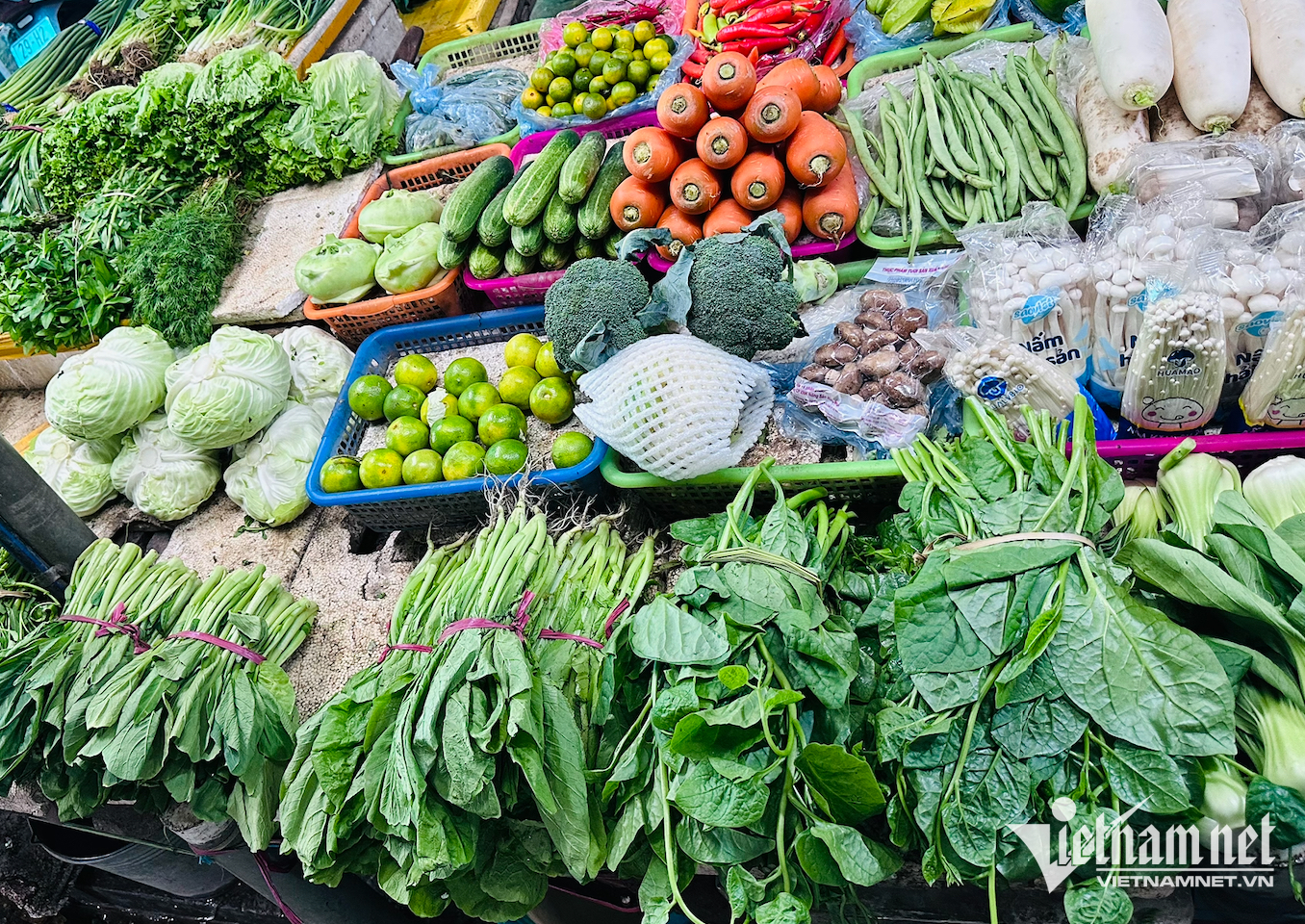
Speaking at the forum “Improving the quality and safety of domestic agricultural products” on the morning of September 23, Nguyen Van Muoi, Deputy Secretary General of the Vietnam Fruit and Vegetable Association, emphasized that food safety begins with proper production processes, with VietGAP being the baseline. Yet, current data shows only 5-6% of vegetables meet this criterion.
“When the minimum standard is not met, we’re neglecting quality control, and consumers bear the consequences,” Muoi stated.
According to Nguyen Quy Duong, Deputy Director of the Department of Crop Production and Plant Protection (Ministry of Agriculture and Rural Development), food safety management is currently divided among three ministries: Health, Industry and Trade, and Agriculture and Rural Development.
In the field of crop cultivation, production is the most crucial stage for ensuring food safety. Vietnam has around 10 million farming households, with approximately 1.15 million hectares of vegetables and 1.3 million hectares of fruit crops. These products serve not only domestic consumption but also exports, making product quality a top concern for both local and international markets.
“To ensure safe food, we must start at the root - production,” Duong emphasized. Since 2008, the Ministry has issued regulations and promoted VietGAP-standardized production.
However, a nationwide survey conducted every five years and published in 2024 revealed that only about 150,000 hectares across six crop groups have VietGAP certification. For vegetables alone, just over 8,000 hectares out of 1.15 million hectares are certified - equivalent to less than 1% (about 0.5-0.6%).
Even when including other certifications such as GlobalGAP, the total certified vegetable-growing area only reaches 8,400 hectares. Duong admitted this is a very modest figure, especially given the scale of production and current consumption demands. Vegetables are daily staples, yet the proportion produced under safe standards remains alarmingly low.
Aside from VietGAP, there are also informal safety commitments signed directly by farmers, but these are often small-scale, scattered, and have not led to fundamental changes in safe vegetable and fruit production.
Given this situation, Muoi again stressed the need for stronger measures to control the quality of goods on the market, especially green vegetables.
He pointed out that what consumers care about most is chemical residue, so plant protection agencies must take greater responsibility. Pesticide products should be controlled by prescription rather than freely sold. Depending on the product, the withdrawal period could range from several weeks to several months. If producers are unaware or indifferent, consumers pay the price.
Regarding market control, Muoi noted that markets and supermarket systems can be regulated, but small shops are much harder to monitor. Therefore, it’s necessary to develop centralized sales points for better oversight and to reduce consumer risk. Authorities must restrict unregulated sidewalk and street vendors. Retail activities need stricter governance through clear, enforceable regulations.
Producers must also meet safety standards before products enter the market. A single farmer may supply tens or even hundreds of tons of vegetables each year, yet there are still no appropriate safety measures in place. This lack of oversight represents a major regulatory gap, Muoi concluded.
Duong added that Vietnam’s fragmented and small-scale farming model will not change quickly. Thus, an effective solution is to encourage farmers to join groups or cooperatives to build shared brands tied to production area codes, packaging, and clear traceability. Whether sold in traditional markets, supermarkets, or modern retail channels, products must guarantee both quality and producer accountability.
Achieving this requires a coordinated approach involving effective oversight mechanisms, strict penalties, production-consumption linkages, and strong public communication to shift awareness among both producers and consumers.
Tam An
.svg)
