 Vietnamnet.vn

 Podcast



Tapping into the desire for quick body reshaping, numerous unlicensed spas and private aesthetic clinics aggressively advertise liposuction with enticing promises such as “a few days of recovery and you look great right away.” Prices are often far lower than those at hospitals.
Many major hospitals in Hanoi have received severe cases following liposuction performed at unlicensed cosmetic facilities.
On January 16, a hospital in Ha Dong admitted a female patient with serious complications after undergoing upper-arm liposuction at an unlicensed beauty facility.
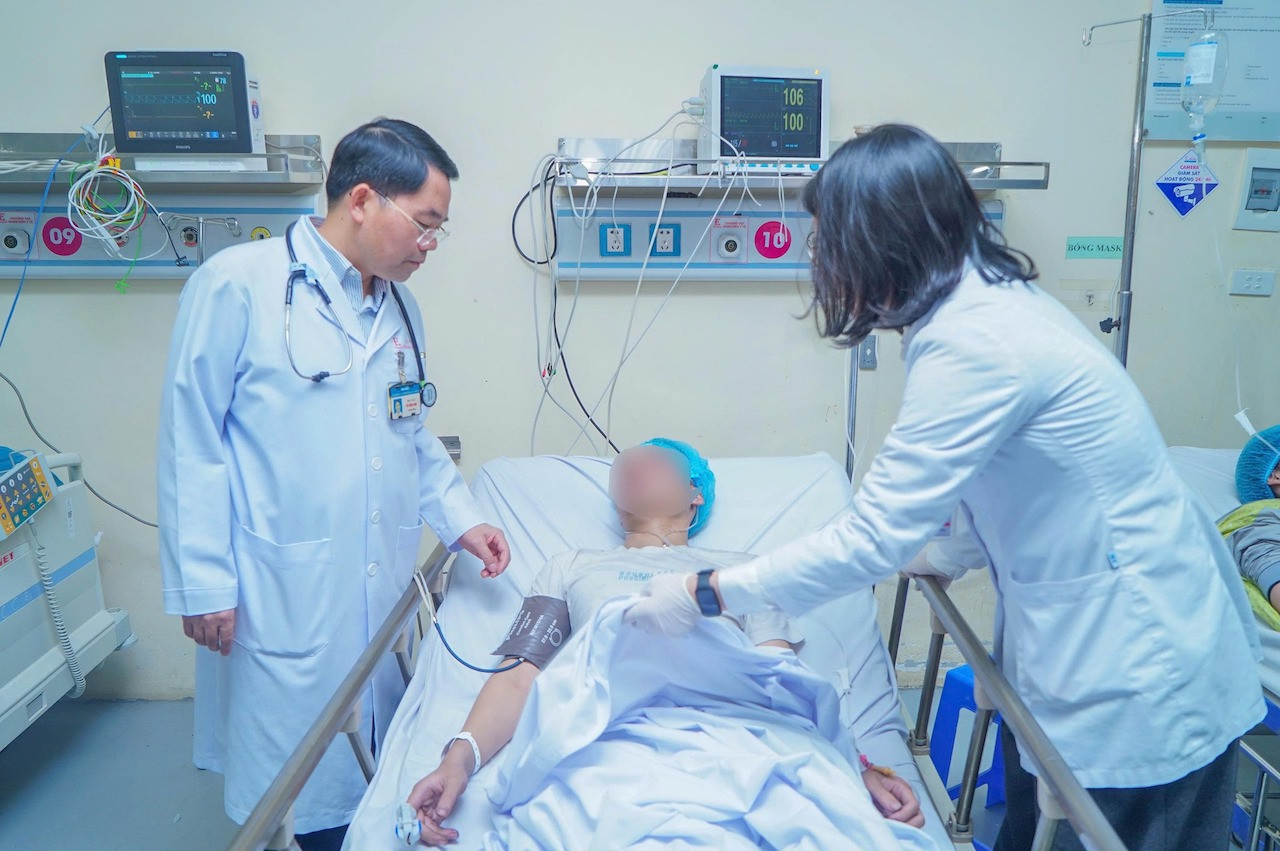
Prior to that, on the night of January 11, the Emergency Department of Hospital E received a critical case due to complications after liposuction at a private aesthetic establishment. The patient was hospitalized with bruising, widespread hematoma across the entire abdominal area, and heavy and uncontrolled bleeding at the intervention sites. The patient suffered from dizziness, lightheadedness, nausea, and signs of acute blood loss.
Before being taken to the hospital, the woman had abdominal liposuction combined with face fat grafting and buttock fat grafting at a private facility, with the intervention time lasting up to 7-8 hours. After the surgery, the patient fell into a state of shock, continuous bleeding, and was quickly taken for emergency treatment in a life-threatening condition.
Dr. Tong Hai, Deputy Director of the Center for Plastic and Aesthetic Surgery, National Institute of Burns, said that liposuction is one of the aesthetic techniques with a high complication rate.
Statistics from 2019 to 2021 in the database of the American Association for Accreditation of Ambulatory Surgery Facilities (QUAD A) show that the liposuction complication rate is 0.4 percent (984/246,119 cases). Southeast Asia recorded the most complications with 431 cases, including 13 deaths out of a total of 21 reported deaths.
In Vietnam, there are no precise statistics on liposuction-related deaths for cosmetic purposes. However, experts say this technique carries higher risks than many other cosmetic surgeries.
"Liposuction requires the direct injection of a large amount of anesthetic into the fat tissue, long intervention time, and strong physical impact. Even with anesthesia or sedation, the risk of disorders and complications is still very high," Dr. Hai said.
Risk of death
According to Dr Tong Hai, his hospital has treated many complication cases transferred from private aesthetic clinics. Common local complications include swelling, bruising, fluid accumulation, hematomas, abscesses, infections, and skin necrosis at liposuction sites.
More dangerous are complications such as blood loss, hypothermia, deep vein thrombosis, pulmonary fat embolism, organ perforation, acute infections, sepsis, acute pulmonary edema, local anesthetic toxicity, or anaphylactic shock. There are also aesthetic complications such as uneven or lumpy skin, asymmetry, sagging, hyperpigmentation, and poor scarring.
Plastic surgery specialists said that liposuction is an invasive surgery, and not a simple procedure as many advertisements claim. Performing it at an unqualified facility, without an anesthesia and resuscitation system, and without a specialist doctor performing the surgery will increase the risk of severe complications, even threatening life.
According to Dr. Nga from E Hospital, common complications after liposuction include hematoma and fluid collection due to the accumulation of blood and serous fluid in the fat cavity, causing inflammation and easily leading to infection if not treated promptly. More severely, patients may encounter particularly dangerous complications such as widespread infection, necrosis, pulmonary embolism, cerebral embolism, or acute respiratory failure.
"Because of those risks, the Ministry of Health stipulates that liposuction can only be performed at hospitals to control and promptly handle complications," Dr. Tong Hai said.
To prevent risks, the expert recommends that people research carefully before deciding on liposuction, only at hospitals with plastic surgery departments. Customers need to be examined and have full pre-operative tests to exclude contraindications while strictly following the doctor's instructions before and after surgery.
"Safe beauty cannot be traded for unverified advertisements," Hai warned.
Vo Thu
.svg)
