 Vietnamnet.vn

 Podcast



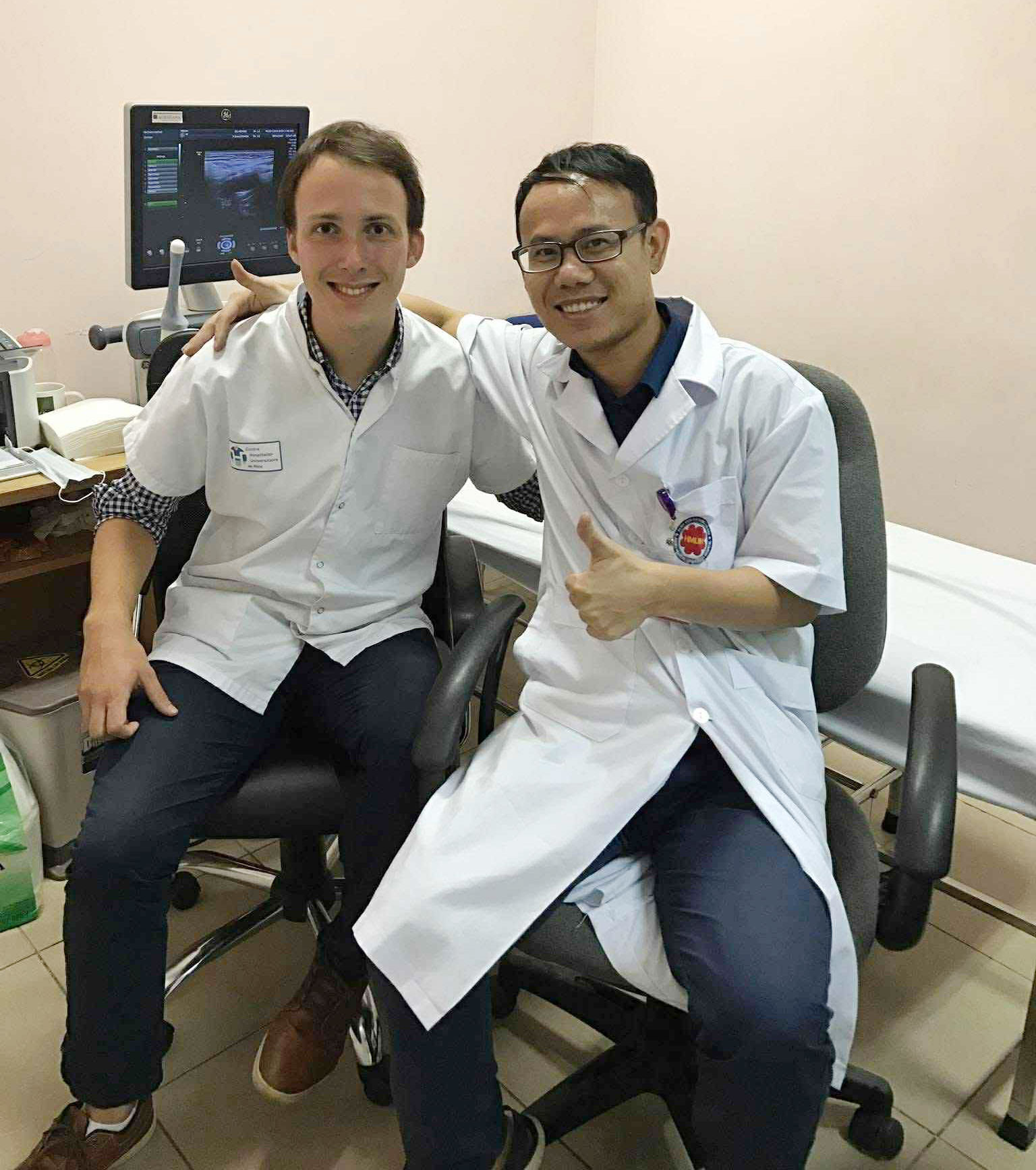
Hoang, currently working at Fribourg Hospital in Switzerland, was a resident student doctor in 2013‑2016, majoring in Diagnostic Imaging (class 38) at Hanoi Medical University.
Twelve years ago, like other medical students, he sat for the entrance exam and was admitted to the resident doctor training program. The three years of residency was not only a period of learning but also a path full of pressure where he was tempered to mature.
Hospital life
During the three years of residency, Hoang’s life was almost entirely tied to the hospital. He practised mainly at Viet Duc Friendship Hospital (2.5 years) and Bach Mai Hospital (six months).
Each day began at 6.30 am at the hospital and usually ended after 10 pm, when he returned to a dormitory right above the emergency department of Viet Duc. On weekends, resident doctors like him continued emergency‑shifts at the Emergency Department, always ready to take part in urgent cases.
Hoang said the residency program is a journey full of challenges. In theory, young doctors must absorb a vast amount of knowledge, from general medicine to deep specialties of Diagnostic Imaging, a broad field covering all organs“from head to toe.”
Techniques like X‑ray, ultrasound, computed tomography (CT), magnetic resonance imaging (MRI), biopsy, and interventions (guided by ultrasound, CT, MRI, or X‑ray) are taught from basic to advanced levels and are used for pain reduction, cancer treatment, and even aesthetics.
Resident doctors also have to pass multiple theoretical and practical exams, including specialties like respiratory, digestive, urology, neurology, musculoskeletal, pediatrics, and gynecology. The peak is the graduation thesis requiring serious investment in both knowledge and skill.
Dr Hoang revealed that much of his success came from devoted teachers. He especially remembers a teacher with “harsh words, kind heart,” who was always strict but helped him grow significantly.
“Sometimes the teacher made me feel terrified, but that rigor shaped me into what I am today,” he recalled.
Besides teachers, senior resident cohorts, who were were also a strong support, were always willing to guide and share experiences, even help with small daily matters.
“Throughout those three years at Viet Duc and Bach Mai, I was nurtured both literally and figuratively by my seniors. During each shift, they brought homemade food and paid for meals for the whole team,” he recalled.
“I once promised to return and support younger residents, but now, living in Switzerland, I no longer have the chance to fulfill that promise,” the doctor said.
Pressure multiplies every year
Each residency year brought different challenges. In the first year, young doctors had to quickly adapt to the hospital environment, learning and practicing under pressure from senior colleagues.
In the second year, the pressure doubled as they had to guide first-year residents, while continuing to learn from third-year seniors, and get acquainted with complex techniques like vascular interventions. Hoang once fainted in the intervention room due to exhaustion and needed emergency infusion on the spot.
The third year was the most intense time. Besides teaching younger residents, they had to complete their thesis, refine their skills, choose a subspecialty, and start looking for job opportunities after graduation.
Youthful memories
Despite the pressure, the three years of residency were filled with memorable moments for young doctors. Post-work gatherings were opportunities to bond. “Carrying each other up the stairs, dragging one another on the street, or even setting up IV drips for each other after parties are unforgettable images,” Hoang recalled with a smile.
Those moments became a vibrant part of his and his peers’ youth. During those three years, he only managed to visit home during Tet for 4-5 days. Almost all his time and effort were devoted to the hospital.
Living and working in Switzerland, Hoang values his residency years in Vietnam. It was a formative period, when he learned how to face pressure, refine his skills, and internalize his sense of responsibility as a doctor.
“Wherever they are, resident doctors are always passionate, dedicated and talented. All for the highest goal of the medical field: heal the sick, save lives,” Dr Hoang told VietNamNet.
Phuong Thuy
.svg)
