 Vietnamnet.vn

 Podcast



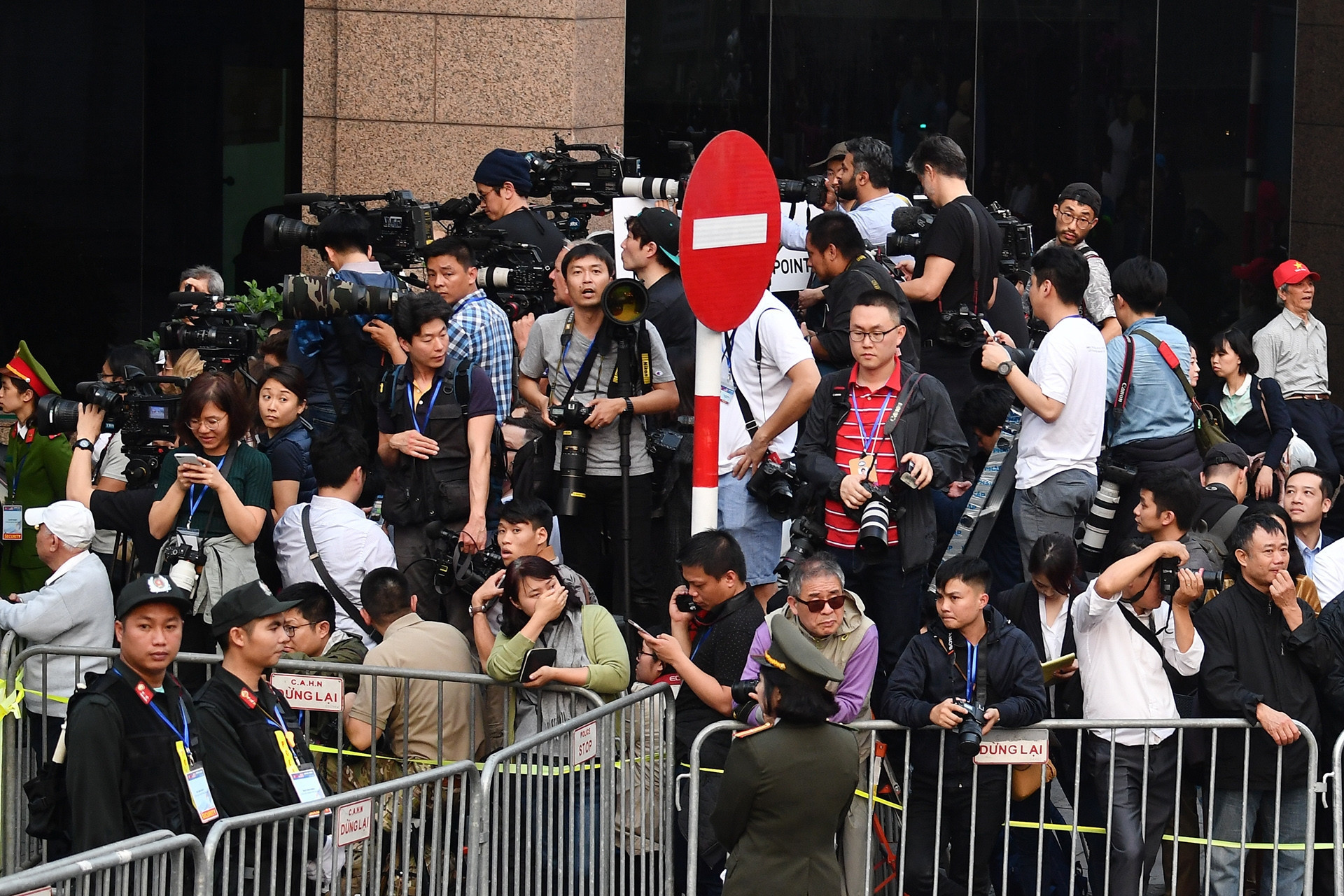
Since Vietnam officially joined the World Trade Organization in 2006, the journalism sector has undergone unprecedented expansion.
According to the Ministry of Information and Communications, as of November 30, 2019, the entire nation had 850 press agencies, comprising 179 newspaper entities, 648 magazines, and 23 independent electronic press units; along with 72 entities licensed for radio and television broadcasting operations, including two national stations, 64 local stations, and five television channels. The entire sector boasted more than 41,000 personnel, within which 20,407 individuals were granted journalist cards.
Reform
The current wave of journalism agency restructuring, in parallel with the streamlining process across ministries, sectors, and localities, carries a far grander scale and impact than the 2019 Press Master Plan. Hanoi and HCMC, the two largest cities, are left with only one local press, radio, and television agency for each, like other provinces and cities.
According to the Ministry of Culture, Sports and Tourism, following six years of implementing the Press Master Plan tied to the deployment of Resolution 18 on organizational apparatus restructuring, the journalism system has undergone its deepest restructuring since Doi Moi (renovation). Hundreds of press agencies have been merged, transformed in model, or had operations terminated. And journalism units under association setups have vanished.
By the end of 2025, the nation retained 733 press agencies, a reduction of 117 units compared to 2019. The sharpest change was in the newspaper, radio, and television segment: the number of newspapers shrank from 179 down to 98, while radio and television stations plus equivalent units plummeted from 72 to 38. The volume of magazines dropped marginally, moving from 648 down to 597.
Following this structural changes, how will the remaining press agencies survive and thrive in a media landscape being reshaped rapidly by social networks and AI?
Yesterday, this week, or last week, how many times did you actively navigate to a newspaper's website to read the news? Or has the vast majority of information reached you via social networks, digital platforms, and more recently, AI?
It would be unjust to solely cast blame on social networks or AI. Across multiple years, a myriad of newspapers and magazines chased identical content, reporting on the same event using the exact same approach. Meanwhile, multiple issues that citizens truly cared about failed to appear, or appeared with insufficient depth on the pages.
From a certain perspective, the current predicament of journalism is not merely a story of journalism business models. It serves as a reminder for journalism to look inward at itself: Have we truly excelled in the role, function, and mission that society expects of us?
A fresh and distinct vision
What commands attention is that following a phase centered on streamlining focal nodes, the journalism development strategy is steering toward a distinct objective: constructing press agencies massive and powerful enough to compete in the digital media landscape.
Under the Strategy for the Development and Management of the Press System until 2030, with a Vision to 2045, Vietnam sets a target to develop eight flagship multimedia press agencies, progressing toward the formation of national flagship journalism-media conglomerates.
The organizational model will also continue to be standardized, ensuring each ministry and sector has one newspaper entity and one magazine; and each locality maintains one press, radio, and television agency alongside one arts and culture magazine.
If deployed to its full extent, the Journalism-Media Complex model could forge the grandest transformation for Vietnamese journalism since the 2019 Press Master Plan.
Notably, lawmakers did not opt for the path of journalism privatization or corporatization. The principle that journalism cannot be privately owned remains intact. However, multiple corporate operational tools are step-by-step being integrated into journalism activities to amplify autonomy, adapt to the digital landscape, and compete better against global tech platforms.
In other words, if the journalism reform in recent years primarily targeted a reduction in the volume of press agencies, the upcoming reform will likely focus on a far tougher equation: forging press agencies large enough, sturdy enough, and packed with sufficient resources to survive the AI era.
Journalism is confronting its grandest challenge in multiple decades from social networks, digital platforms, and artificial intelligence. However, journalism will not vanish. Journalism is a mirror reflecting society that no AI can substitute.
Tu Giang
.svg)
