 Vietnamnet.vn

 Podcast



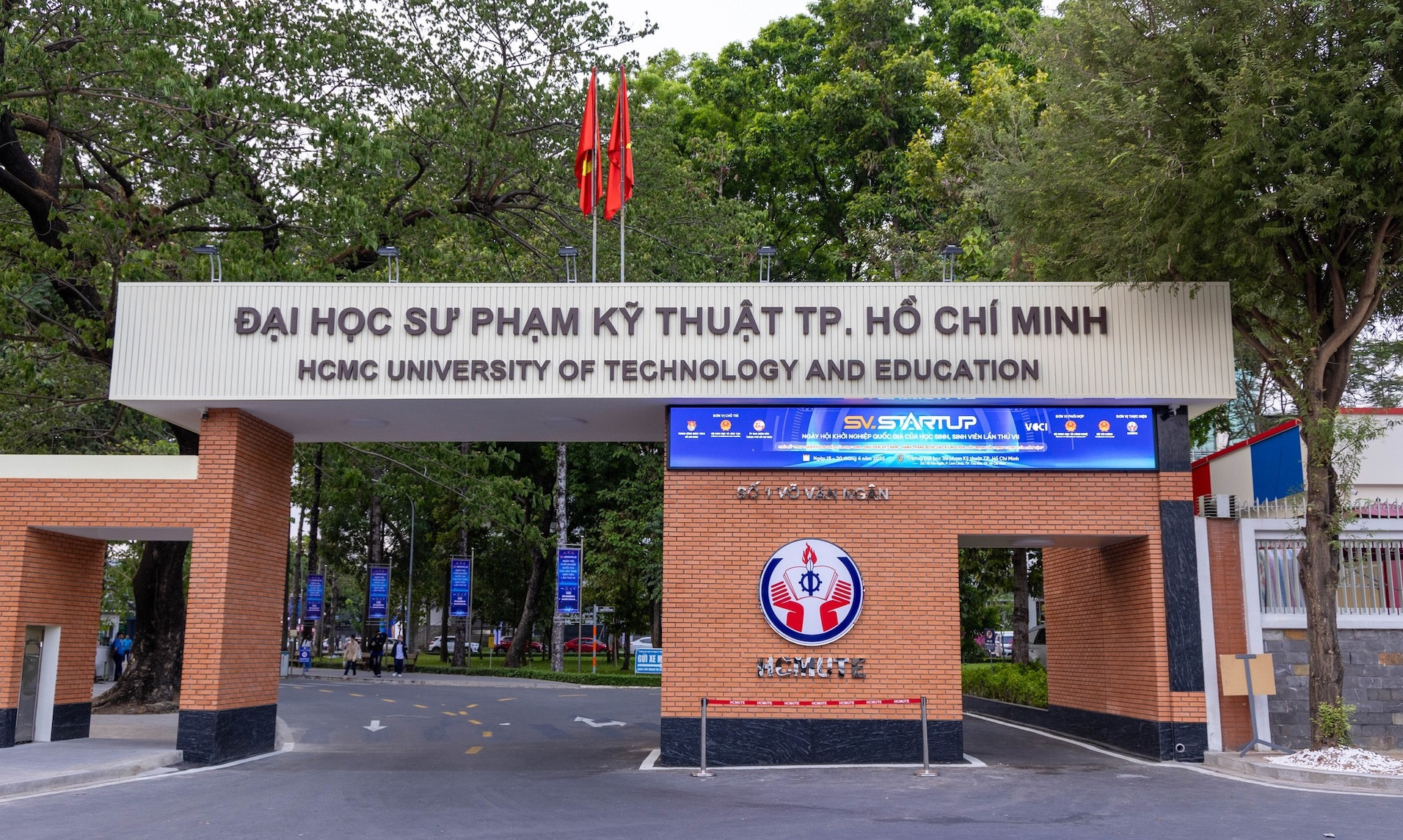
Among HCMC's large-scale universities, HCMC University of Technology and Education stands out not only as one of Vietnam's 14 universities with revenue exceeding VND1 trillion, a top engineering training institution in the South, but also for its very low on-time graduation rate.
According to the school's public 2025 report, in 2024, the school got a total revenue of VND1,120 billion, including VND976 billion in tuition. The school currently has over 30,000 students and recruits about 8,000 new students annually. In 2022, the graduation rate was 66.95 percent, but only 24.54 percent graduated on time, equivalent to one-quarter of the incoming cohort.
In 2023, the graduation rate reached 72.96 percent, but on-time graduation was only 31.56 percent. The percentage of students employed in their field was 62 percent.
In 2024, the graduation rate dropped to 60.45 percent, with on-time graduation at 41.14 percent.
Thus, on average, from 2022 to 2024, only over 30 percent of students graduated on time, meaning about 3 out of 10 students complete on schedule; the rest must extend their studies or drop out.
This issue is not isolated to HCMC University of Technology and Education but occurs at many other HCMC universities.
HCMC University of Industry currently has about 33,000 students and recruits nearly 10,000 new spots each year. In 2023, the on-time graduation rate was 46.17 percent. In 2024, it fell to 40 percent, while the overall graduation rate was only 60.81 percent.
Most schools achieve only 30 to 50 percent on-time graduation. A rare exception is HCMC University of Economics, with nearly three-quarters of students graduating on schedule.
Alongside low on-time graduation, dropout rates at many schools are rising rapidly, especially at HCMC University of Technology and Education. There, the dropout rate was just 0.091 percent in 2023 but surged to 24.45 percent in 2024, with first-year dropouts alone at 2.13 percent.
Standards
Nguyen Trung Nhan, PhD, head of training at HCMC University of Industry, noted that in business-related faculties, 40-50 percent of students might graduate on time, but in engineering and technology majors, even 40 percent is difficult, with some majors at only 20 to 30 percent.
“The university cannot allow students to graduate if they haven’t met academic standards,” he said.
Extending the study period increases education costs and delays students’ entry into the job market.
Pham Thai Son, director of admissions at HCMC University of Food Industry, stressed that universities must not sacrifice quality for quantity. “High-quality training is what attracts students. To graduate on time, students need a clear plan: what courses to take, which semester, where to intern, and how to gain experience. If they fail a course, they need to schedule a retake, even during summer.
“Without a plan, failing one subject can delay the entire program,” he explained.
Vicious cycle
Do Van Dung, PhD, former rector of HCMC University of Technology and Education, warned that the inability of students to graduate on time is forming a vicious cycle that weakens the foundation of higher education. Rising dropout rates and prolonged studies affect admission targets and the quality of human resources.
According to the Ministry of Education and Training’s Circular 01/2024, the annual dropout rate should not exceed 10 percent (15 percent for first-year students). But the reality is harsher: in 2024, many HCMC universities had on-time graduation rates as low as 41.14 percent. The average in 2022-2024 was just over 30 percent. i.e only 3 out of 10 students graduated on schedule, while the rest dropped out or extended their studies.
The number of students who gained admission but did not enroll has also increased. In 2025, more than 147,000 admitted students did not enroll (19.1 percent), up from 122,000 (18.13 percent) in 2024. They might choose the wrong major (around 30 percent), have financial pressure due to high tuition fees, and the training programs were too difficult for students' initial capabilities.
According to Do Van Dung, for sustainable quality, programs cannot be lightened or assessments loosened. First-year surveys need to be conducted to adjust curricula, with personalized support. At entry, eliminating transcript-based admission is necessary to select students with true quality.
For students, the things that need to be done include early career counseling, and encouragement to practice soft skills. At ministry level, tighter quota oversight via software.
"This issue won't resolve overnight, but synchronized action from ministry to schools and students can reverse the trend," Dung emphasized.
Thuy Nga
.svg)
