 Vietnamnet.vn

 Podcast



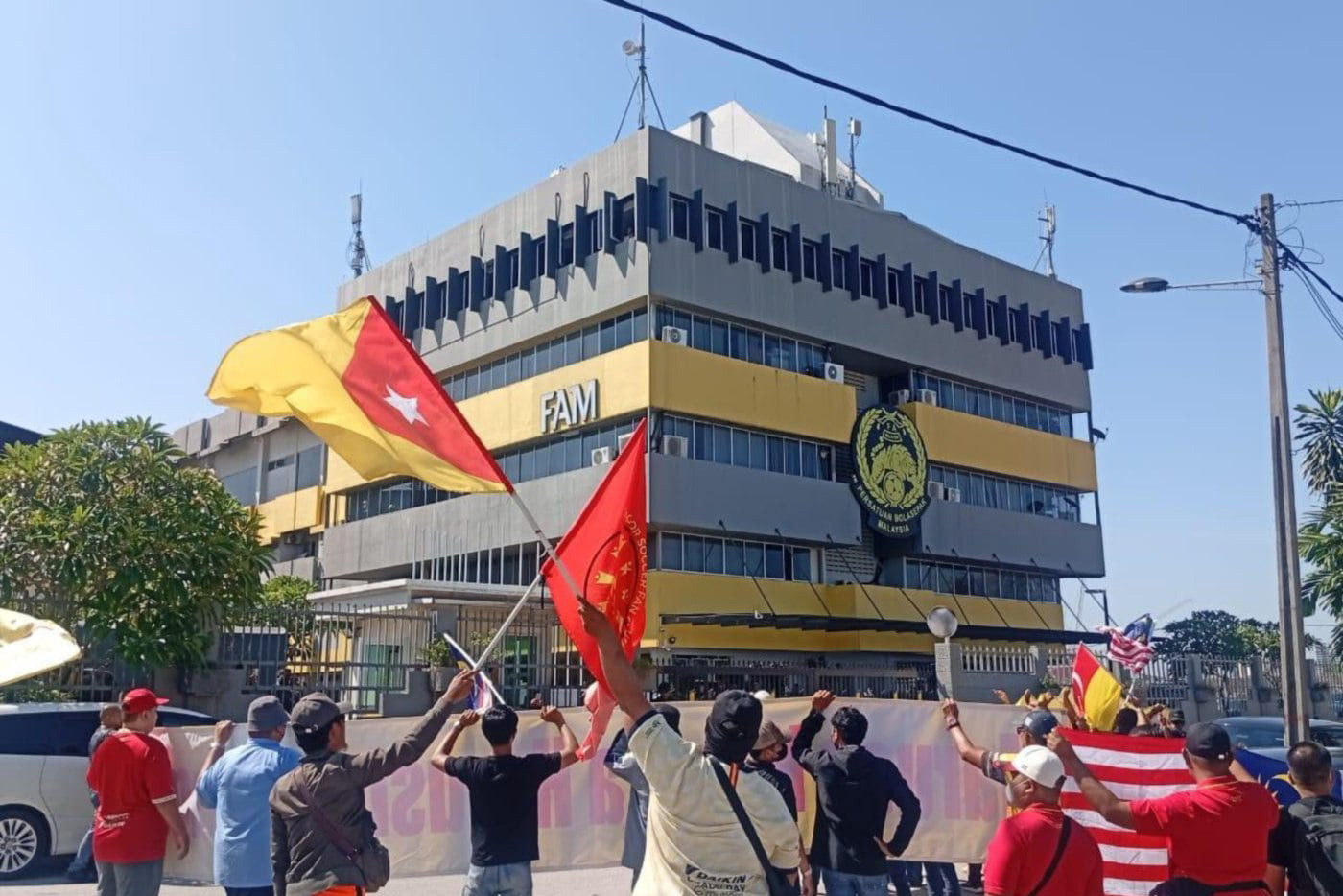
Malaysia’s football is facing mounting consequences over allegations of naturalization fraud, yet instead of addressing the root problem, attention has increasingly shifted toward speculation about who reported the Football Association of Malaysia (FAM) to FIFA.
A familiar Malaysian proverb - “no matter how agile a squirrel is, it will eventually fall to the ground” - seems to reflect the current situation, as the controversy surrounding falsified player documents has evolved into a broader crisis of trust.
Public pressure grows for transparency
In recent days, fans have gathered outside FAM headquarters, demanding transparency and clear answers regarding the alleged irregularities in player documentation.
Malaysian media outlets have also raised questions about verification processes, governance responsibilities and how such serious violations could have persisted undetected for so long.
However, instead of focusing on these core issues, parts of the football community have turned to speculation, seeking to identify an external “culprit”.
Initial claims pointed toward Indonesia, suggesting that the neighboring country had filed a complaint with FIFA. When that narrative lost traction, attention shifted again, with insinuations that the Vietnam Football Federation might have been behind the report.
Indonesia’s response highlighted the lack of basis for such claims. Indonesian Football Association chairman Erick Thohir addressed the issue directly, stating: “Why would we interfere in another country’s development when we need each other?”
His remarks underscored a development-focused approach, emphasizing the need to improve domestic football rather than scrutinize rivals. As he noted, without improvement, Indonesia would continue to struggle against stronger teams from Europe and South America.
The core issue lies in rule violations
In reality, the question of who reported Malaysia has been amplified beyond its significance.
Within the structure of global football governance, organizations such as FIFA and the Asian Football Confederation (AFC) do not rely solely on complaints from individual associations. They operate independent monitoring, investigation and verification mechanisms.
When a case reaches a conclusion and sanctions are imposed, it indicates that sufficient evidence has been established.
The central issue, therefore, is not who filed the complaint, but the nature of the violation itself. Falsifying player documentation to meet eligibility requirements is among the most serious breaches under FIFA regulations.
Such actions undermine not only match fairness but also the integrity of the sport as a whole. Once violations are confirmed, debates over who discovered or reported them become secondary.
Attempts to divert attention outward are, in essence, akin to “trying to cover an elephant with a sieve” - another Malaysian proverb suggesting that the obvious cannot be concealed.
Accountability over deflection
Fans have not taken to the streets to question who filed the complaint, but to demand clarity about what went wrong within their own system.
Similarly, the media is not seeking answers to fuel regional disputes, but to safeguard transparency and the credibility of Malaysian football.
Yet within FAM, there remains a lingering hope among some that the issue might quietly fade.
The lesson, however, is clear. In modern football, where data, documentation and procedures are subject to constant scrutiny, misconduct is increasingly difficult to conceal.
Evasion may work temporarily, but it cannot outlast the truth.
And when the “squirrel” has fallen, the real question is not who witnessed the fall first, but how it chooses to stand up again.
Ngoc Huy
.svg)
