 Vietnamnet.vn

 Podcast


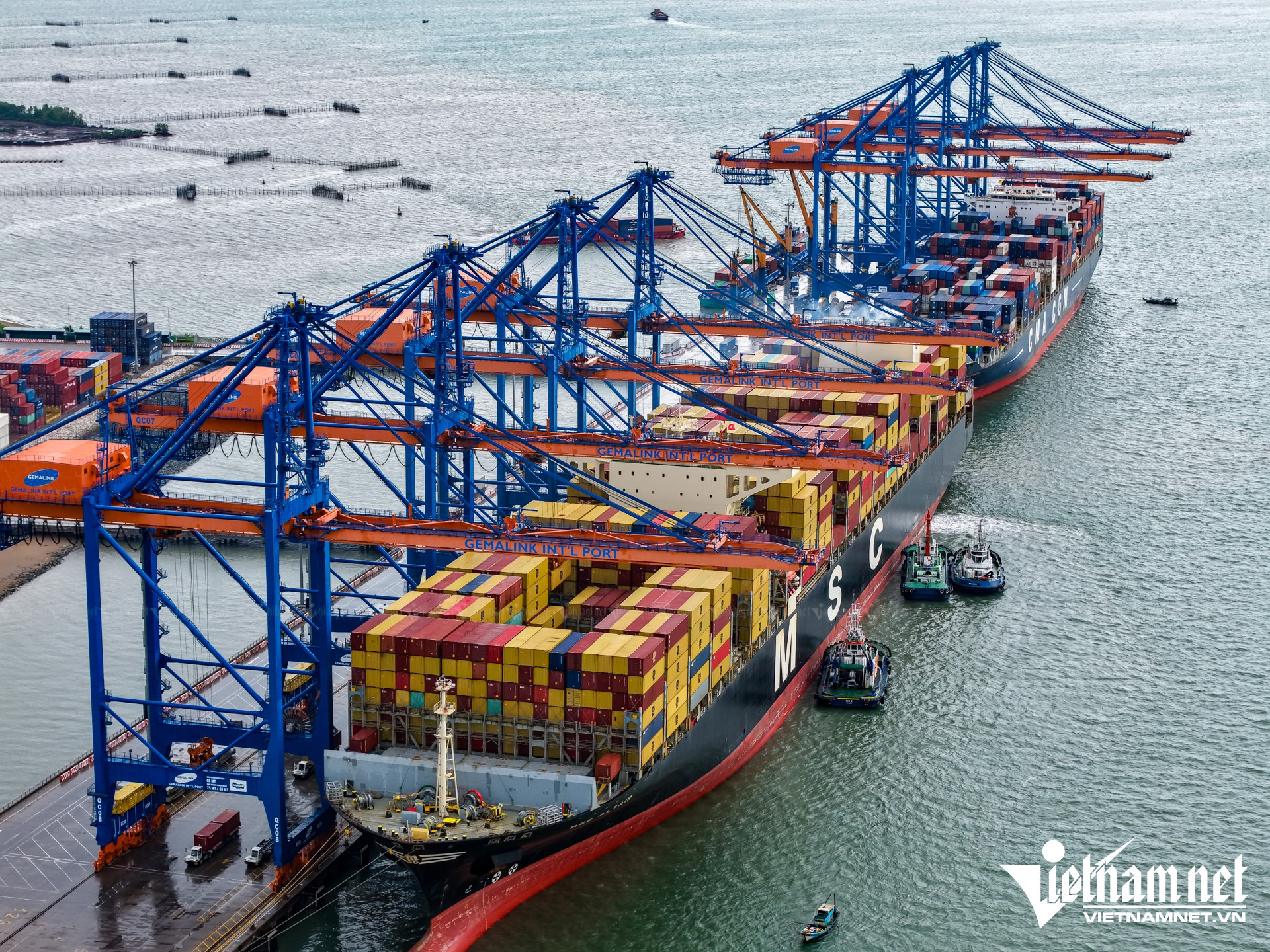
By leveraging the advantages of the Cai Mep-Thi Vai deep-water port complex and combining logistics, clean industry and international trade, HCMC can develop a new growth engine with a marine economic-urban area for the former Ba Ria - Vung Tau area.
HCMC's master plan for 2025-2050, with a 100-year vision, calls for the city to develop into a megacity comprising five growth poles, five satellite centers, five strategic connectivity systems and 10 development management zones.
The southern area is designated for port development, free trade and energy. Satellite centers such as Long Hai - Ho Tram and Con Dao are also identified as important development areas.
This orientation would open up opportunities to capitalize on the marine economy, and strengthen links between seaports, urban areas, industry and services.
International trade
Dr. Tran Quang Thang, director of the HCMC Institute of Economics and Management, said the former Ba Ria - Vung Tau area has many advantages for developing into a major marine economic hub for the country, particularly in seaports, logistics, processing industries, international trade and tourism.
The area's outstanding advantage is the Cai Mep-Thi Vai deep-water port complex, one of Vietnam's major seaport hubs, with the capacity to connect directly to international shipping routes.
Thang said this can provide a foundation for high-value-added services such as maritime transport, marine insurance, finance, warehousing and goods distribution.
However, to capitalize on these advantages, the city needs long-term planning and stronger connectivity between seaports and urban, industrial, commercial and service areas.
Rather than serving solely as a cargo transshipment hub, the area should aim to develop a marine economic ecosystem, with logistics and processing and manufacturing industries as key pillars.
Attracting high-tech factories, clean industries, distribution centers and international logistics companies would help create an integrated supply chain covering production, warehousing, transportation and exports.
Besides seaports and industry, tourism is another sector with significant potential. With its long coastline, natural landscapes and proximity to central HCMC, the area could develop resort tourism, marinas, convention centers and high-end entertainment services.
Combining tourism with trade, finance and maritime services would help diversify revenue sources, create jobs and enhance the competitiveness of the marine economy.
Another direction proposed by Thang is to develop an international trade center linked to the Cai Mep-Thi Vai port complex and the Cai Mep Ha Free Trade Zone.
The center could include international goods trading, trade fairs, exhibitions, logistics, and wholesale and services supporting foreign businesses.
Unlike conventional retail shopping centers, this model would focus on business-to-business (B2B) transactions, goods distribution, import-export services and cross-border trade.
Connected to seaports, bonded warehouses and the free trade zone, the center could become an important link in international supply chains.
Planning and infrastructure
To maximize the area's potential, Thang said planning needs a long-term vision that ensures connectivity between port, urban, industrial, commercial and tourism areas.
In particular, interregional transport infrastructure plays a crucial role. The Bien Hoa - Vung Tau Expressway, coastal roads, Ring Road 4, and connections to Long Thanh Airport and Cai Mep - Thi Vai port need to be developed in a coordinated manner to form a multimodal transport network and improve the movement of goods and passengers.
“If the area capitalizes on its port advantages, combines synchronized planning with appropriate investment attraction mechanisms, the former Ba Ria - Vung Tau area could expand its development space, attract large capital flows and establish an internationally competitive marine services ecosystem. This would provide additional growth momentum and gradually affirm its role as Vietnam's marine economic hub,” he said.
Marine urban model
Regarding land use, Thang proposed allocating 6,000ha across five main functional groups. Urban and residential land would account for around 25 percent, or 1,500ha; commercial, service and maritime finance areas would cover about 20 percent, or 1,200ha; and logistics, ports and clean industry would take up 25 percent, or 1,500ha.
Tourism, resort and marine entertainment areas would account for 15 percent, or 900ha, while the remaining 15 percent would be reserved for greenery, water bodies and ecological conservation.
This allocation is intended to balance urban development, the exploitation of marine economic advantages, and environmental protection. The commercial, service and maritime finance zone could become a hub for transactions, international conferences, insurance, banking and maritime transport support services.
Thang estimated that if implemented effectively, the marine economic urban area could attract around $20-30 billion in investment and create 150,000-250,000 jobs in logistics, clean industry, finance, tourism and trade.
Phuoc Sang

