 Vietnamnet.vn

 Podcast


On October 23, the management board of Phong Nha-Ke Bang National Park in Quang Tri province announced that experts had completed a survey of a massive sinkhole in the Cha Noi - Khe Gat area.
The survey found that the sinkhole has an oval-shaped opening measuring approximately 190 meters long and 140 meters wide.
Its interior gradually widens toward the bottom, reaching around 250 meters in length and 200 meters in width, with a depth of approximately 120 meters. This gives the formation a shape resembling an inverted bowl.
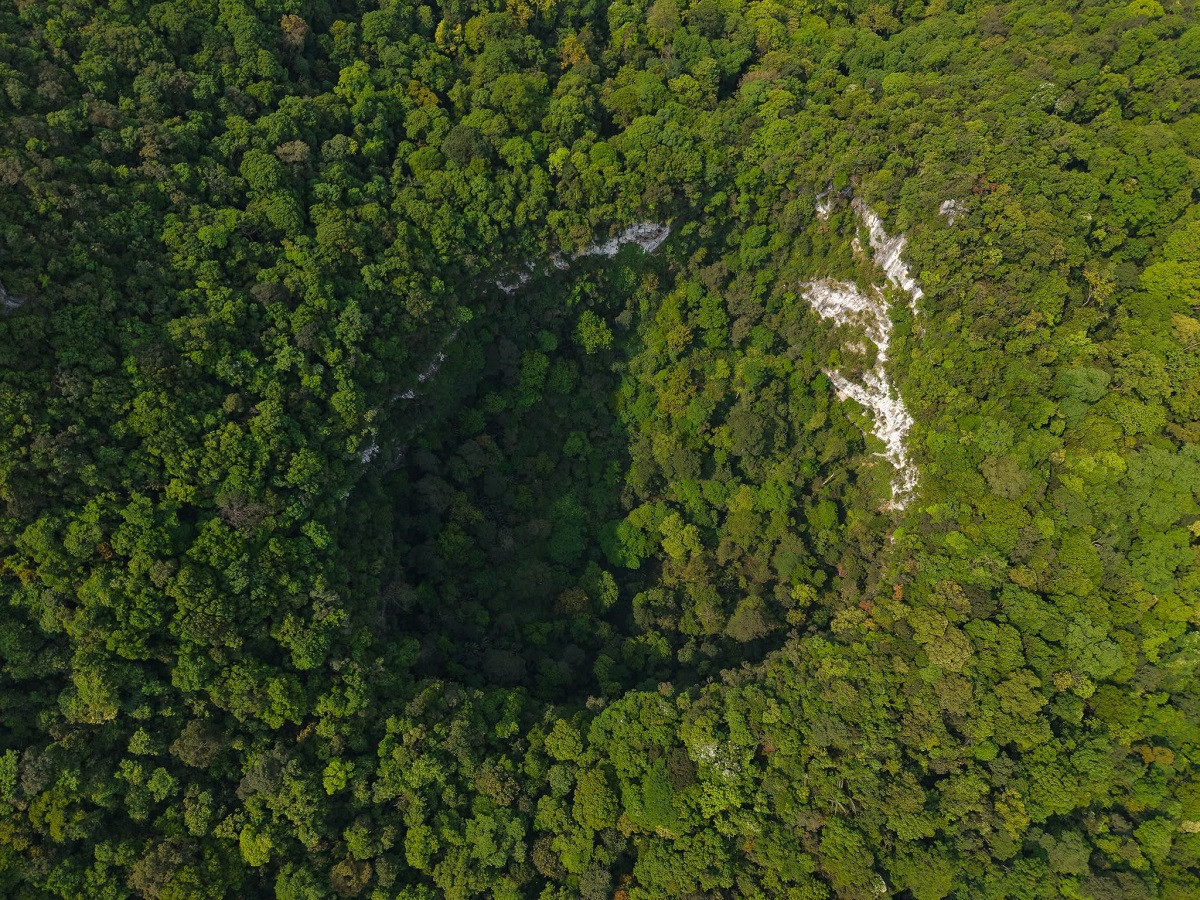
The massive sinkhole discovered in the Cha Noi - Khe Gat area of Phong Nha-Ke Bang National Park. Photo: Jungle Boss.
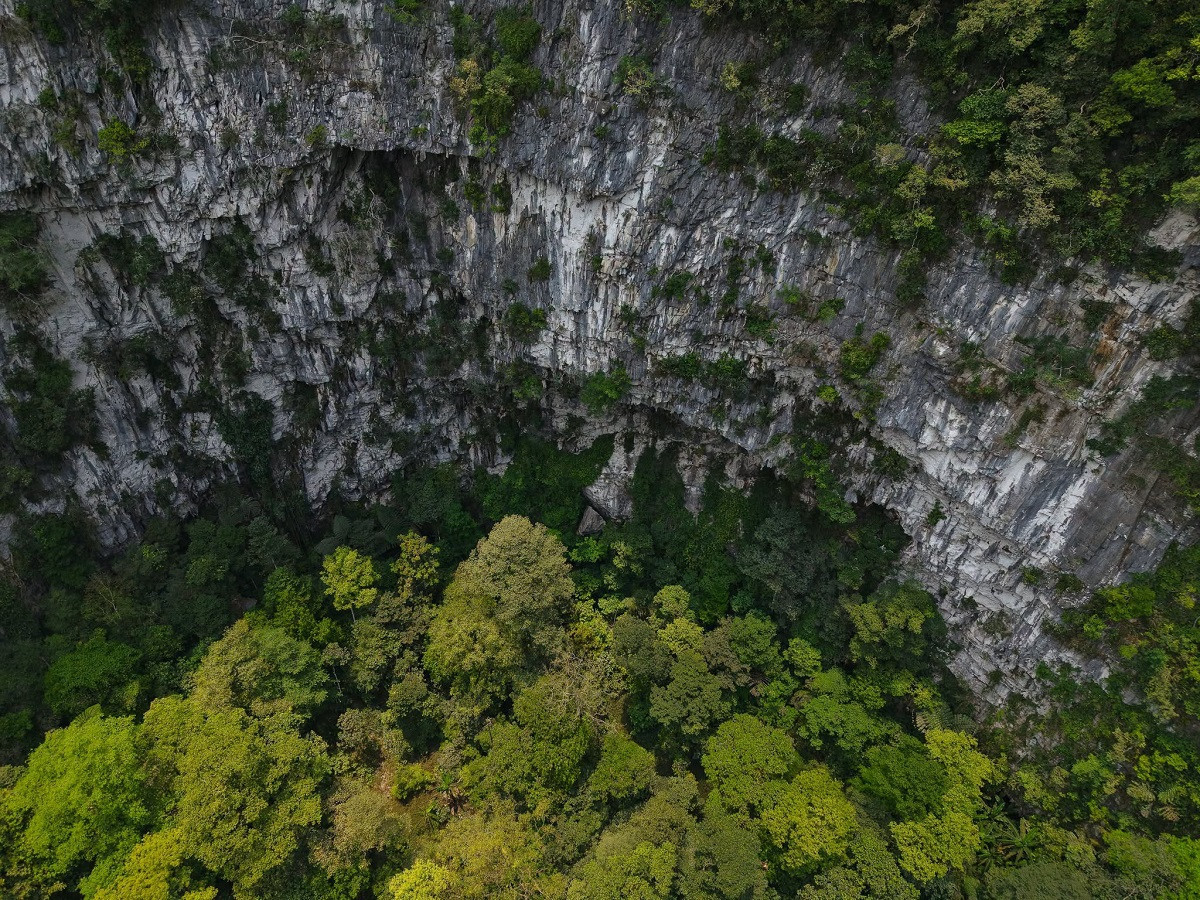
One of its most remarkable features is the thriving primary forest ecosystem inside the cavity, where numerous large, ancient trees continue to grow.
The dense canopy conceals much of the terrain below, making the sinkhole difficult to identify from above.
The first clue emerged when Kevin Ditamore, an experienced member of the National Speleological Society in the United States, noticed an unusual dark area among the limestone mountains while examining satellite imagery on Google Earth.
After three drone surveys, the research team successfully identified the sinkhole's location.
From July 23 to 29, 2025, a 24-member expedition undertook a journey described as lasting six days and five nights to reach and survey the site.
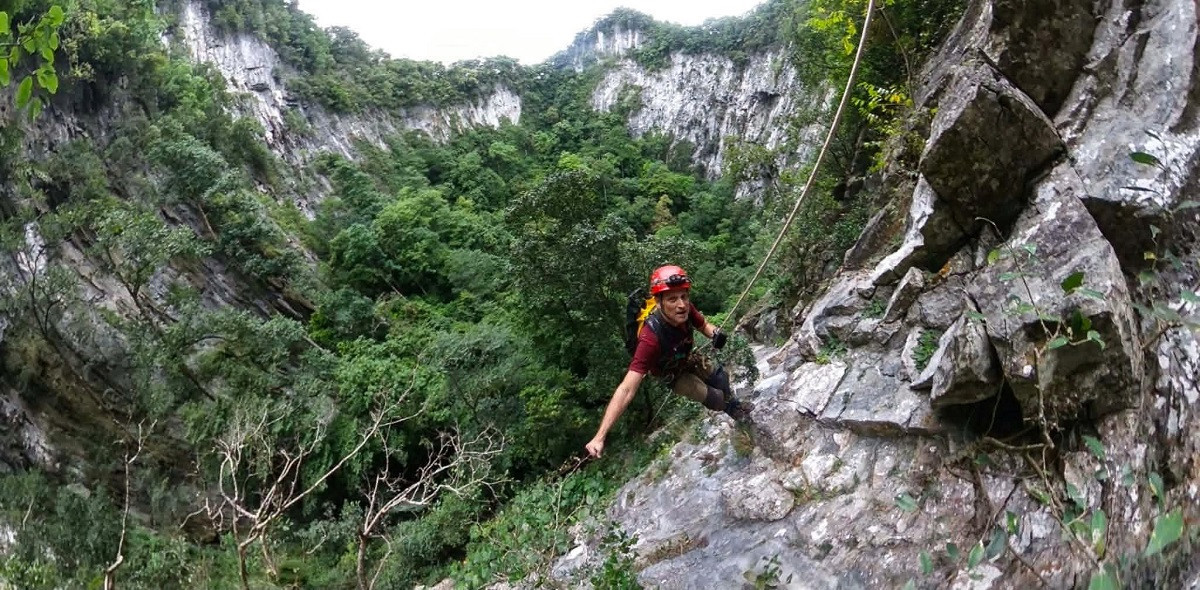
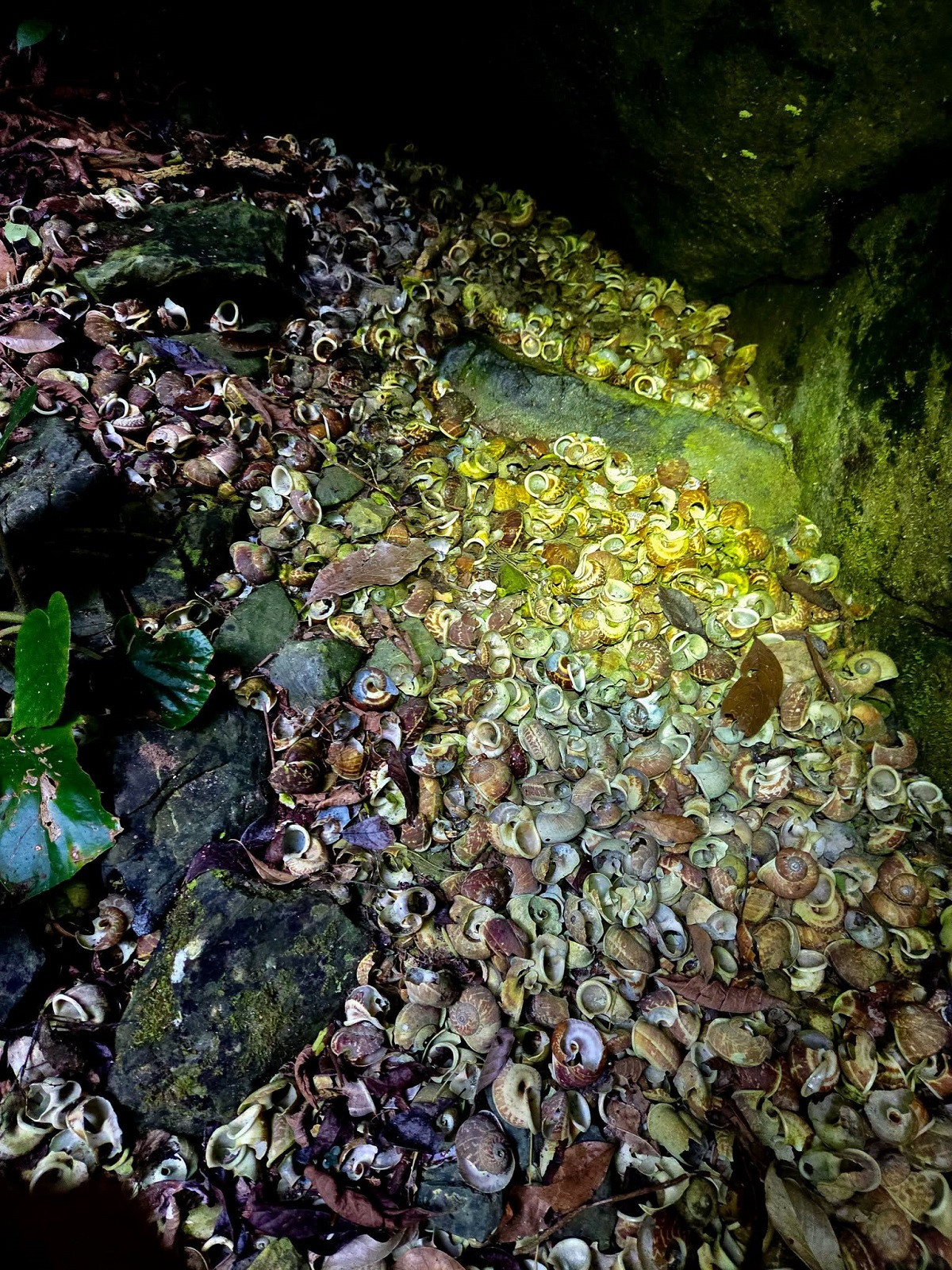
The team traveled more than 20 kilometers through dense forest, crossing sharp limestone mountain ridges while facing limited access to water.
At the site, expedition members used specialized climbing equipment and established safety rope systems to descend into the sinkhole, examine the terrain and document its geological characteristics.
The explorers discovered numerous collapsed limestone blocks, traces of stalactite formations on the rock walls, several monkey skeletons and skulls, and large quantities of snail shells scattered across the floor.
During the survey, they also heard monkeys calling, indicating the presence of wildlife in the surrounding environment.
At the center of the sinkhole floor, the limestone bedrock showed extensive signs of erosion, with hundreds of cracks and cavities.
Water drains through these openings into the underlying rock rather than gathering into a single large stream.
The expedition also searched for evidence of a connection between the sinkhole and an underground cave system.
Researchers discovered a fissure approximately five meters high and extending 12-15 meters into the rock, but detected no airflow through it.
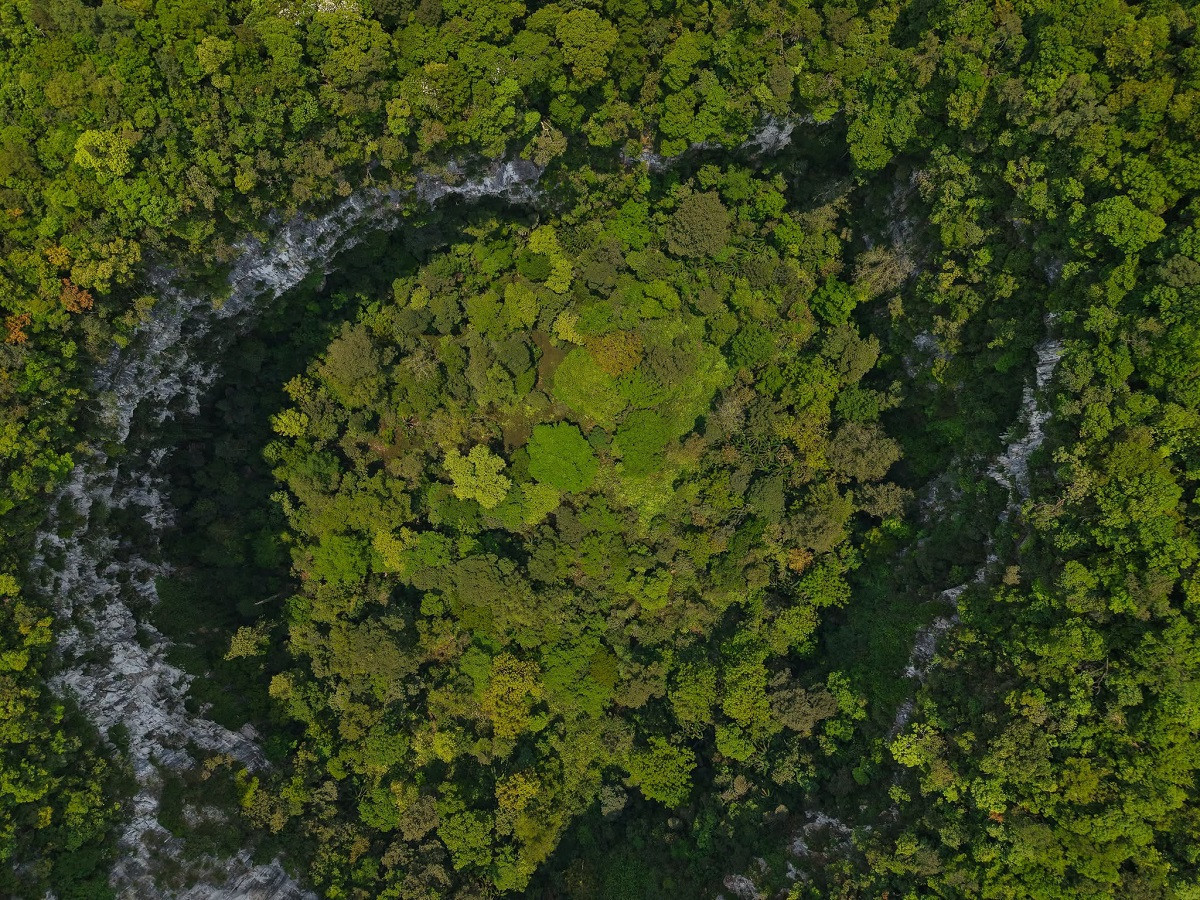
Lush vegetation and large trees thrive inside the sinkhole, forming a dense forest canopy. Photo: Jungle Boss.
Other locations showing signs of water movement near the base of the rock walls had been buried by collapsed soil and debris.
As a result, the team found no cave entrance or direct passage connecting the sinkhole to another underground cave system within the surveyed area.
The discovery provides additional geological, geomorphological and biodiversity data for Phong Nha-Ke Bang National Park.
The findings could support further research into the formation of karst landscapes, the movement of water through limestone formations and the development of natural ecosystems within isolated geological structures.
Experts also emphasized the importance of preserving the sinkhole's existing vegetation and natural environment as part of efforts to protect the area's natural heritage.
Hai Sam

