 Vietnamnet.vn

 Podcast



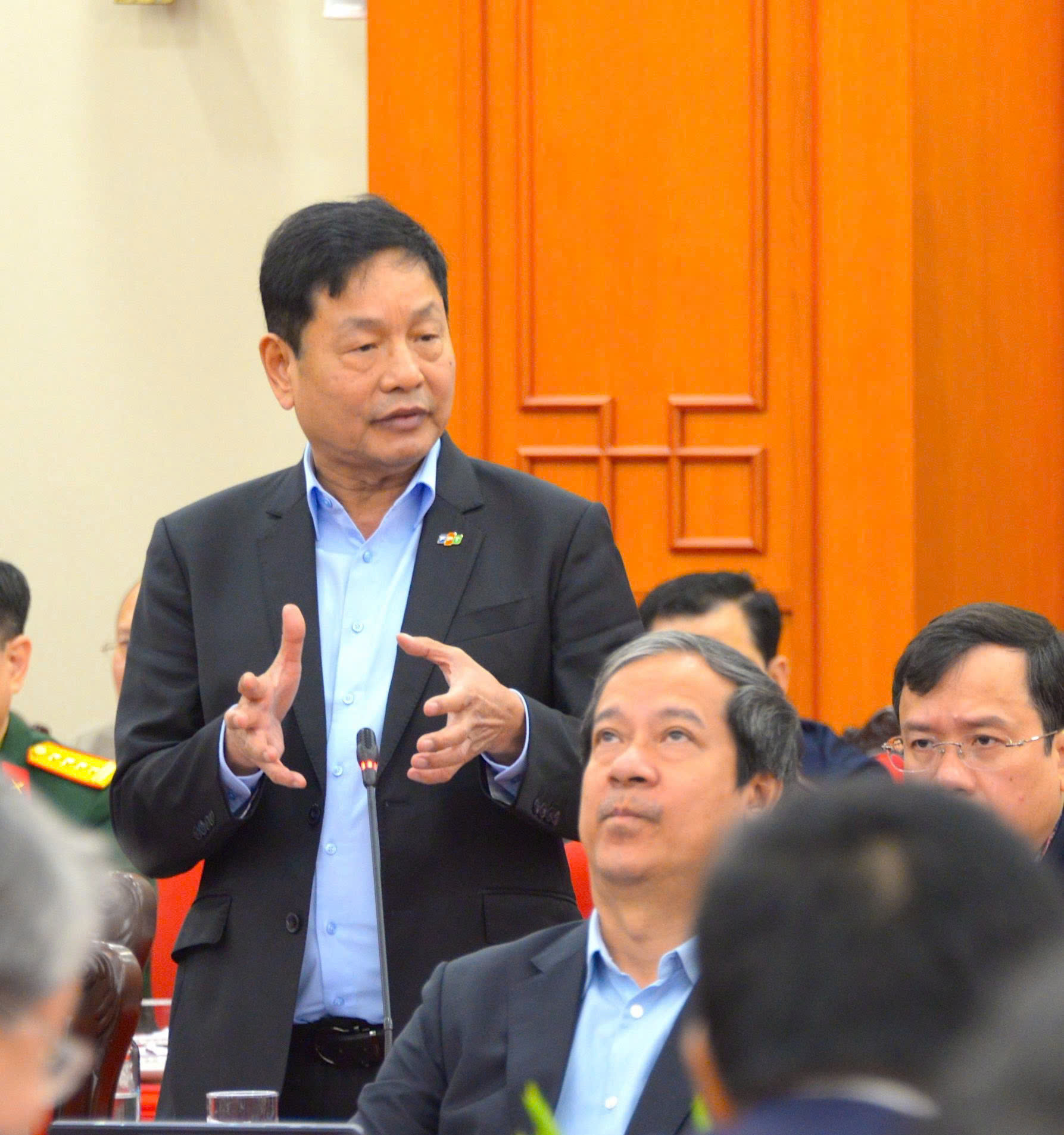
FPT President Truong Gia Binh has noted that the Politburo’s Resolution No57 has created strong consensus within the technology business community, opening up strategic space for enterprises to engage more deeply in the development of science, technology and innovation.
On December 25, the Central Steering Committee for the development of science, technology, innovation and digital transformation held a conference to review results in 2025 and outline key directions and tasks for 2026.
By the end of 2025, the online and end-to-end online public services provided at the central level had reached 53.3 percent and 31.36 percent, respectively, while the figures were 93.9 percent and 45 percent, respectively, at the local level.
The proportion of citizens and businesses using online public services has increased sharply, helping save an estimated VND4.1 trillion.
The National Public Service Portal was upgraded into a “digital one-stop shop” beginning on July 1, 2025, supporting the operation of the two-tier local government model.
Digital transformation of the political system has been accelerated, with many processes digitized and platforms for administration, document management and paperless meetings operating effectively.
National digital infrastructure continued to develop, with internet speed ranking among the world’s Top 20, and 5G coverage reaching nearly 59 percent of the population,
The National Data Center No1 was also established.
At the same time, science, technology and innovation have taken shape in a systematic manner, following the right direction and aligning with global development trends. The Prime Minister issued a list of 11 groups of strategic technologies and 35 strategic technology products.
Vietnam continues to hold the 44th position out of 139 countries regarding the Global Innovation Index; the startup and innovation ecosystem maintains its development momentum and strengthens international connectivity.
At this event, Truong Gia Binh, President of FPT, affirmed that Resolution No57 has created a consensus among the Vietnamese technology business community, while opening up strategic space for businesses to participate more deeply in the national cause of science, technology, innovation, and digital transformation.
Core technology: national strategic capability
According to Binh, amid complex global fluctuations, technology plays an increasingly pivotal role, not only for economic development but also directly linked to sovereignty, security, and national self-reliance.
In the spirit of Resolution No57-NQ/TW, FPT has made a strategic decision: shifting the focus from pure growth to long-term investment in core technologies, considering this the foundation for the sustainable development of enterprises and a practical contribution to the country.
Currently, FPT has about 85,000 employees and engineers operating in more than 30 countries. The corporation focuses on investing in strategic technology fields such as AI, cybersecurity, quantum technology, data, and digital infrastructure, step by step mastering high value-added technologies.
Binh said at the conference that FPT is transforming FPT University from a practical university model to a research and development university, promoting training associated with scientific research, where students learn alongside AI lecturers.
FPT University students are involved in technological research from their first year. Currently, the students publish about 270 scientific articles in prestigious international journals a year.
On December 3, FPT established the Quantum AI & Cyber Security Research Institute (QACI) and committed to investing $100 million with the goal of producing 100 PhDs by 2035; developing and fostering 2,000 technology experts; and publishing 500 articles, patents, and intellectual property items.
FPT with Au Lac AI Alliance has developed a Vietnamese large language model. FPT has its own ChatGPT with a scale of 70 billion parameters, trained on 112 billion tokens, currently having about 5 million regular users.
In the semiconductor field, "Make in Vietnam" chips designed and tested by FPT have been exported to Japan and South Korea.
Four proposals
Binh suggested four proposals: first, accelerate the development of technology platforms for digital government, positioning AI as a foundational technology. Second, form a national cybersecurity defense alliance, connecting “Make in Vietnam” security products. Third, call for state support for a “public–private co-creation” model, pilot mechanisms and breakthrough investment in emerging technology fields.
Finally, regarding railway infrastructure, Binh stressed that absorbing and mastering technologies for operation, control and system protection is vital. FPT has experience in mastering technology and operating large-scale systems, and wants to participate more deeply with ministries, agencies and localities in developing railway infrastructure, contributing to the country’s long-term development.
Du Lam
.svg)
