 Vietnamnet.vn

 Podcast



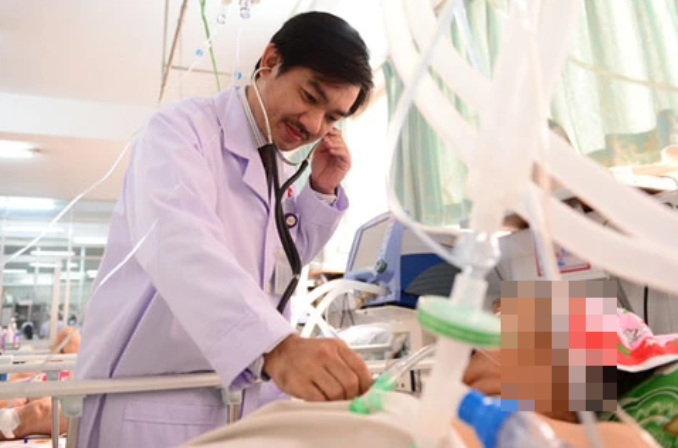
Stroke screening is an important medical need. However, taking advantage of public anxiety, many facilities advertise high-cost screening services with appealing claims such as 128-slice or 256-slice CT scans or MRI scans to detect stroke risk “from the earliest stage”.
The Ministry of Health records 200,000 new stroke cases annually with a mortality rate of up to 50 percent. Stroke can occur at any age but mainly affects people aged 55 and above. However, the rate among younger people is increasing by about 2 percent per year, with men having a risk four times higher than women.
Fearing stroke risk, many people seek screening services. These packages are widely advertised with modern diagnostic techniques such as brain MRI, CT scans, vascular ultrasound, electrocardiograms, ABI and TBI measurements, even fundus examinations and blood tests. These providers promote the ability to detect stroke risk early.
Searching for the keyword “stroke screening” on Google yields millions of results related to such packages. Private hospitals in Hanoi and HCMC offer packages ranging from a few million to several tens of millions of VND.
These packages are advertised as including advanced imaging and deep screening, with claims of detecting all risks early to prevent stroke. Some facilities even promote photon CT scans priced from VND16 million to VND45 million, claiming to detect vascular damage at the earliest stage with ultra-thin 0.2 mm slices. Packages are tailored to different groups and often come with promotional discounts.
Aggressive marketing
Associate Professor Nguyen Lan Hieu, director of Hanoi Medical University Hospital, said he frequently receives questions from patients and friends about how to detect stroke early. He emphasized that not all cases require advanced tests or expensive screening.
Some providers promote having “latest-generation” machines with “thousands of slices” or “ultra-high resolution”, leading people to believe that more slices mean more accurate diagnosis. However, he said such claims are exaggerated marketing.
Associate Professor Nguyen Hoai Nam, former senior lecturer at the University of Medicine and Pharmacy in HCMC, said stroke screening advertisements are being excessively inflated, exploiting public fear.
Anyone hearing about a seemingly healthy person suddenly dying may worry about their own stroke risk. Taking advantage of this, many overpriced screening packages are aggressively marketed, prompting people to spend large sums even when not truly necessary.
Nam said that those who should consider screening include people over 50, or from 40 if they have family history of stroke, smoke, drink heavily or have underlying conditions such as cardiovascular disease or high blood pressure.
However, screening does not necessarily require expensive, in-depth imaging packages, which may even cause unnecessary anxiety.
He cited a case of a 56-year-old businessman in HCMC who spent a large amount on a screening package, only to receive results showing he was healthy and at no risk. He then proudly shared this with others.
However, just a week later, he suffered a myocardial infarction and had to be hospitalized. Fortunately, he lived near a hospital and received timely treatment.
Stroke screening should be targeted at high-risk individuals, he said. Simpler methods such as blood pressure measurement, blood tests or vascular ultrasound can help detect risks early without costly packages.
Experts agree that while stroke screening is important, exploiting public anxiety and exaggerating high-cost services is unethical in healthcare. Such inflated advertising not only increases costs for patients but can cause unnecessary stress.
Commenting about the reported 200,000 stroke cases a year, Ta Ba Thang, Deputy Director of Military Hospital 103 (Hanoi), said at a seminar in early 2025 that the figure is outdated and does not fully reflect the current reality of strokes in Vietnam.
"Stroke emergency centers and departments are always overloaded. At People's Hospital 115 (HCMC), nearly 20,000 cases are admitted annually, while Military Hospital 103 sees 2,500 cases," Thang said.
Mai Duy Ton, director of the Stroke Center at Bach Mai Hospital (Hanoi), said that in the four years since its establishment, the unit has received an average of about 10,000 patients per year, with some months reaching 1,000 cases.
Vo Thu
.svg)
