 Vietnamnet.vn

 Podcast



According to the agency, since February 28, the US and Israel have launched large-scale airstrikes targeting Iran, marking a serious escalation in regional tensions. Within 24-48 hours of the strikes, the involved parties signaled preparations for a prolonged conflict scenario.
Military attacks and counterattacks have created significant instability, posing high risks to international transport, trade activities and global supply chains.
Forecasts suggest that prices of consumer goods, fuel and global oil may trend upward in the coming period, indirectly and multidimensionally affecting Vietnam’s production and import-export activities, particularly those linked to the Middle East.
In the logistics sector, rising fuel prices are pushing up maritime and air freight costs, directly impacting shipping routes to the Gulf region.
Several Middle Eastern countries have restricted or closed their airspace due to security concerns, forcing cargo flights to reroute. This has lengthened transit times and increased logistics costs.
Meanwhile, shipping through the Strait of Hormuz has nearly stalled following airstrikes on Iran by the US and Israel. Iran has also warned vessels of safety risks when passing through the area.
Amid these developments, many shipping lines are avoiding conflict zones or altering routes, leading to extended voyages and significantly higher fuel expenses.
The Import-Export Agency has urged export-import and logistics associations to closely monitor market developments and maintain regular communication with relevant state management bodies to promptly update their members.
On that basis, businesses are advised to proactively develop production plans, organize import-export operations and arrange transportation to avoid congestion and minimize negative impacts stemming from tensions between Israel, the US and Iran.
Such preparedness will enhance flexibility and resilience among Vietnamese enterprises in the face of volatile international business conditions, especially when unforeseen incidents arise.
The agency recommends that companies diversify sources of supply and seek alternative markets with similar demand to reduce reliance on Israel, Iran and the broader Middle East.
During contract negotiations and signing, businesses should pay particular attention to clauses related to logistics, transport, delivery and insurance to limit potential risks.
Transport contracts need to clearly define force majeure provisions, liability for compensation and mechanisms for cost sharing in case of incidents.
Companies are also advised to secure comprehensive insurance coverage for goods to proactively manage risks and minimize losses in importing markets.
Enterprises should analyze developments and coordinate information sharing with relevant ministries and agencies regarding trade data, geopolitical fluctuations and impacts on production, import-export and transport activities, as well as freight rates and surcharges. This will enable timely consensus on response measures for similar situations in the future.
In addition, businesses are encouraged to formulate contingency plans to adapt and minimize risks and losses in international trade and transport, while preparing rapid response strategies to protect supply chains.
They are also advised to maintain close communication with the Import-Export Agency, the Trade Promotion Agency, the Foreign Market Development Department and Vietnam’s trade offices abroad to seek new orders and promising markets, thereby identifying replacement options and maximizing emerging opportunities.
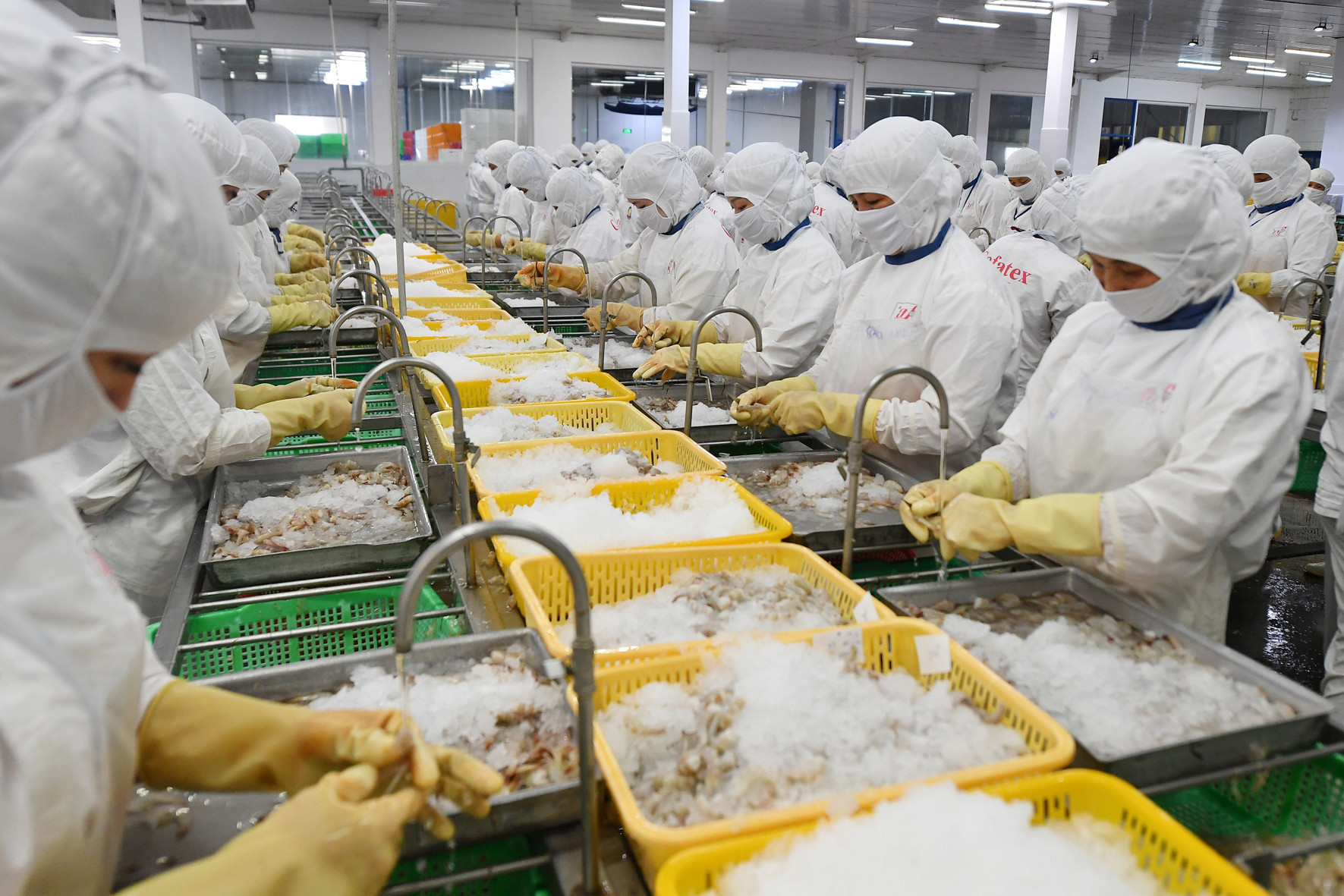
Seafood exports, a key strength worth nearly US$11.3 billion in 2025, may be significantly affected.
According to Le Hang, Deputy Secretary General of the Vietnam Association of Seafood Exporters and Producers, escalating conflict in the Middle East will certainly impact domestic seafood exporters.
The Middle East generates export turnover of approximately US$250-300 million annually for Vietnam. Therefore, if the conflict intensifies, shipments to the region could face disruption.
Fluctuating fuel prices are also increasing business costs. Shipping activities through the Strait of Hormuz risk congestion, forcing companies to reroute cargo via alternative pathways, resulting in additional time and logistics expenses.
In previous conflicts involving Israel, export activities experienced similar disruptions, but the current situation is considered more severe, potentially exerting considerable pressure on the seafood sector, Hang noted.
Tam An
.svg)
