 Vietnamnet.vn

 Podcast


Along Kham Thien Street in Hanoi, shops selling inexpensive milk tea, black tea and fruit tea have opened almost side by side.
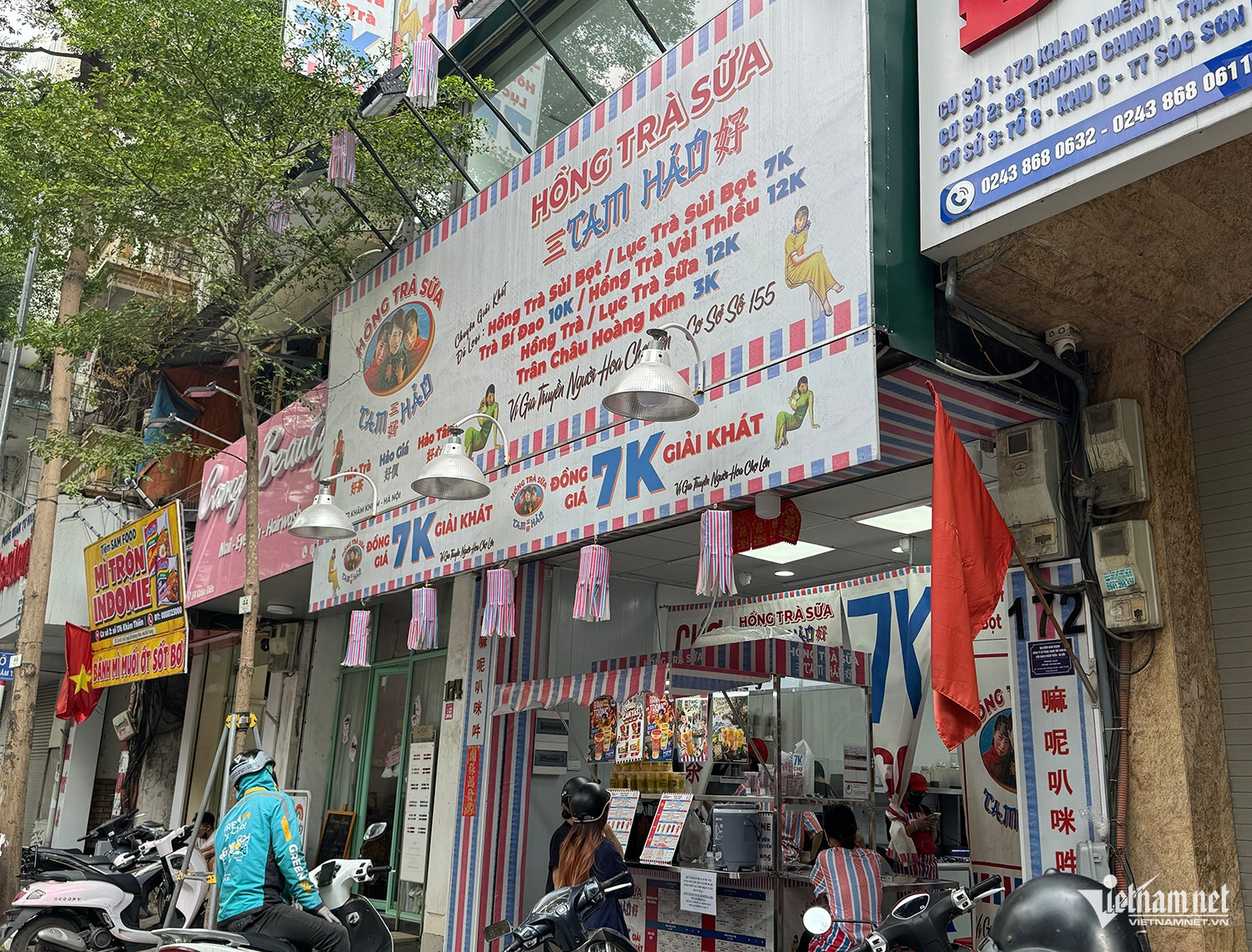
Brands including Hong Tra Ngo Gia, Tam Hao, Thanh Tra and Olong Gia Gia have established outlets offering drinks starting at just VND7,000 (approximately $0.27) per cup.
These shops typically occupy small premises with limited seating and focus primarily on takeaway orders.
Some operate preparation counters directly facing the street or use service windows, allowing customers to stop their motorbikes, place an order and collect their drinks without entering the shop.
Their main customers are school pupils, university students and young people looking for affordable beverages.
The starting price of VND7,000 is significantly lower than that of many established milk tea chains, where drinks can cost VND35,000-60,000 ($1.33-2.28) per cup.
It is even cheaper than many products sold by Mixue and Bingxue, two budget beverage chains that previously expanded rapidly across Vietnam.
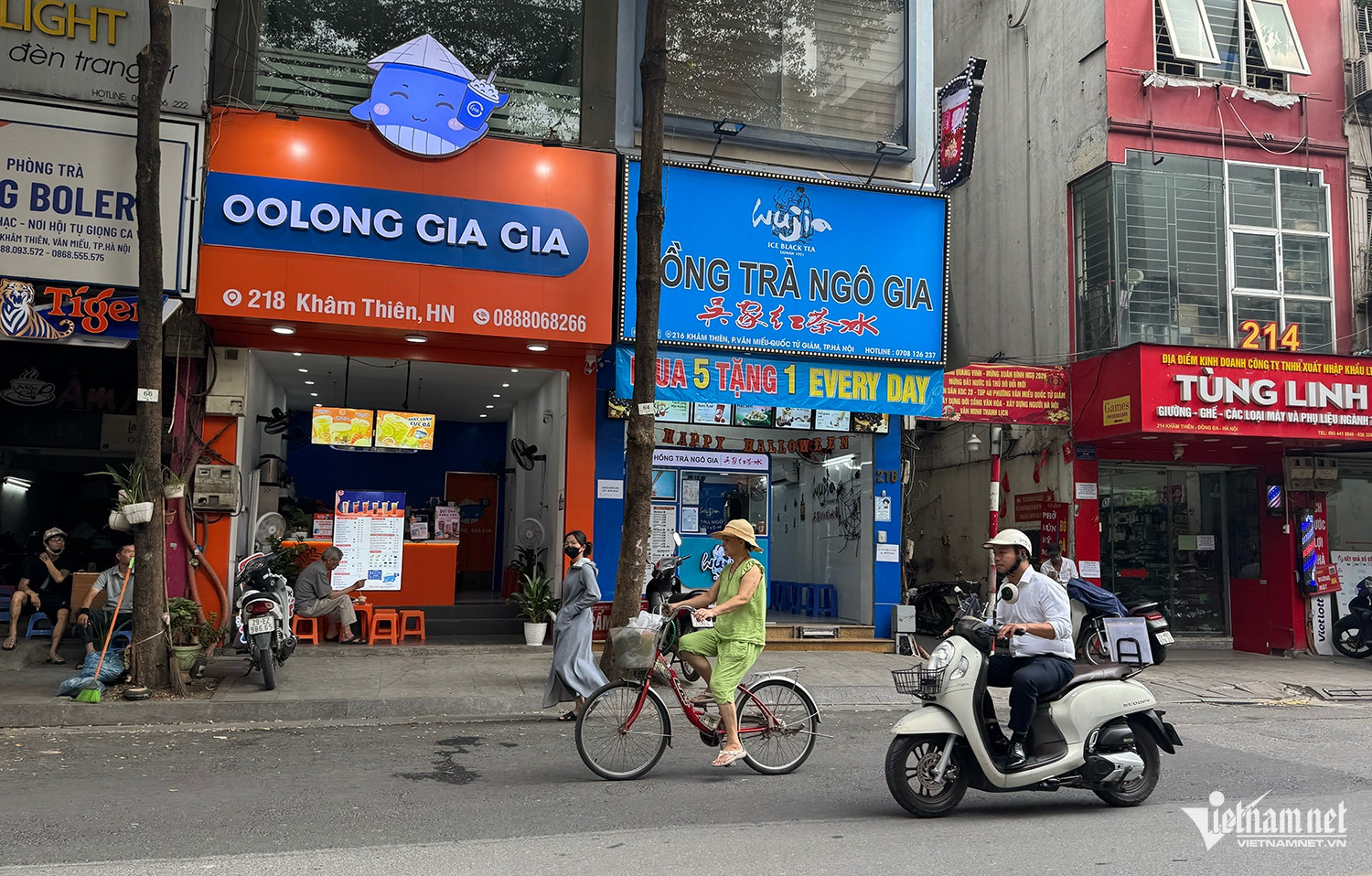
Similar low-cost milk tea outlets have also appeared along streets with large student populations, including Truong Dinh, Chua Lang, Cau Giay and Nguyen Trai.
The budget milk tea model began expanding rapidly in Ho Chi Minh City several years ago before reaching Hanoi in late 2025.
It resembles the low-cost beverage trend in China, where numerous milk tea and ice cream chains have grown by combining affordable prices with streamlined operating procedures.
A price war in the beverage market
According to a representative of one budget milk tea brand, its VND7,000 starting price is made possible by four main factors: simple packaging, streamlined operations, bulk ingredient purchasing and a focus on customer experience rather than advertising.
The representative said ingredients and packaging for a VND7,000 cup of milk tea cost approximately VND5,000 ($0.19).
However, actual profitability depends on labor, rent, electricity, water and other operating expenses.
In practice, customers often pay more than the advertised starting price.
The VND7,000 offer generally applies only to basic drinks and does not include toppings or upgrades.
Adding tapioca pearls, jelly or pudding, or choosing a larger cup, increases the total price.
Depending on the drink and customization options, a customer's bill can reach VND15,000-20,000 ($0.57-0.76).
Even at those prices, the drinks remain competitive with products sold by many established milk tea brands.
Low-cost milk tea is proving particularly popular among younger consumers.
Mai Anh, a university student in Hanoi's Dong Da area, said drinks priced at around VND20,000 are affordable enough for students to buy regularly without putting too much pressure on their budgets.
However, she noted that low prices alone are not enough to encourage repeat purchases.
Taste, beverage quality and hygiene remain important factors in deciding whether customers return.
Tran Khanh Minh Son, a food and beverage industry expert, said the emergence of numerous budget milk tea brands reflects increasingly intense competition in Vietnam's beverage market.
Milk tea experienced a major boom in Hanoi around 2017, when brands such as Ding Tea, Gong Cha, Royal Tea and TocoToco rapidly expanded their presence.
That trend gradually cooled, with some outlets closing and others switching to different beverage products.
The market subsequently saw the rise of affordable drink chains such as Mixue and Bingxue.
Mixue entered Vietnam in 2018 and went on to expand its franchise network, becoming one of the most recognizable brands in the country's budget ice cream and beverage segment.
While Mixue and Bingxue helped popularize inexpensive tea and ice cream, the latest wave of low-cost milk tea shops suggests that aggressive pricing is becoming an increasingly important competitive strategy.
The model primarily targets price-sensitive consumers, particularly school pupils, university students and young adults.
To maintain low prices, operators must tightly control ingredient and operating costs.
Packaging is also selected with affordability in mind. Many shops use standard plastic cups sealed with plastic film rather than more expensive packaging.
Store layouts are kept compact, prioritizing preparation counters and order collection areas over seating.
According to Son, operating a low-cost beverage business requires strict cost management without compromising ingredient quality or food safety.
He emphasized that low prices do not necessarily indicate poor quality.
Consumers should pay attention to ingredient origins, preparation conditions and hygiene standards at individual outlets rather than judging products solely by their prices.
Duy Anh

