 Vietnamnet.vn

 Podcast



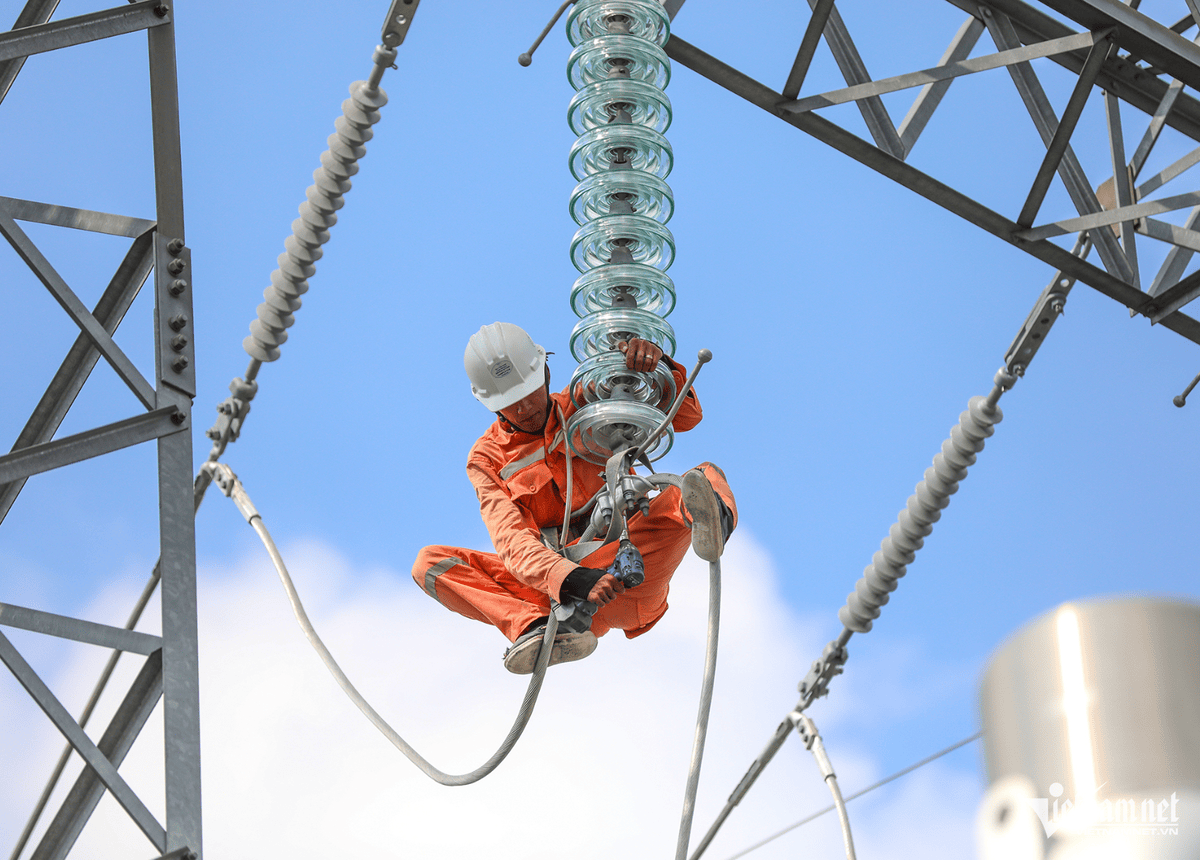
Responding to proposals from the Ministry of Industry and Trade (MOIT) to soon split the National Power Transmission Corporation (EVNNPT) from Electricity of Vietnam (EVN), the Ministry of Finance (MOF) said there should be a cautious roadmap to minimize operational disruptions and safeguard national power security.
According to a draft proposal prepared by the MOF, in the immediate time, EVNNPT should temporarily remain a single-member limited liability company where EVN holds 100 percent of charter capital. Once existing operational challenges are resolved, EVN will review and report to competent authorities on potential separation plans in accordance with Government directives.
Regarding power distribution and retail, the draft proposes that regional Power Corporations (EVN's subsidiaries) remain wholly owned by EVN. These subsidiaries manage regional distribution networks, provide default retail services, and compete with other retailers in the competitive retail electricity market (VREM).
The separation of distribution from retail operations within regional Power Corporations would proceed gradually, aligned with specific development phases of the competitive retail power market.
The potential equitization of independently accounted electricity retail companies is expected to be considered after 2035, once the necessary conditions are met and the companies comply with the criteria for classifying state-owned enterprises under the Prime Minister's decisions.
However, MOIT disagrees with both proposals. In Document No. 822 dated September 28, 2026, the ministry proposed: “Developing and implementing a plan to separate EVNNPT from EVN and establish it as an independent enterprise wholly owned by the State and directly under the specialized ministry.”
If EVNNPT is not separated, MOIT has asked the government and Prime Minister to authorize the ministry to exercise the state's ownership rights over EVN. The move, it said, would improve coordination in sector management, planning implementation and energy security.
Regarding electricity distribution and retail, MOIT asked MOF to revise the restructuring timeline to align it with the power sector restructuring plan. It argues that separating the retail division into an independently accounted entity is essential to establishing a competitive retail electricity market, which is expected to begin operating no later than 2030.
Ministry warns of major disruption
Explaining its proposal to maintain the current model in the near term, MOF said EVNNPT provides services to the power system and has an organizational structure and accounting system independent of EVN. Electricity transmission tariffs are approved by MOIT, while investment activities are carried out in accordance with the national power development plan.
MOF considers EVNNPT's current operating model independent and consistent with the requirements of the electricity market. It said the model has not created any conflicts of interest with electricity buyers or sellers, nor has it resulted in discrimination between EVN-owned power plants and those owned by other investors, including in the connection of power plants to the national grid.
The model also ensures openness, transparency and equal treatment among electricity market participants, including when the competitive retail electricity market is introduced in the coming years.
According to MOF, separating EVNNPT from EVN immediately could create several problems affecting the company's operations and efficiency.
One major obstacle is the substantial capital required for investment in transmission networks. Under the revised Power Development Plan VIII, EVNNPT needs net investments averaging nearly VND45 trillion a year during 2026-2030, while its ability to mobilize funding independently would cover no more than 40 percent of that requirement.
Additionally, severing EVNNPT from EVN would disrupt centralized oversight and operational coordination needed for synchronized development of national transmission networks and regional distribution grids (currently managed by EVN's regional Power Corporations).
MOF argued that maintaining EVN's 100 percent ownership of EVNNPT secures unified leadership in investment, operation, and management of the national power grid - prioritizing critical, inter-regional, and cross-border power import projects.
Distribution and retail
MOF said that during the competitive wholesale electricity market phase, distribution costs and retail business costs should be accounted for separately. This would provide a basis for determining distribution tariffs and facilitate the participation of large customers in the market.
MOF said that, with Vietnam targeting GDP growth of at least 10 percent and electricity demand expected to rise by around 10 percent annually, retailers need sufficient financial capacity to sign long-term power purchase agreements with power generation investors.
If ownership is fully separated from the power corporations in the short term, these retail entities may not yet have the capacity to meet that requirement.
Tam An
.svg)
