 Vietnamnet.vn

 Podcast



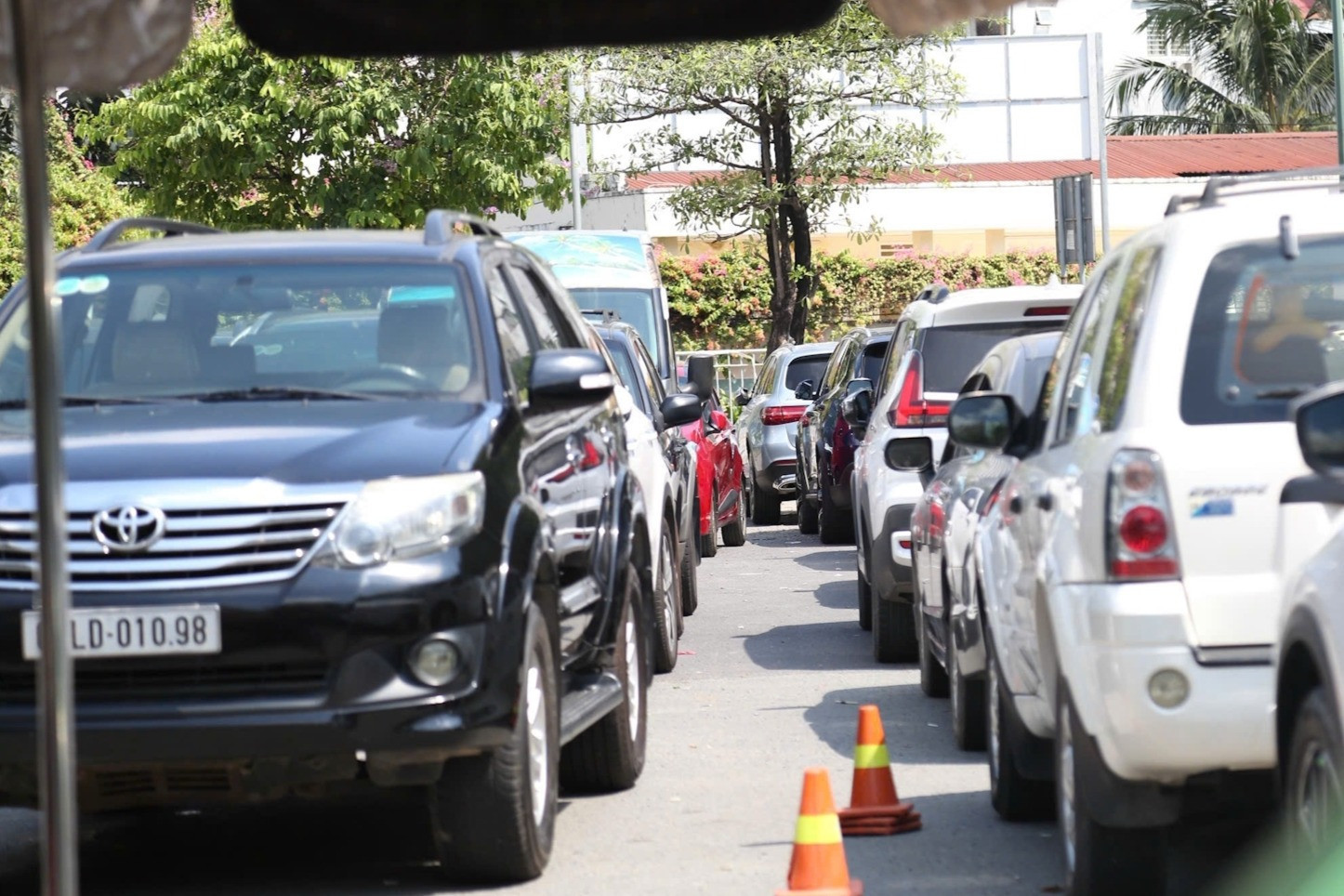
Under the new regulation, the testing speed is the maximum speed the engine can reach according to the manufacturer’s specifications. During the test, inspectors must press the gas pedal fully to the floor, causing the engine to accelerate very quickly (with acceleration time under one second), before evaluating emission levels.
To perform this procedure, vehicle owners must sign a commitment allowing the test to be conducted according to the prescribed process. If any damage occurs, the owner must bear all costs and cannot file complaints or legal claims.
Many vehicle owners, especially those with diesel engines or older vehicles, have expressed concerns. Some opinions on the OFFB forum say that having to sign such a commitment is “quite stressful,” because revving the engine to maximum speed without load could affect the engine.
In response, the Ministry of Agriculture and Environment (MAE) said that when the engine accelerates rapidly, its operating state becomes more stable, allowing maximum smoke density to be produced and pass through the exhaust pipe to the measuring device. Therefore, the test can more accurately reflect the vehicle’s actual emission levels.
According to the ministry, the emission testing method at high engine speed, commonly understood as “pressing the accelerator fully”, in the National Technical Regulation QCVN 85:2025/BNNMT is not actually new but has been applied previously and is based on international standards.
A representative of the ministry said the scientific basis of the current emission testing method is built on international standards that have been converted into Vietnamese standards. Each engine type has its own specific procedures and technical standards for emission testing.
For vehicles using spark-ignition engines (gasoline engines), the concentrations of CO and HC in exhaust gas are determined according to TCVN 6204:2008 on emission measurement methods during inspection or maintenance of road vehicles. This standard was issued by the Ministry of Science and Technology (MST) and was developed based on ISO 3929:2003.
For vehicles using compression-ignition engines (diesel engines), smoke opacity in exhaust gas is measured according to TCVN 7663:2007. This standard specifies measurement using the engine’s free acceleration cycle and is based on ISO 11614:1999.
According to the ministry, ISO is an international standardization organization with the participation of national standards bodies from more than 160 countries. The free acceleration, high-speed testing method is a technical practice widely used around the world.
The ministry also said the regulations in QCVN 85:2025/BNNMT still use the same measurement method as before and have not changed compared with the period before the vehicle emission control roadmap was implemented.
Explaining further why emission testing must be conducted at high engine speed, the ministry said that when the engine operates at high idle speed, the combustion process in the combustion chamber is closer to real operating conditions when vehicles travel on the road.
If testing is conducted at low idle speed, the combustion chamber temperature and emission treatment systems may not yet reach stable operating conditions, which could cause the results to fail to reflect emissions during real driving.
Older vehicles may incur maintenance costs
Le Chi Thien, owner of an auto garage in Hanoi, said that in principle engines are designed by manufacturers to withstand high engine speeds within permitted limits. However, safety also depends on the actual condition of each vehicle.
According to Thien, for newer vehicles with well-functioning engines, pressing the accelerator fully during emission testing usually does not cause significant problems. However, for vehicles that have been used for many years, especially trucks that frequently operate under heavy loads or are overloaded, sudden increases in engine speed may carry certain risks.
After long periods of use, many engine components may become worn and develop clearances. When the engine is subjected to sudden and heavy force due to full-throttle acceleration, these components may be affected.
With older or heavily used vehicles, owners often need to service or repair the engine before taking the vehicle for inspection to ensure safety. Repair costs vary depending on the vehicle’s condition and may reach several tens of millions of dong or more, causing some vehicle owners to incur additional expenses before emission testing.
Some inspection centers currently require vehicle owners to sign a commitment in case the engine is at risk of damage when performing the full-throttle acceleration for emission testing. According to Thien, this approach is not entirely appropriate.
He said that during inspection, examiners should observe and evaluate the engine based on technical judgment and parameters from measuring equipment. If abnormal signs are detected or emission results indicate the vehicle may fail to meet the standards, the inspection should be temporarily halted and the owner advised to repair the vehicle.
Hoang Quy
.svg)
