 Vietnamnet.vn

 Podcast



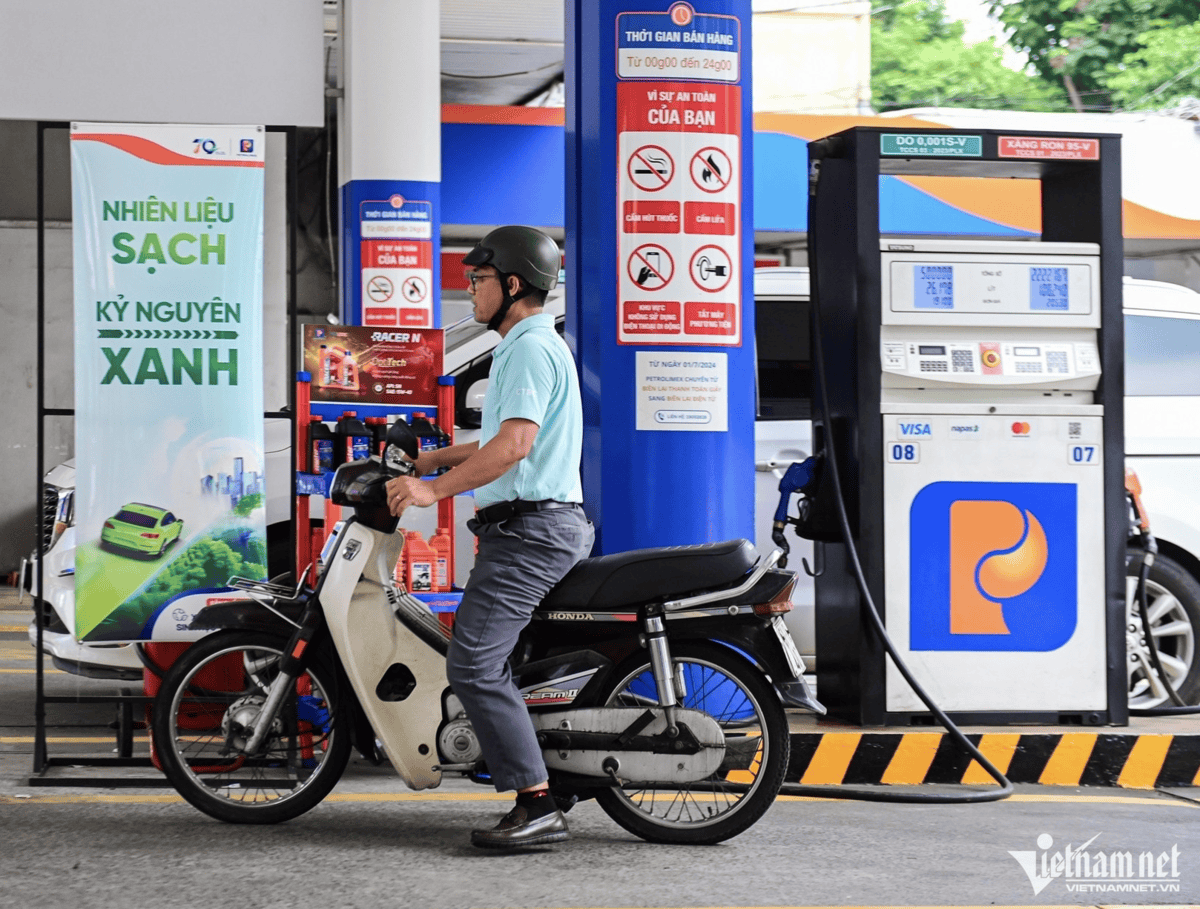
This was the assertion of Dao Duy Anh, Deputy Director of the Department of Innovation, Green Transformation, and Industrial Promotion (Ministry of Industry and Trade – MOIT), at the seminar “E10 Biofuel - Harmonizing Benefits for Citizens, the State, and Businesses” on the afternoon of April 17.
According to Anh, changing habits regarding familiar consumer goods always create hesitation. From a state management perspective, petroleum can be considered the “blood” of the economy. Therefore, no nation would pump "toxic blood" into its economy.
To introduce this biofuel program, MOIT made very careful preparations. Since 2014, the Ministry has conducted surveys and assessments on the biofuel use globally and in Vietnam. Accordingly, Vietnam began piloting E5 gasoline in 2014 and rolled it out officially nationwide in 2018.
Starting August 1, 2025, PVOIL and Petrolimex tested the distribution of E10 gasoline in major cities. During the distribution process, no negative feedback has been received from customers.
MOIT has worked with many domestic and international scientists regarding issues related to E10 gasoline. It has also researched experiences from many countries that have used biofuel globally.
“I can say that the negative impact of E10 gasoline on engine performance is negligible,” Dao Duy Anh emphasized.
He added that leaders from the ministry, PVOIL and Petrolimex were among the first to use E10 during the pilot phase. Authorities have monitored its use and found no unusual differences in cost, fuel consumption, or engine performance compared to conventional gasoline.
However, he acknowledged that changing fuel habits may initially cause concern among consumers, often due to incomplete or inaccurate information about potential engine impacts or fuel efficiency.
Therefore, he stressed the need for transparent, science-based communication to build public trust and consensus.
The ministry said it will continue coordinating with agencies, localities, and media to implement solutions and support the E10 rollout.
Competitive pricing is key to wider adoption
Nguyen Thuong Lang, a senior lecturer at the National Economics University, said consumers are highly sensitive to fuel prices. For E10 to gain widespread adoption, it must offer a clear price advantage.
He noted that E10 needs to be significantly cheaper than conventional fuel to encourage people to use the biofuel. A sufficient price gap would drive consumer choice and help establish new habits. In the early phase, price support or regulatory measures may be needed to stimulate the market.
According to Lang, biofuel is part of a young but strategically important industry in Vietnam’s energy transition. To unlock its potential, strong and long-term incentives are required.
These include tax incentives. Higher incentives, or even tax exemptions in the initial stage, should be considered. Specifically, Value Added Tax and Corporate Income Tax could be exempted for the first 5 years, then reduced by 50 percent for the next 5 years. According to him, an incentive cycle of about 10 years is necessary for investors to have enough confidence and motivation to participate in the market.
Second are financial support policies. The State can apply support such as interest rate incentives, initial investment cost support, or even price subsidies during necessary periods. These are important tools to reduce risks for businesses in the initial stage.
Third are incentives regarding land and infrastructure. Creating favorable conditions for businesses to access land and develop production and distribution infrastructure will help significantly reduce costs, thereby enhancing the competitiveness of biofuel.
Besides, it is necessary to remove barriers regarding administrative procedures and investment approvals, as well as build a clear strategic direction regarding market scale. When businesses see a large and stable total demand, they will boldly invest long-term.
An important point is the need for a demand-creation mechanism. Beyond the public sector, encourage large enterprises, transport corporations, and logistics companies to use biofuel through incentive policies or specific regulations. Simultaneously, promote communication to change consumer awareness.
In the current stage, the State needs to play the role of a "midwife," proactively creating a strong enough policy ecosystem to provide the necessary push. Anh said the ministry is working with other agencies to propose reducing fuel import taxes to zero.
Tam An
.svg)
