 Vietnamnet.vn

 Podcast



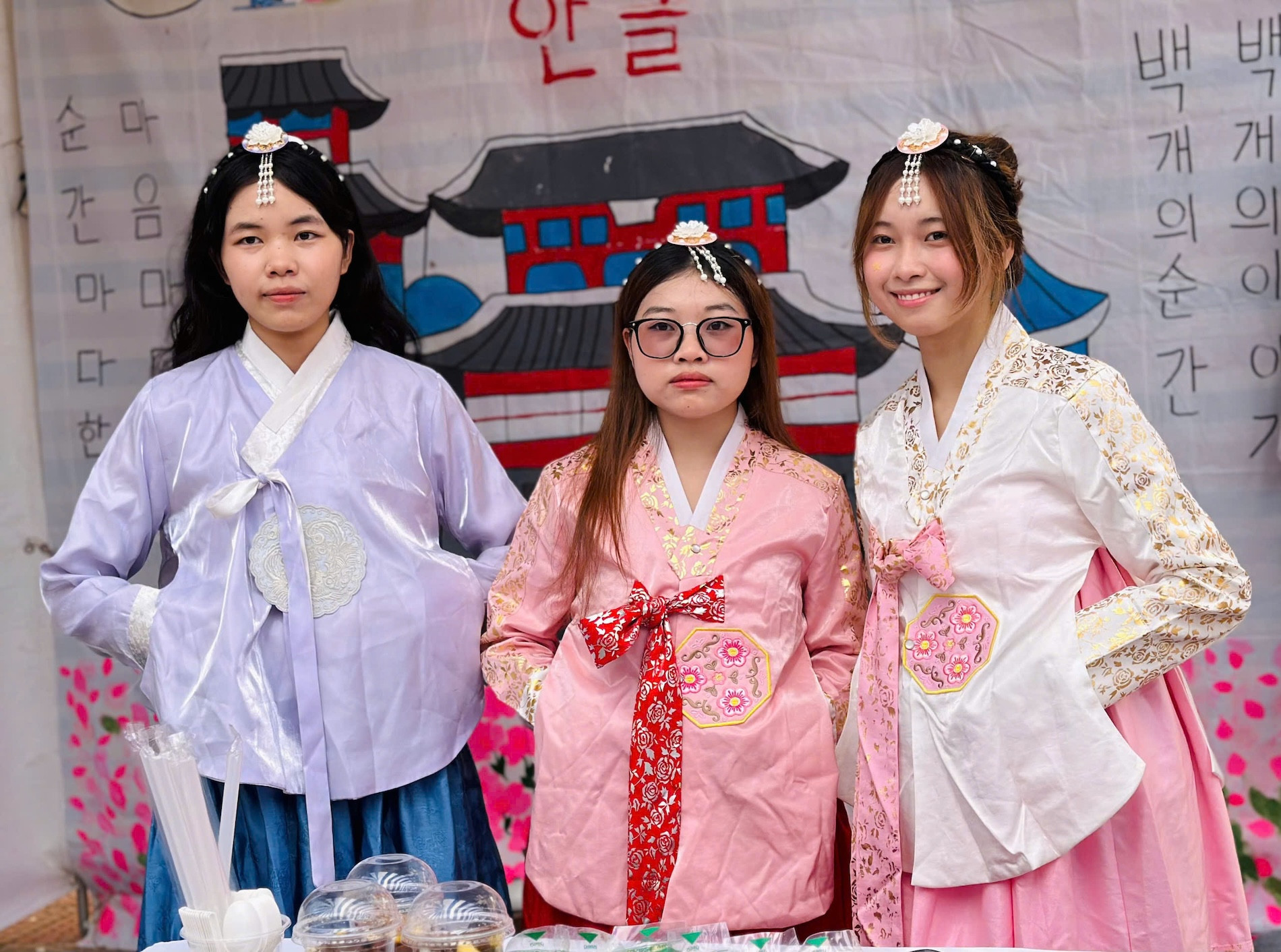
The figures were announced at the 2026 Korean Alphabet Festival, jointly organized on Oct. 3 by the Embassy of the Republic of Korea in Vietnam, the Korea Foundation and the University of Social Sciences and Humanities under Vietnam National University, Hanoi.
According to a survey by the South Korean Embassy in Vietnam and the Korea Foundation, more than 26,000 students are currently enrolled in Korean Studies and Korean Language programs at 54 universities and colleges nationwide.
Vietnam is also among the countries with the largest Korean language and culture education systems in the region.
Korean was first introduced into university curricula at Vietnam National University, Hanoi and Vietnam National University, Ho Chi Minh City in 1993.
More than three decades later, Korean language education and related academic programs have expanded rapidly in terms of the number of institutions, students and range of courses offered.
Seo Won Sam, Minister and Consul General at the South Korean Embassy in Vietnam, noted that a growing number of young Vietnamese are learning Korean.
"Learning a new language such as Korean means that you are constantly striving to understand Korean culture and history, as well as the feelings and thoughts of Korean people conveyed through the language," he said.
Seo said that as more people understand the Korean language, respect each other's cultures and develop a greater sense of mutual understanding, relations between Vietnam and South Korea will become deeper and stronger.
He added that the South Korean government and its embassy would continue to support young people in gaining access to the country's language and culture.
Nguyen Thi Thu Huong, PhD, Deputy Head of the Faculty of Oriental Studies at the University of Social Sciences and Humanities under Vietnam National University, Hanoi, said Vietnamese people began learning Korean after the two countries formally established diplomatic relations in 1992.
As bilateral cooperation has developed, the number of people studying Korean has continued to increase.
In recent years, admission scores for Korean Studies programs at some universities have frequently ranked among the highest.
According to Huong, this is partly due to strong demand from applicants while enrollment quotas remain limited. The field is also attractive because of its diverse career prospects, linked to the presence of South Korean companies in Vietnam as well as opportunities to study abroad, participate in exchange programs and work in international environments.
Annual surveys by the University of Social Sciences and Humanities show that about 98% of Korean Studies graduates find employment within one year of graduation.
Graduate salaries are relatively high and vary depending on individual capabilities and job positions.
The lowest monthly salaries recorded are around VND15-16 million ($570-$608), while graduates with stronger skills and greater experience can earn considerably more.
However, Huong said that as more South Korean companies invest and operate in Vietnam, demand is no longer limited to workers who can speak Korean.
Companies increasingly need employees who combine Korean language proficiency with an understanding of economics, culture and the working environment of South Korean businesses.
Thuy Nga
.svg)
