 Vietnamnet.vn

 Podcast



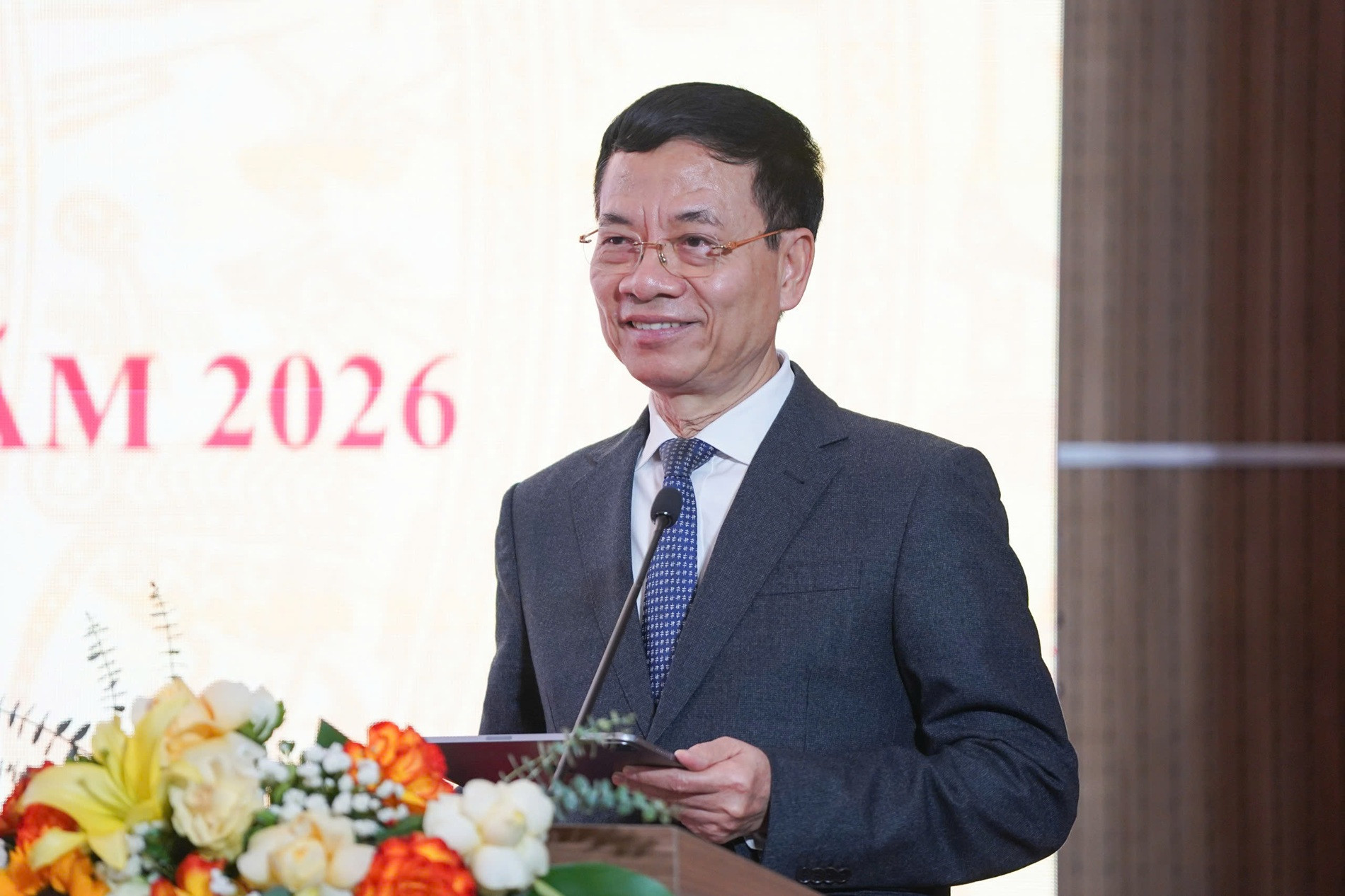
To fulfill the role of leading and guiding enterprises while bringing value to the country, the Authority of Radio Frequency and the Authority of Telecommunications have been required to create market research and development groups, Minister of Information and Communications Nguyen Manh Hung said at a conference on the 2026 work program for the Postal and Telecommunications sector.
He pointed out that Vietnam's digital economy is growing at 30 percent per year, but its digital infrastructure only grew by 1-2 percent, which is unsustainable rate as the economy is developing rapidly.
The reason is that telecom operators are facing difficulties and remain focused on subscriber growth, while state management agencies like the Telecommunications Authority and the Radio Frequency Authority still follow old ways of working, he said.
To address this, the minister directed the two authorities to immediately establish market research and development divisions in 2026. In the initial phase, they can leverage infrastructure and human resources from both enterprises and the ministry.
Telecom business jobs are no longer about digging holes and installing antennas. Their core job has shifted to research and development, so state management must also shift to research and guidance. “You must never ask businesses which way to go; you have to show them the way,” the minister emphasized.
Regarding resources, Hung said enterprises are often hesitant to spend $10 million investing in a laboratory (Lab) due to immediate financial pressure. However, the State can invest in large-scale Labs, costing about $20 million.
The goal of this investment is to orient the total investment capital for network infrastructure and frequency, avoiding waste.
In addition to research infrastructure, the State will use the Sandbox mechanism if enterprises want to deploy new models but are hindered by legal regulations. The combination of Labs and the Sandbox mechanism helps management agencies lead the development of enterprises.
Regarding resource management, the Minister requested to change the thinking behind frequency auctions. Instead of the goal of maximizing the value collected as before, the auction must target the overall benefit for the economy. Frequency must bring value to the country through investment, coverage, and application.
Under the new approach, the State will still conduct auctions, but enterprises that commit to rapid and extensive coverage will receive price reductions. This is to ensure businesses have sufficient resources to develop networks.
Tasks for 2026
At the conference, Hung assigned detailed tasks to six units in the Posts & Telecommunications sector, requiring comprehensive transformation in 2026.
For the Posts side, he referred to digital postal services and digital logistics. He stressed the need to create a 3D postal space (including drone delivery and a low-altitude economy), expanding growth space at least fourfold. The goal is that “by 2030 or 2035, postal services must be larger than telecommunications,” he said.
For Telecommunications, the minister required a shift from managing telecom networks to managing national digital infrastructure (telecommunications, Internet, data centers, cloud, AI); and a shift from administrative management to fostering competition and next-generation telecom markets.
The shift should be from standalone telecommunications to integration with the economy and society.
“Telecommunications will become infrastructure for the economy. Next-generation telecom operators will be production tools and means of production for enterprises and the economy,” he said.
Key tasks for 2026 include achieving 100 percent smartphone penetration for mobile users in Vietnam; mobile coverage reaching 99 percent of the population, with average mobile speeds of 200 Mbps; and minimum speeds of 100 Mbps in remote and disadvantaged areas. The minister said meeting these targets could boost GDP growth by an additional 1-2 percent.
For the Authority of Radio Frequency, the Minister requested a shift from frequency licensing management to frequency resource governance; from static management to flexible frequency management according to new technologies, generating many new forms of licensing; and from technical management to market creation and national frequency standards, establishing an effective frequency market.
The Central Post Office was tasked with shifting from conventional digital infrastructure to digital infrastructure serving the Party and Government, including management of government data centers, the cloud, and AI.
He said the Vietnam Internet Center (VNNIC) needs to shift from a resource management unit to the role of "architect of national Internet infrastructure." VNNIC needs to build a Vietnam Internet ecosystem, expanding Internet Exchange points to keep data, traffic and value in Vietnam.
Thai Khang
.svg)
