 Vietnamnet.vn

 Podcast



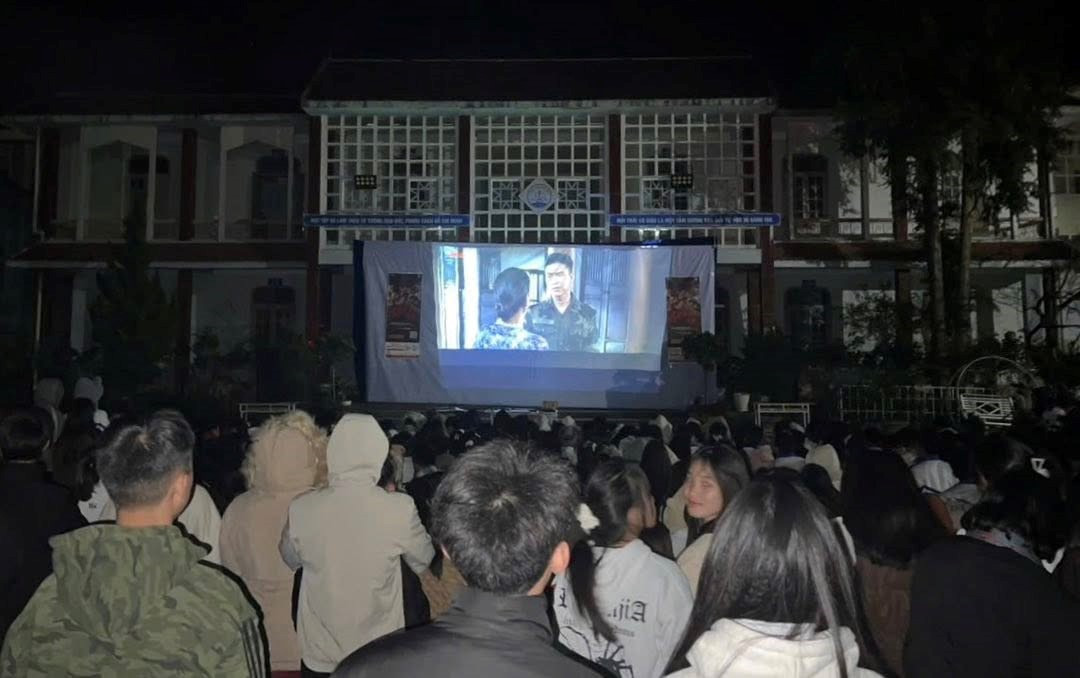
The end-of-year screenings in 2025 across hundreds of communes, wards, and schools has created a special cultural highlight. "Mua Do" appeared in schoolyards and communal cultural houses; some places used LED screens, while others just a white sheet, a small speaker system, and a few hundred plastic chairs. But it is this very simplicity that awakens the memory of mobile cinema for many generations.
From Lang Son to Hanoi, Ninh Binh, from Thai Nguyen to Ca Mau, each place has its own conditions, but the common feeling is warmth and connection. The applause, soft sobbing during battle scenes, or the moments when entire communities fall silent in the dark, remind many of the collective movie-watching atmosphere of the 70s and 80s.
More than 800 free screening points helped nearly 300,000 people, especially in remote areas, access the film, reflecting Viettel’s community-oriented mission of bringing cinema and technology to everyone in the journey of culture enjoyment.
A history lesson
Toward the 81st anniversary of the founding of the Vietnam People’s Army, Da Phuc High School in Hanoi organized an extracurricular film screening for nearly 2,000 students. “Mua do” became a special “history class” - no textbooks, no slides, where history was felt through emotion.
Nguyen Van Thanh, a 7th-grade student, said: "This is the first time I've watched such a good Vietnamese film. I understand that the price of peace is the sacrifice of many, many Vietnamese people."
Giang Thi Hiep, a 12th grader, was moved: "The film is a great lesson about responsibility and living ideals."
Many students also shared how to download the TV360 app to watch it again together, showing the effectiveness of this artistic education approach.
Spreading cultural values
The screenings were not only for the general audience but also targeted special groups. A school for visually impaired children sent a request to watch the film. Even without seeing the images, the children could still enjoy it through sound, emotion, and guidance from their teachers.
In Nghe An, the screening at the Disabled Veterans Nursing Center moved many veterans to tears as they relived memories of their youth. At ethnic boarding schools, students in the highlands eagerly followed the film despite the simple and somewhat rudimentary equipment. And when the film ended, many stayed to share family stories, wartime memories, or lessons about patriotism, creating a true community cultural space.
Some localities are even considering maintaining the community film screening model on major holidays, stemming from the viral effect brought by the free screenings of "mua do" by TV360.
A bridge between generations
The veterans stood up reflexively, like those who had been in battle; stories about comrades and the years of fighting were told right at the screening location, which are lessons that no textbook could fully convey.
A student in Tuyen Quang said the film made him think of his grandfather, a former soldier, and understand why the grandfather always teaches him to cherish peace. In An Giang, a veteran said: “Watching Mua do, I relived the war years. I hope the film is widely screened to spread the spirit of resilience.”
When cinema returns to community spaces, it becomes a cultural anchor connecting families, bridging generations, and awakening national pride.
A cultural-educational model
The journey of “Mua do” proves that the power of community culture does not come from glamour but from the ability to touch people’s hearts. Mobile screenings open a way of learning history that resonates with young people; at the same time, they create shared cultural spaces built through digital technology.
In today’s busy life, this model is a reminder that communities still need shared spaces to listen, understand, and share.
“Mua do” and TV360 have revived that spirit. From crowded schoolyards to remote villages, the film’s journey continues to grow through stories of patriotism and civic responsibility.
Tinh Le
.svg)
