 Vietnamnet.vn

 Podcast



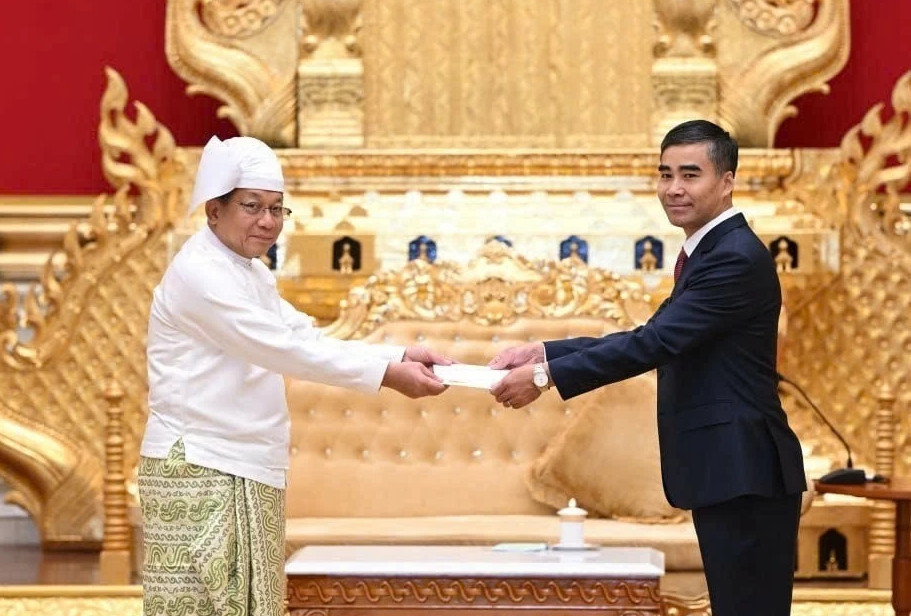
Vietnam and Myanmar officially established diplomatic relations on May 28, 1975, although ties between the two countries and their peoples, both part of Southeast Asia, date back much further.
Soon after the two countries gained independence, President Ho Chi Minh and General Aung San personally took an interest in establishing and nurturing friendly neighborly relations between their peoples. President U Nu visited Vietnam in November 1954, followed by President Ho Chi Minh’s visit to Myanmar in February 1958, laying a solid foundation for bilateral relations.
Through the ups and downs of history, relations between Vietnam and Myanmar have remained close and steadfast, while continuing to grow stronger, deeper and more substantive. In 2017, the two countries upgraded their ties to a Comprehensive Cooperative Partnership.
Earlier, on August 26, Foreign Minister Le Hoai Trung and Myanmar Foreign Minister Tin Maung Swe co-chaired the 10th meeting of the Vietnam-Myanmar Joint Commission for Bilateral Cooperation.
The two sides identified a number of key directions for future cooperation, prioritizing areas aligned with the development needs and goals of each country, including infrastructure, information technology, consumer goods manufacturing, agriculture and digital transformation.
The two countries are also working toward reaching $1 billion in bilateral trade at an early date.
Foreign Minister Le Hoai Trung also met with President Min Aung Hlaing.
The Myanmar president reaffirmed the importance his country attaches to its traditional friendship and multifaceted cooperation with Vietnam, whose foundations were laid by President Ho Chi Minh, General Aung San and successive generations of leaders from both countries.
Min Aung Hlaing praised Vietnam’s development achievements and thanked the country for its consistent support for Myanmar in its development and nation-building process, as well as within ASEAN and at regional and international forums.
He affirmed that Myanmar would continue supporting Vietnamese businesses operating in the country and create favorable mechanisms and policies to give them confidence to invest and conduct business successfully, particularly in telecommunications, education and training, agriculture, food processing, logistics, digital transformation, and science and technology.
Tran Thuong
.svg)
