 Vietnamnet.vn

 Podcast



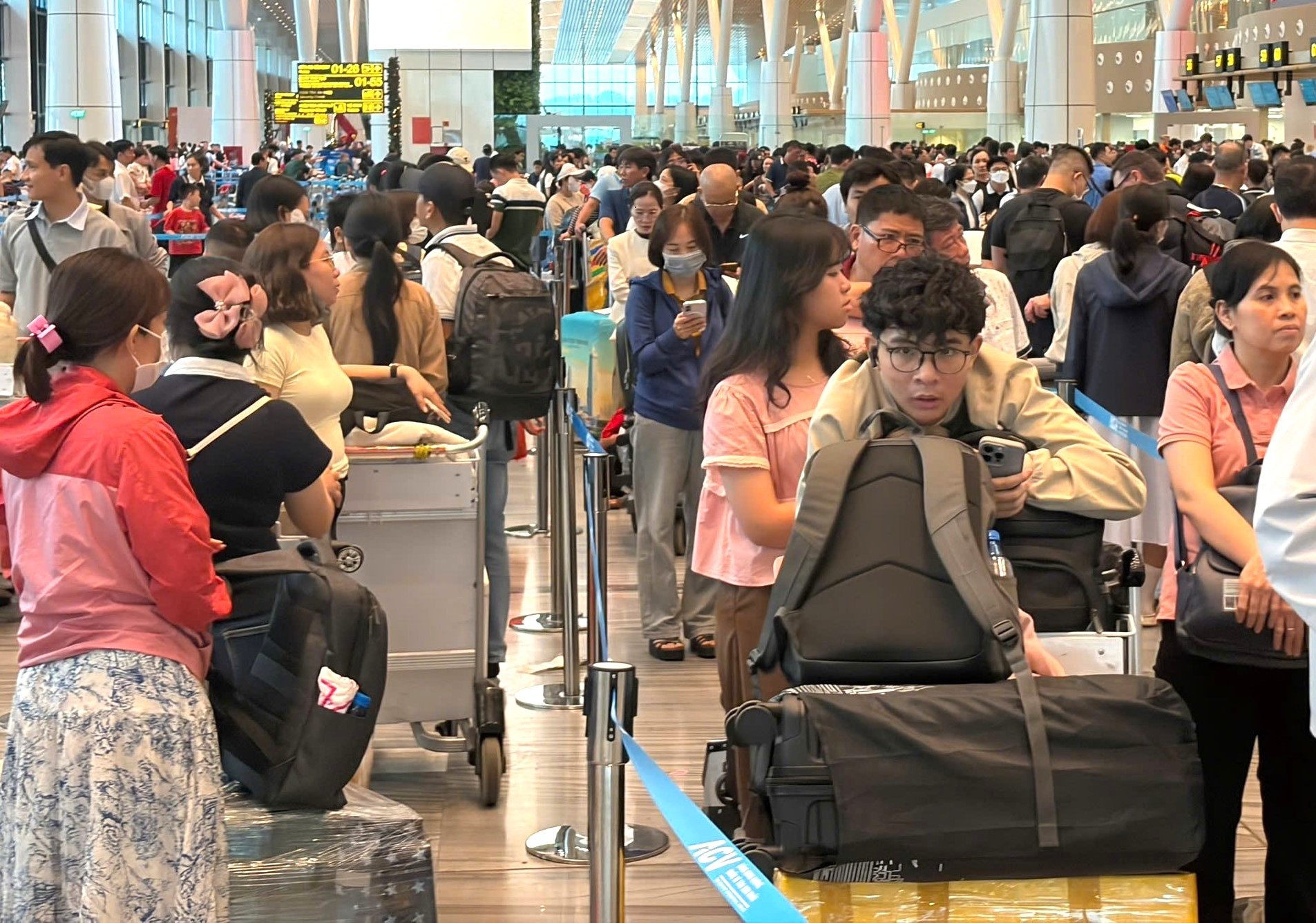
According to data from the airport’s Operations Center, on the sixth day of Tet (February 22), the largest airport in southern Vietnam handled 177,859 passengers across 1,069 flights, surpassing all prior forecasts.
Throughout the Tet 2026 peak period, Tan Son Nhat continuously broke operational milestones, turning the post-holiday phase into an extraordinary high season. Before Tet, the highest daily volume reached around 165,000 passengers. In recent days, however, numbers climbed sharply, with one record after another falling.
After exceeding 170,000 passengers on the fourth day of Tet and maintaining similar levels on the fifth day, the airport officially set a new peak on the sixth day, welcoming nearly 178,000 travelers.
The international gateway also recorded remarkable figures, reflecting the strong revival of tourism and overseas Vietnamese returning for visits. During the Tet peak, Terminal T2 maintained more than 60,000 passengers per day. On the sixth day alone, T2 handled over 64,700 passengers on 334 flights, its highest level in many years. Arrivals (33,100 passengers) and departures (31,500 passengers) were relatively balanced, highlighting strong travel demand and the return of overseas Vietnamese to work after the holiday.
Terminal T3 eases congestion pressure
Inbound traffic dominated the day, with 104,701 arriving passengers, including 71,568 domestic travelers. Streams of people returning from northern and central provinces to Ho Chi Minh City for work filled arrival halls, creating a vibrant and rarely seen scene.
Despite the immense pressure, airport representatives said no serious congestion occurred, thanks largely to load-sharing from the newly operated Terminal T3. With significant design capacity, T3 alone handled 454 flights and nearly 68,000 passengers on the peak day, accounting for almost 40 percent of the airport’s total volume. This substantially eased pressure on Terminal T1, which had long been overloaded during major holidays.
Notably, Terminal T3 was not only a relief valve but also became the most dynamic operating zone at the airport. Although its number of flights was only about 1.7 times that of T1 (454 compared to 263), its passenger throughput was markedly higher. This indicates that airlines are optimizing operations, particularly with wide-body aircraft operating at near-full seat occupancy.
The relocation of major carriers such as Vietnam Airlines, Bamboo Airways and Vietravel Airlines to Terminal T3 has significantly reduced the strain on T1, an area that routinely faced overcrowding during festive seasons.
At the same time, Tan Son Nhat accelerated the application of technology, deploying identification and biometric recognition systems to shorten check-in times. Operational and security personnel were reinforced, while check-in counters and baggage conveyors were flexibly coordinated to ensure smooth operations even as passenger numbers reached their highest level in more than ten years.
Tuan Kiet
.svg)
