 Vietnamnet.vn

 Podcast



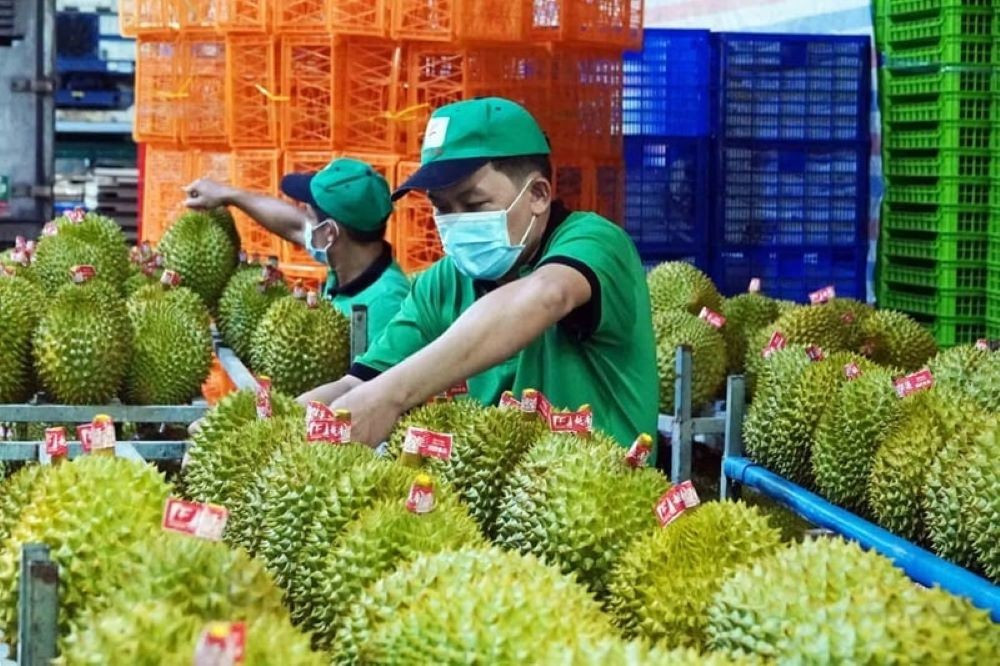
The Vietnam SPS Notification Authority and Enquiry Point under the Ministry of Agriculture and Environment has announced that nearly 2,600 agricultural and seafood product lines will be subject to a new requirement when exported to China.
Under the regulation, exporters must secure a “confirmation letter” issued by the Chinese authorities prior to customs declaration.
According to the SPS Office, the affected items span more than 20 product groups.
They mainly include goods considered high-risk in terms of quarantine control, such as fresh seafood, fresh fruits and vegetables, spices, medicinal herbs, coffee, seedlings, grains, tobacco, animal feed and animal-origin products.
Chinese authorities require foreign enterprises exporting these goods to provide documentation confirming compliance with standards set by the General Administration of Customs of China (GACC) in their import dossiers.
The SPS Office also noted that the enterprise name and registration code in China must match exactly the information stated on the Certificate of Registration for Foreign Enterprises Engaged in the Production, Processing and Storage of Animals, Plants and Related Products.
For companies registered for multiple product categories, customs declarations must be separated according to each corresponding code linked to each Chinese partner.
Using a single code for multiple product groups may result in customs refusal.
This means Vietnamese exporters must complete procedures for the “confirmation letter” before filing customs declarations in China.
Without a valid confirmation letter, shipments risk being delayed or rejected at border gates.
Ngo Xuan Nam, Deputy Director of the Vietnam SPS Office, emphasized that the confirmation letter does not replace phytosanitary or veterinary certificates for individual consignments.
Instead, it serves as a foundational condition for enterprises to register and maintain their export codes for the Chinese market.
Notably, fresh fruit items such as durian, bananas and jackfruit, which are already regulated under bilateral quarantine protocols, will face even stricter documentation and declaration requirements if they are also included in the confirmation letter list.
As China continues to tighten technical barriers, proactively standardizing procedures and investing in thorough legal documentation is no longer optional.
It has become a prerequisite for Vietnamese agricultural exports to retain access to their largest market.
Leaders of the Vietnam SPS Office have urged industry associations and businesses to urgently update the full list of nearly 2,600 affected product lines.
Enterprises are advised to review their registration information, export codes and publicly available reference systems issued by Chinese authorities, and to prepare documentation early to avoid disruptions once the regulation takes effect.
Duong Hung (Tien Phong)
.svg)
