 Vietnamnet.vn

 Podcast



During a National Assembly discussion on socio-economic development and the state budget on the afternoon of April 20, several deputies raised concerns about investing in transport infrastructure to strengthen regional connectivity, expand development space, and reduce logistics costs.
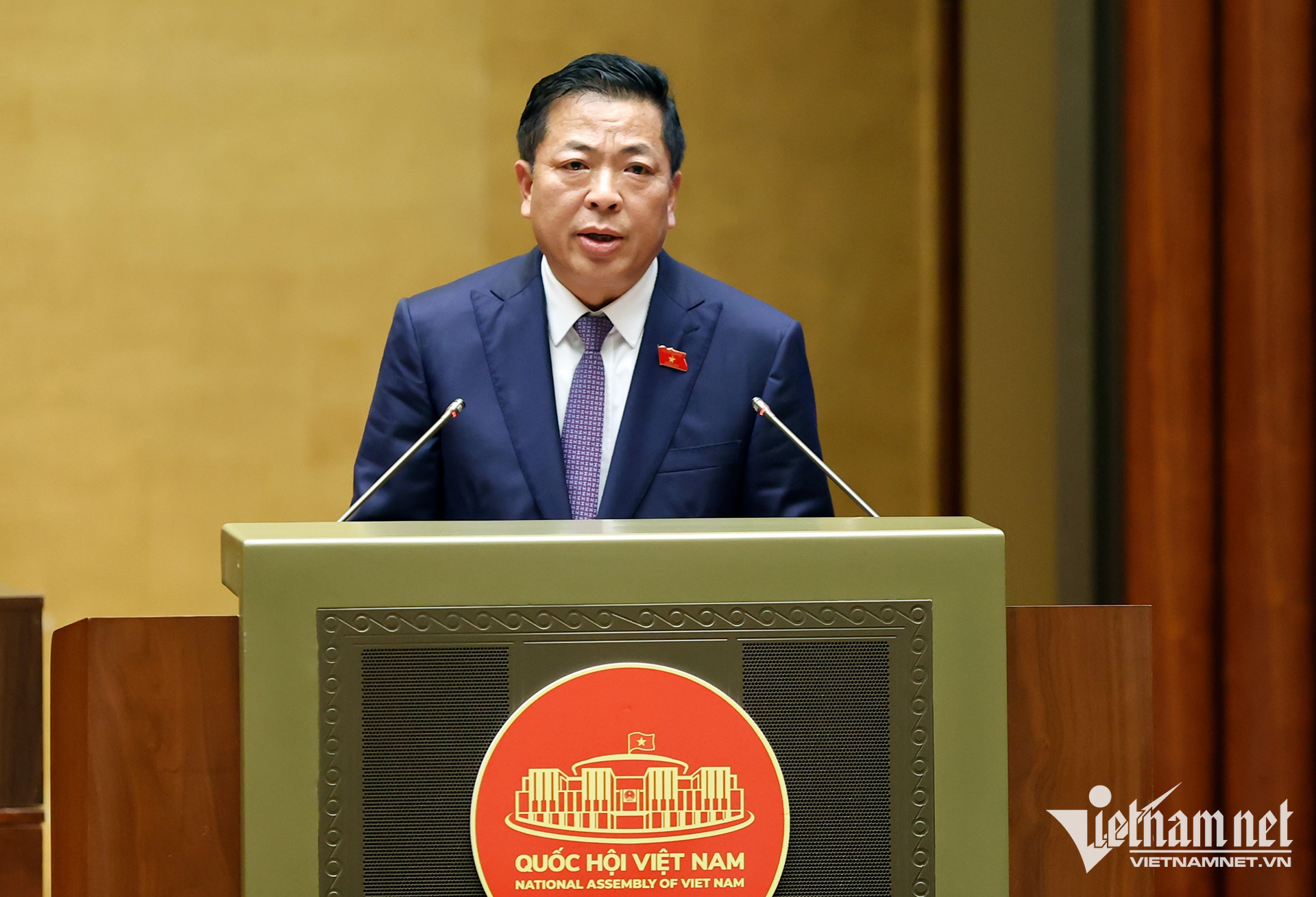
At the end of the session, Minister of Construction Tran Hong Minh addressed and clarified issues related to the transport sector.
Regarding road infrastructure, the minister said that by 2050, the country is expected to have 43 expressways with a total length of about 8,993km. Of these, 6,539km will be completed before 2030, with the remainder built between 2030 and 2050. So far, around 3,345km have been put into operation, including 458km of interchanges.
In terms of scale, 548km are two-lane expressways (16%), 1,559km are four-lane limited expressways (47%), and 1,238km are fully completed four-to-six-lane expressways (37%). The Ministry of Construction is responsible for 2,561km (77%), while the rest are managed by local authorities.
As for investment methods, 2,458km have been funded through public investment (74%), while 860km have been developed under public-private partnership (PPP) models (26%).
Currently, 1,252km of expressways are under transitional construction and are expected to be completed by 2027, including 153km managed by the ministry and 1,099km by localities and the Ministry of National Defense.
“By the end of 2025, the expressway density nationwide is expected to reach about 2.23km per 100km2. The Mekong Delta reaches 4.43km per 100km2, while 14 northern border provinces remain at a low level of 0.58km per 100km2,” the minister noted.
In the 2026-2030 period, about 1,721km of expressways are planned for investment and upgrading, with capital demand estimated at VND802.868 trillion (US$31.6 billion).
Regarding the national highway system, Vietnam currently has 24,376km. Following decentralization policies, from July 1, 2025, the Ministry of Construction has transferred management of 17,520km to local authorities, while retaining control of 4,875km, mainly BOT routes and those related to national defense and security.
For coastal roads, 1,701km have been completed, accounting for around 60% of the total. Construction is ongoing on 340km across 10 provinces and cities, with the minister urging completion within the year. An additional 772km is planned for the 2026-2030 period to fully connect the coastal route.
In the railway sector, the national network is planned to include 25 lines with a total length of 6,658km. This includes seven existing lines spanning 2,510km and 18 new lines totaling 4,148km.
Most of the existing railway system uses a 1-meter gauge, built during the French colonial period, while the Hanoi - Lang Son line uses the standard 1,435mm gauge. Future development will focus on key national routes such as Hanoi - Ho Chi Minh City, Lao Cai - Hanoi - Hai Phong, Hanoi - Lang Son, Hai Phong - Ha Long - Mong Cai, and Ho Chi Minh City - Can Tho - Ca Mau.
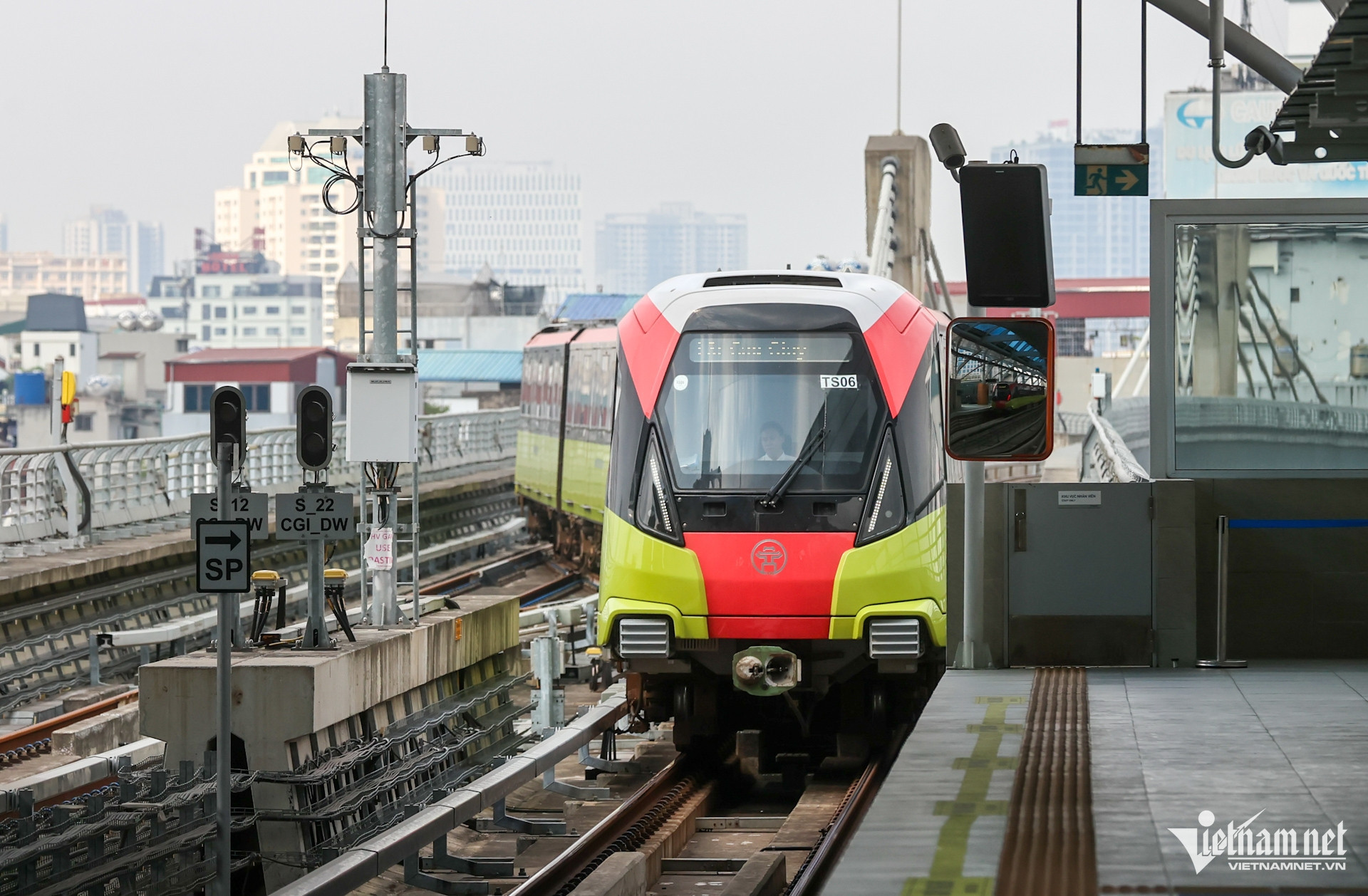
For urban rail, three lines have been completed nationwide with a total length of about 41km, including two in Hanoi and one in Ho Chi Minh City. In Hanoi, one line is fully operational, while another has completed its elevated section (Nhon - Van Cao), with the underground section from Van Cao to Tran Hung Dao expected to be finished this year.
Looking ahead, Hanoi plans to develop 18 lines totaling 1,052km, while Ho Chi Minh City will build 12 lines spanning 1,172km. Combined, the 30 lines will cover approximately 2,224km, requiring an estimated VND743.907 trillion (around US$29.4 billion).
In aviation, the minister said that by 2030, Vietnam will have 31 airports, including 15 international and 16 domestic, with a total capacity of about 294 million passengers per year. By 2050, the number is expected to rise to 34 airports, with a capacity of 533 million passengers annually.
Currently, the country operates 22 airports with a combined capacity of around 155 million passengers per year, 1.6 times higher than the previous term.
Among the planned 31 airports, six will meet 4F standards, one will be 4C (Tho Chu), and the rest will be 4E. The strategy aims to reduce the share of public investment, focusing instead on maintenance and upgrades while mobilizing private capital, particularly through PPP models.
In maritime and inland waterways, Vietnam has 309 seaports with a total length of about 107km and over 3,200km of coastline, meaning port infrastructure accounts for just 0.1% of the coastline length. There are also 44 offshore oil and gas ports. The system has a capacity of about 955 million tons per year, 1.3 times higher than in 2020.
The country also has 310 inland waterway ports, including 202 cargo ports, 11 passenger ports, and 97 specialized ports, along with 6,332 inland wharves and 2,562 ferry terminals.
In the 2026-2030 period, the minister said efforts will focus on attracting private investment to develop seaport infrastructure.
Tran Thuong
.svg)
