 Vietnamnet.vn

 Podcast



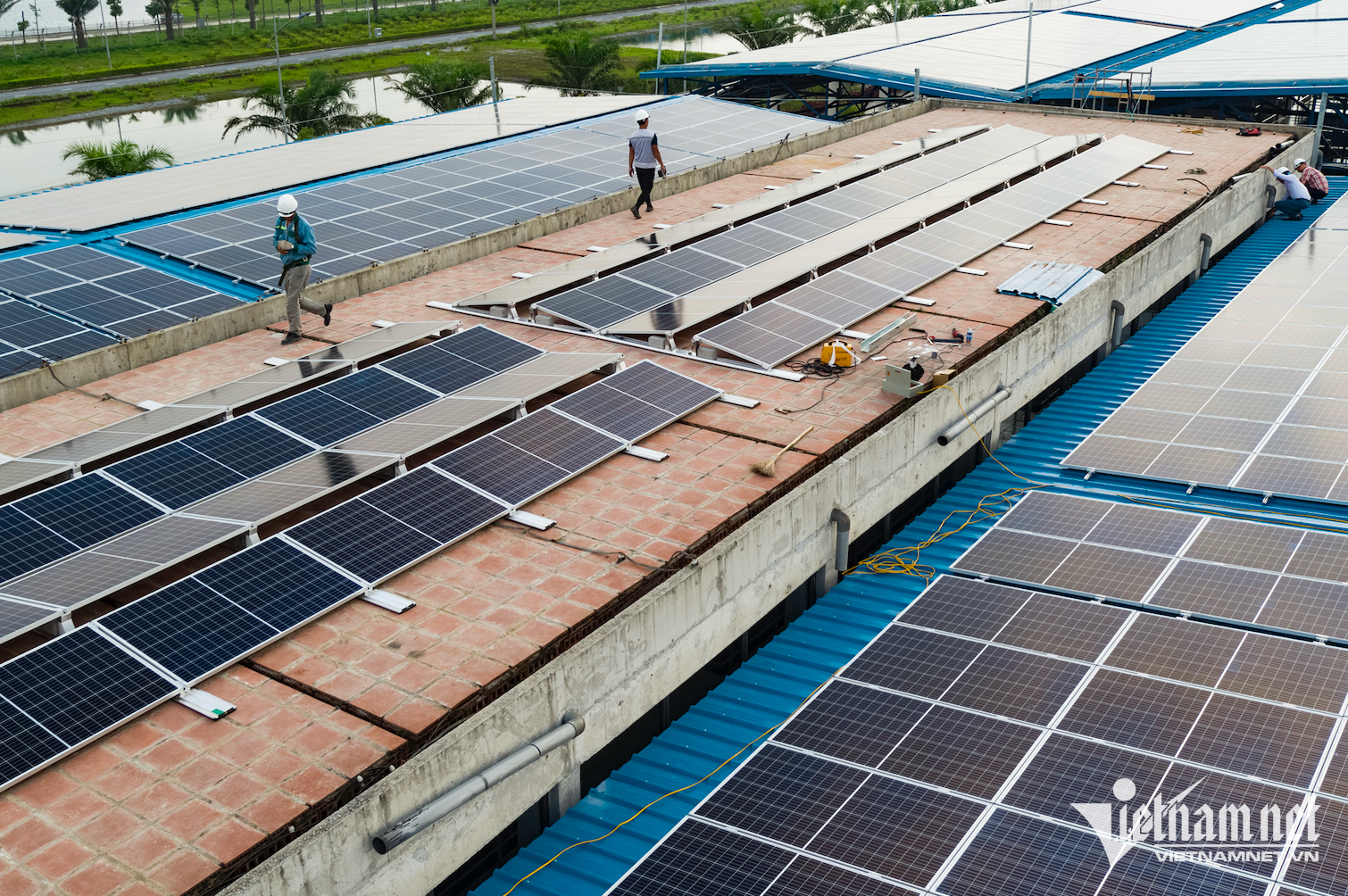
The Ministry of Industry and Trade has proposed fines ranging from USD 400 to 800 for cases where rooftop solar systems with a capacity of 100 kW or more are installed for self-use but without proper notification or in violation of existing regulations.
This proposal appears in the ministry's draft decree on administrative penalties in the fields of electricity and energy efficiency, currently open for public consultation.
Of particular interest is Article 7 of the draft, which outlines various penalties for violations related to new and renewable energy development.
For example, the ministry suggests only issuing a warning for violations involving self-produced, self-consumed power systems connected to the national grid with a capacity under 100 kW. These violations include the failure to submit a development notice or the failure to properly fulfill the required contents of such a notice.
However, repeat offenders - those who violate the rules again within 10 days of a previous penalty - would face monetary fines ranging from USD 20 to 40 for systems up to 20 kW, and USD 80 to 120 for systems above 20 kW but below 100 kW.
For systems of 100 kW or greater capacity, more serious infractions could incur fines of USD 400 to 800. These include:
Failure to submit a power source development notice or operating a system without a development registration certificate.
Failure to comply fully with the requirements of the development notice or registration certificate.
Neglecting to update or amend development registration documents when required.
Obstructing or refusing to cooperate in the development process of self-produced, self-consumed rooftop solar power, or failing to provide installation guidance and ensure safe grid connection during operation.
Improper sale of surplus power from self-use systems to unauthorized entities or at incorrect ratios.
Disregarding dispatch instructions when sending excess power to the national grid (except in safety-related cases), or failure to install appropriate monitoring and control equipment.
In cases where a wind or solar power plant is ordered to dismantle by the authorities but the owner fails to comply or deliberately delays, fines could go up to USD 3,200–4,000.
Earlier, in the third draft dated September 29 of a proposed decision from the Prime Minister regarding support for rooftop solar installations, the ministry suggested a subsidy of USD 40–60 for households installing solar systems without energy storage.
If households install both solar panels and an integrated storage system, they could receive an additional USD 40–60 in support.
At a regular press conference on October 8, Deputy Minister of Industry and Trade Nguyen Sinh Nhat Tan reaffirmed that under the revised Power Development Plan VIII, the goal is for 50% of Vietnamese households - roughly 14 million homes - to install self-produced, self-consumed rooftop solar systems by 2030.
He emphasized that the ministry strongly encourages the development of rooftop solar and has no intention of making the process difficult for citizens.
However, he also highlighted the necessity of submitting installation notifications so the electricity sector can monitor power capacity and make appropriate supply plans.
Tam An
.svg)
