 Vietnamnet.vn

 Podcast



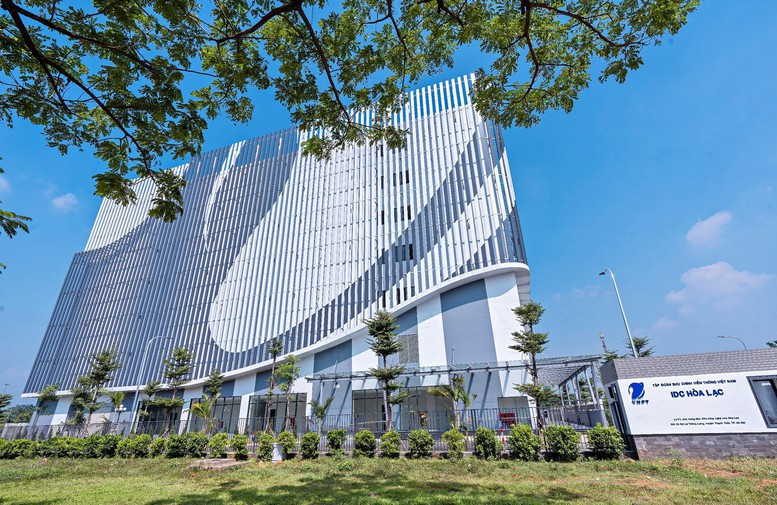
Under Circular No. 60/2025/TT-BCT dated December 2, 2025, the Ministry of Industry and Trade stipulates that electricity sold to data centers will be charged under commercial pricing instead of production pricing. Following the implementation of the circular, major firms including Viettel, VNPT, FPT Telecom, CMC and VNG Data Center sent formal petitions to the ministry regarding the revised pricing framework.
These companies reported that local power utilities have notified them of the new tariff structure. A representative of CMC Telecom said that after three billing cycles under the new rate, electricity costs - already the largest component of data center operating expenses - have risen by more than 50 percent compared to previous levels.
Such a sharp increase, the company noted, is exerting substantial pressure on financial plans, service pricing structures and the ability to maintain stable operations and expand investment.
Ngo Trong Hieu, General Director of CMC Telecom, estimated that Vietnamese technology enterprises operating data centers would collectively pay an additional VND1,000 billion per year, approximately US$40.5 million, to Vietnam Electricity.
“This immediate cost surge places many data centers at risk of losses,” he said. “It could also affect foreign investment at a time when Vietnam seeks to attract major semiconductor and AI corporations in line with the Party and State’s policies. The move runs counter to Resolution 57 of the Politburo, which promotes high technology and digital infrastructure development.”
Sharing similar concerns with VietNamNet, Le Ba Tan, General Director of Viettel IDC, said the shift from production to commercial electricity rates would significantly increase operational costs. The new framework alone is expected to raise immediate expenses by around VND1,000 billion (US$40.5 million).
“In several provinces, we have already received notices of the new tariff application,” he said. “Service providers cannot immediately pass these higher costs on to customers because contracts were signed earlier. Around 20,000 of our clients could be affected by increased pricing. The policy may also have a substantial impact on national digital transformation in the spirit of Resolution 57 and on Vietnam’s attractiveness as an investment destination.”
An industry expert told VietNamNet that in many countries, electricity consumption by data centers accounts for roughly 2 to 3 percent of national power usage. In Vietnam, however, the figure remains below 2 percent. Globally, data centers are increasingly viewed as digital infrastructure - even infrastructure of infrastructure - and are supported by strategic policies and incentives.
Data centers currently serve as the backbone of digital transformation, the digital economy, digital government and digital society. According to the expert, imposing higher electricity tariffs may dampen investment appetite among technology firms, thereby weakening Vietnam’s digital infrastructure and competitiveness.
In their petition to the ministry, Viettel, VNPT, FPT Telecom, CMC and VNG Data Center argued that data center operations should be classified as production rather than commercial activities.
They noted that data centers operate as specialized industrial-technical facilities with characteristics similar to manufacturing plants: stable base load, high electricity consumption, continuous 24/7 operations without interruption and complex multilayered technical systems for power supply, cooling, safety, backup and monitoring.
Electricity in data centers is a direct, indispensable input used to “produce” computing capacity, storage, connectivity and secure operational environments for government agencies, enterprises and organizations. It is not electricity consumed for retail, commercial or on-site consumer purposes.
Instead, data centers form foundational infrastructure enabling other sectors to function, comparable to electricity, water supply or industrial park infrastructure in the traditional economy.
They are a cross-sector production input and a critical component of digital infrastructure, linking physical infrastructure, digital platforms, IT industries, IT applications and cybersecurity.
Data centers ensure continuous and reliable data flows, forming digital ecosystems and knowledge streams that reach every organization and citizen, closely tied to cybersecurity and national digital sovereignty.
Moreover, they serve as production inputs for numerous sectors including digital government, finance and banking, industry, logistics, energy, e-commerce, healthcare, education and artificial intelligence.
For that reason, technology enterprises maintain that electricity used by data centers should be recognized as production input for digital infrastructure rather than as commercial service consumption.
VietNamNet has contacted the Ministry of Industry and Trade for further clarification on the matter.
Thai Khang
.svg)
