 Vietnamnet.vn

 Podcast



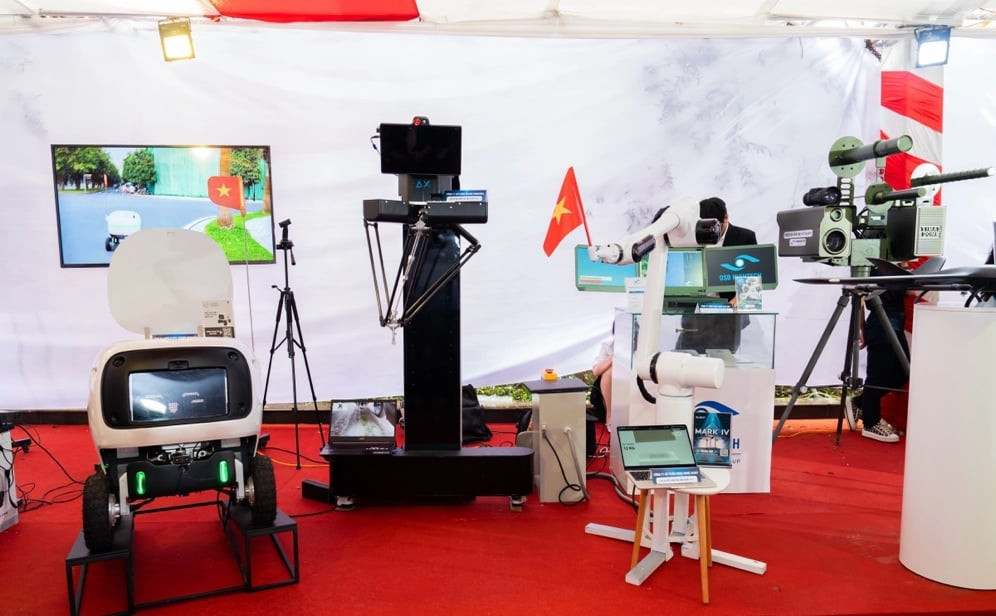
This has been a successful model, helping Vietnam rise from an economy with a low starting point to a vital link in the global production chain.
But no advantage lasts forever.
At the Strategic Dialogue Forum 2026 jointly organized by the Ministry of Foreign Affairs, the Weatherhead East Asian Institute at Columbia University (USA), and the US-ASEAN Business Council (USABC), and the Organisation for Economic Co-operation and Development (OECD) on June 25, a question was raised: When old advantages gradually lose their efficacy, what will Vietnam compete with?
The world Vietnam is integrating into is vastly different from that of the early Doi Moi era. The OECD warned that the global economy is facing slower growth, weak productivity, and rising uncertainty in trade and investment. Global greenfield FDI has also fallen sharply compared with two decades ago, while competition for investment has become increasingly intense.
Today, however, competition is no longer simply about who offers cheaper land, lower labor costs, or more generous incentives. New investment flows are increasingly directed toward countries that combine openness with strong institutions, a skilled workforce, modern infrastructure, and a clear long-term vision.
Prof Merit Janow of Columbia University described it not as a world of "deglobalization," but rather as one of fragmentation. Supply chains are not disappearing; they are being redistributed.
Economic efficiency is no longer the sole factor driving investment decisions. Economic security, national security, and technological sovereignty have become equally important considerations.
In this context, Vietnam can no longer rely solely on the advantages that served it well in the past.
Cheap labor is still valuable, but it cannot be an advantage forever. Resources are limited. Investment incentives can attract businesses, but they do not automatically create technological capabilities.
Exports can increase, but if domestic added value remains low, the economy still stands at the lower rungs of the value chain.
The growth engine that once propelled Vietnam so rapidly now needs a new kind of fuel. That includes knowledge, technology, talent, domestic businesses, and institutional quality.
Vietnam does not start this journey from scratch. After 45 years of Doi Moi, the economy has built a significant foundation. Scientific and technological capabilities and innovation have improved. The domestic startup ecosystem and technology businesses are beginning to participate more deeply in international production chains.
Yet these achievements have also made the country's limitations more visible.
Science, technology, and innovation have yet to become the primary drivers of economic growth. Investment in research and development remains limited.
High-quality human resources, core technology capabilities, and the commercialization of research outcomes have not yet met expectations. Vietnam has also yet to fully leverage international resources to promote technology transfer and strengthen its connections with the global innovation ecosystem.
Vietnam cannot transition to a new growth model simply by buying technology, importing technology, or attracting global technology corporations.
An economy cannot master technology without the capacity to learn independently, absorb knowledge, improve continuously, and gradually develop its own technologies.
Minister of Science and Technology Vu Hai Quan outlined three major transformations Vietnam must pursue: from receiving technology to mastering it; from growth based on cheap labor to growth based on talent and innovation; and from a low-cost advantage to a competitive advantage based on technology.
These three transformations are not merely issues for the science and technology sector. They represent a fundamental shift in how Vietnam creates competitive advantages.
Under the new growth model, competitive advantages must be built on knowledge, talent, technologically capable domestic enterprises, the ability to commercialize research, and institutions that are flexible enough to encourage innovation while remaining transparent enough to inspire confidence.
Strategic technologies, therefore, are the true test of a nation's development capacity.
Technology only truly becomes strategic when it is mastered, applied, and commercialized into products, services, productivity, and added value.
Vietnam has begun to construct a policy framework for the new era, from the National Steering Committee on Science, Technology and Innovation Development, the list of priority strategic technologies to be developed, to the goal of forming strategic technology enterprises.
But the biggest challenge is translating those guidelines into businesses, technology, products, and productivity. This becomes most evident in the story of FDI.
to be continued...
Tu Giang - Lan Anh
.svg)
