 Vietnamnet.vn

 Podcast



Dr Hoang Ngoc Vinh, former Director of the Professional Education Department (Ministry of Education and Training), speaks below about the causes of this pressure and suggests policy solutions to help parents and students lighten the burden while improving the efficiency of secondary education.
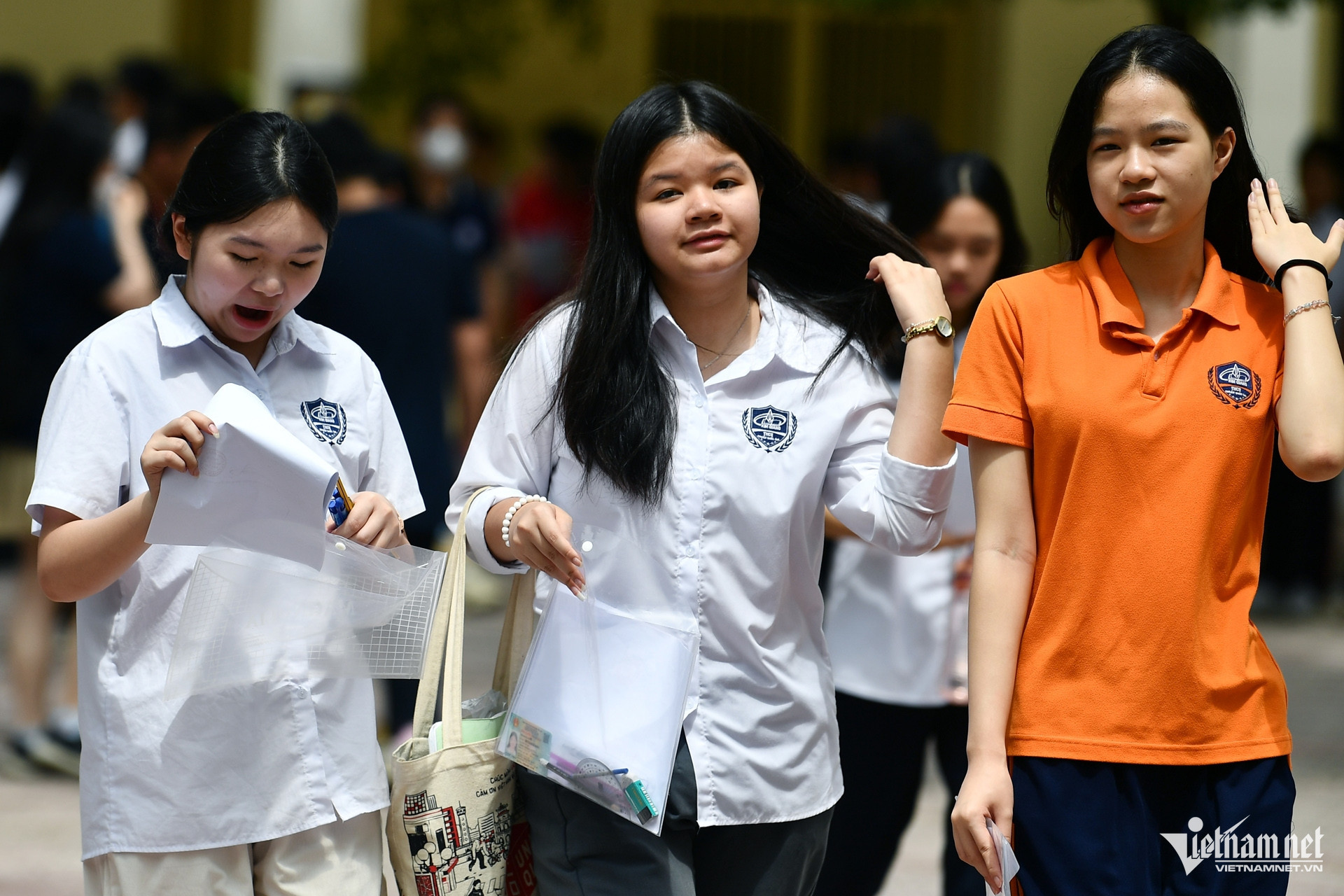
In major urban areas, as each grade 10 enrollment season approaches, pressure weighs heavily on parents and grade 9 students. This anxiety is not groundless. In the context of rapid scientific and technological changes, education today is seen as the minimum foundation for learners to continue higher education, switch careers, and update skills throughout their working lives.
Meanwhile, the number of seats at public high schools, especially in inner-city areas, is limited. When supply falls short of demand, competition is inevitable. As the race intensifies, extra classes focused on “exam drilling” and “test-taking tricks” quickly become an almost compulsory choice for many families in order to secure a place in public schools.
Vocational education
From the 2025-2026 school year, the policy of waiving tuition fees for public-school students and providing tuition support for those attending private institutions is a noteworthy step forward, reflecting social responsibility and easing financial burdens.
However, reality must be faced: tuition waivers do not create more seats. In fact, lower costs may further increase the appeal of public schools, intensifying the pressure to get in the schools. For many low-income urban families, the high tuition at private schools plus living expenses remain a very big barrier.
Therefore, to sustainably relieve exam pressure, it is not enough to funnel all ninth grade graduates through a single “narrow gate.” What matters is opening multiple pathways of equivalent value.
Post-secondary vocational education is expected to act as a “valve to ease pressure,” but in practice it is not yet attractive enough. Reasons include social bias that views vocational tracks as second-tier options, parental fears that children’s futures are “decided” too early, and unclear, unconvincing pathways for progression, employment opportunities, and income.
To draw students into vocational education and reduce pressure on the public grade 10 exam, this pathway must become a genuinely valuable option. Students should still receive core general education to allow further study and long-term adaptability; and learning should be linked to workplaces to demonstrate practical relevance. And, most importantly, there must be a transparent mechanism on credit transfer which allows students to continue their education when they want.
International experience shows that in countries where vocational education is designed as a high-quality option closely tied to labor market needs, parents no longer see the academic track as the only way.
Switzerland is an example. Many students after secondary participate in vocational education programs, with apprenticeship playing a central role.
Exam governance
The unreasonable exam governance itself inadvertently increases pressure. One clear example is the late announcement of the third exam subject in many localities.
In principle, students have three exam subjects, including math and literature, and a third subject, which is decided by education departments every year.
In general, local education departments only announce the third exam subject just three months before the grade 10 entrance exam. The information about third exam subject does not come soon enough to prevent students from skewed learning, or academic imbalance, i.e., they only spend time on learning exam subjects, while ignoring other science subjects.
However, this causes difficulties for students. As they are uncertain about the third exam subject, they have to bear a larger workload and increased psychological pressure, while learning efficiency is not necessarily improved.
Also, uncertainty about exam subjects weakens the role of schools. Teachers find it difficult to focus on consolidating core competencies, and students easily switch to an "exam preparation" mode instead of mastering the curriculum.
When the exam remains an unknown until the last minute, pressure is not reduced, but is pushed back onto families and learners through extra classes outside of school. In that sense, announcing exam subjects late does not directly create competition, but amplifies the sense of risk in an already overloaded system.
To reduce pressure, the Ministry of Education and Training needs to strengthen communication and invest more substantively in vocational education, and Departments of Education and Training should manage exams with stability and transparency.
Thuy Nga
.svg)
