 Vietnamnet.vn

 Podcast



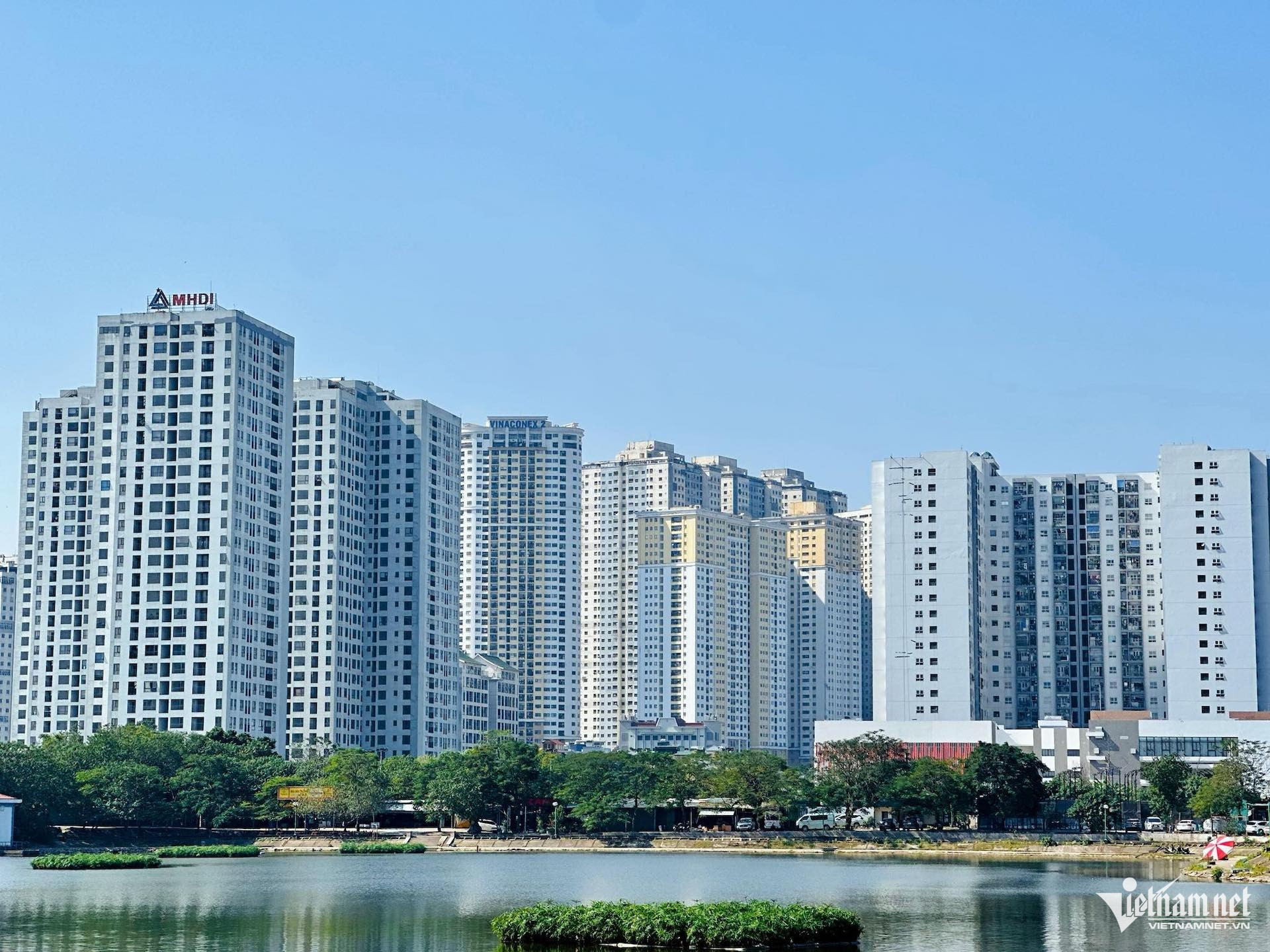
According to the Vietnam Association of Real Estate Brokers (VARS), as real estate prices have far outpaced average incomes while interest rates and capital costs rise, the market is narrowing its pool of participants. Investors relying heavily on financial leverage and lacking long-term strategies will gradually be pushed out of the game.
Rising risks in short-term flipping and high leverage
VARS reported that in 2025, the market recorded about 128,000 newly launched products, the highest level in the 2019–2025 period.
However, rising supply does not mean the market has been fully “quenched.” Product structure remains imbalanced, with affordable housing still in severe shortage, while most new supply comes from high-end apartment projects and high-value low-rise products.
Notably, about 25 percent of the apartment supply on the market has selling prices exceeding VND100 million/sqm, mainly developed by a few large developers.
Despite the rapid increase in supply, real estate prices continue to set new levels. According to VARS, as supply increases widespread with more options, the market begins to enter a stage of substantive competition.
Price levels remain high, but liquidity is no longer evenly distributed across all regions and segments. Differentiation is becoming clearer between projects, developers, and customer groups.
"In the context where real estate prices, especially in major cities, have risen high compared to average income, while capital costs and loan interest rates continue to create pressure, the market is gradually narrowing its participants. Buyers with real accommodation demand must have a solid financial foundation and long-term accumulation capacity. Investors can no longer easily achieve quick profits as in the previous period," a VARS expert commented.
The expert added that short-term flipping strategies based on unverified information, herd effects, or short-term expectations are becoming increasingly risky, especially as market data is gradually being made more transparent, including the assignment of unique identification codes to properties.
Investors are therefore being forced to adopt a more selective mindset, prioritizing real value, usability, liquidity and risk management. Those using high financial leverage without long-term strategies will gradually be eliminated from the market.
On the other hand, developers are also under significant pressure from land costs, project development expenses and financial costs. Companies with weak financial capacity, excessive reliance on leverage or products misaligned with market demand will soon see risks emerge.
Real demand exists but becomes increasingly selective
Nguyen Vu Cao, Chair of Khang Land, stated that even when capital costs increase, the market still records transactions in certain segments.
Demand mainly comes from three groups: real buyers with existing financial savings; high-income customers who are less dependent on bank loans; and investors owning stable cash flows from rental activities with the self-financing capability.
"This shows that the real demand of the 2026 real estate market still exists and is sustainable, but it is no longer as easy-going as before. Buyers are becoming more rational, only willing to spend money on products with reasonable prices, clear use value, and suitability for their financial capacity," Cao emphasized.
In medium and long term, VARS said that the real estate market still faces many obstacles that must be addressed for a sustainable recovery, with the role of state management agencies being a key factor.
According to VARS, land price frameworks and adjustment coefficients remain major bottlenecks. New land price frameworks have pushed land prices higher, while many localities have yet to issue appropriate adjustment coefficients, complicating project implementation, especially in newly developing areas.
In addition, site clearance remains problematic due to a lack of decisive action, requiring unified guidance to accelerate progress.
Another bottleneck, VARS noted, is interest rates, a factor that warrants close attention. In a short period, interest rates have shown signs of rising quickly, placing pressure on both project developers and end-users.
VARS believes that credit control in real estate needs to be implemented cautiously and selectively, to limit systemic risks without causing shocks to the market and development capital flows.
Hong Khanh
.svg)
