 Vietnamnet.vn

 Podcast



The story began with an early morning call on November 20, 2025. A friend lost contact with relatives in a deeply flooded area. Luong Viet Quoc, CEO of RTR, a tech firm, and his co-workers did not wait. They loaded relief supplies and four drones onto their vehicle, communicating with local authorities while re-mapping routes on digital maps amidst landslides and blockaded bridges.
On the afternoon of November 22, RTR’s Hera drone reached an isolated kindergarten where seven children and 11 adults were stranded. The drone transmitted live images back to the command center, guiding ground forces to approach safely.
This story reflects an important milestone: drones manufactured by Vietnamese companies are entering life-saving fields such as rescue operations and disaster response with technology, initiative and decisive action.
Rescue missions during floods that swept across several central and Central Highlands provinces in late 2025 were markedly different from the past. The drones flew through heavy rain and wind, delivering relief supplies to areas where other rescue vehicles could not reach.
In another story, a Vietnamese private enterprise has entered the deepest layer of institutional infrastructure: chip-based citizen ID cards, digital identification and data sovereignty.
For nearly two decades, president Nguyen Trong Khang of MK Group has built capacity in secure card manufacturing, biometric matching solutions and digital identity authentication systems for tens of millions of citizens.
At one point, MK Group stated it had produced tens of millions of chip-based citizen ID cards. These cards are not merely administrative documents but the foundation of digital state governance, now mastered at a high level by a Vietnamese private enterprise.
In both cases, private enterprises are not merely auxiliary service providers or subcontractors, but co-actors in some of the most sensitive fields.
A private sector that makes up 50% of GDP
This sector contributes more than 50 percent of GDP, over 80 percent of jobs and nearly one-third of export turnover, yet its internal structure remains thin and vulnerable. On average, the country has only one enterprise for every 10 people; nearly 20 provinces have fewer than three enterprises per 1,000 residents.
Only around 40 percent of enterprises are profitable, and the figure for micro-enterprises is below 30 percent.
An economy aiming for double-digit growth cannot remain confident if most enterprises operate under small-scale models, lacking capital, data, markets and a truly secure legal framework for long-term investment.
The biggest bottleneck does not lie in entrepreneurial spirit, but in institutional regime and procedures. Enterprises still must apply for licenses under fixed business categories, while new models can be halted because they are “not yet regulated.” Escalating land costs have rendered many manufacturing projects unfeasible. Most SMEs have almost no access to long-term capital or advanced technology.
These barriers are being gradually addressed through a quartet of resolutions issued by the Politburo, reflecting a clear development mindset: modern law is the foundation, technology is the engine, international integration is the market space and the private sector is the central driving force of the new growth model.
The State cannot act as both referee and player; private enterprises cannot remain outside strategic sectors; and the institutional regime cannot simultaneously call for private innovation while maintaining a “jungle of procedures” that restrains them.
Unblocking bottlenecks
In July 2025, at a national conference on resolving difficulties for stalled projects, authorities reported 2,981 delayed projects with total estimated investment of $235 billion and about 347,000ha of related land.
These projects involve housing, urban infrastructure, logistics, industrial parks, jobs and future budget revenues. Yet they have been suspended due to unclear violations, changing laws over different periods, overlapping documentation and, most importantly, fear of accountability.
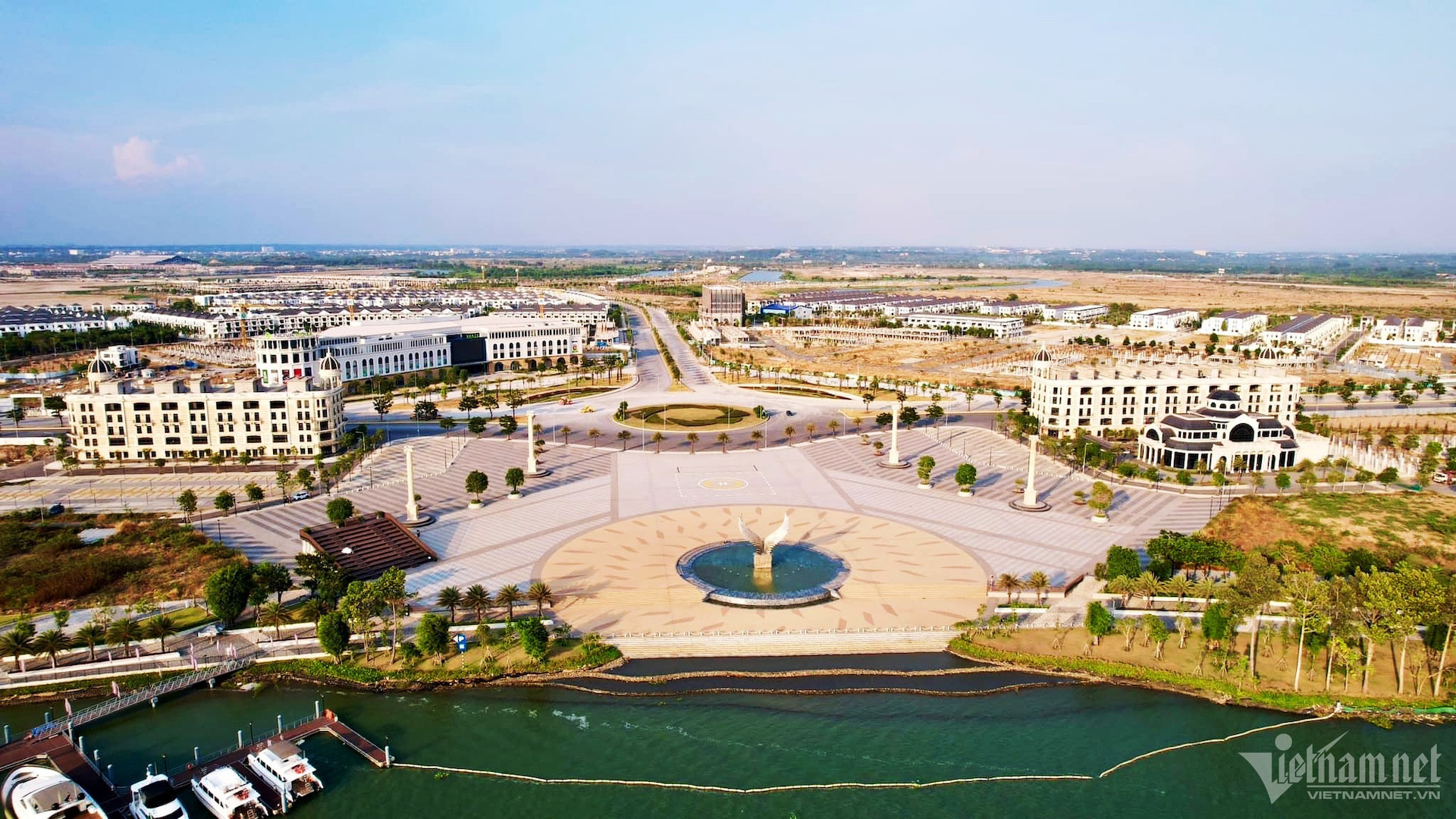
Aqua City in Dong Nai province offers a case study showing that institutions only matter when they are applied.
After a prolonged period of legal obstacles and hesitation, Dong Nai adopted a different approach: provincial leaders came forward and took responsibility, established an inter-agency task force, consolidated all obstacles under one focal point, conducted periodic reviews and resolved issues decisively.
The successful handling of the Aqua City project sends a message: if institutions are operated correctly, resources frozen for many years can be released in a few months. When that method is replicated, 2,981 suspended projects will become a portfolio of opportunities for the private sector and for supply-side growth.
Tu Giang
.svg)
