 Vietnamnet.vn

 Podcast



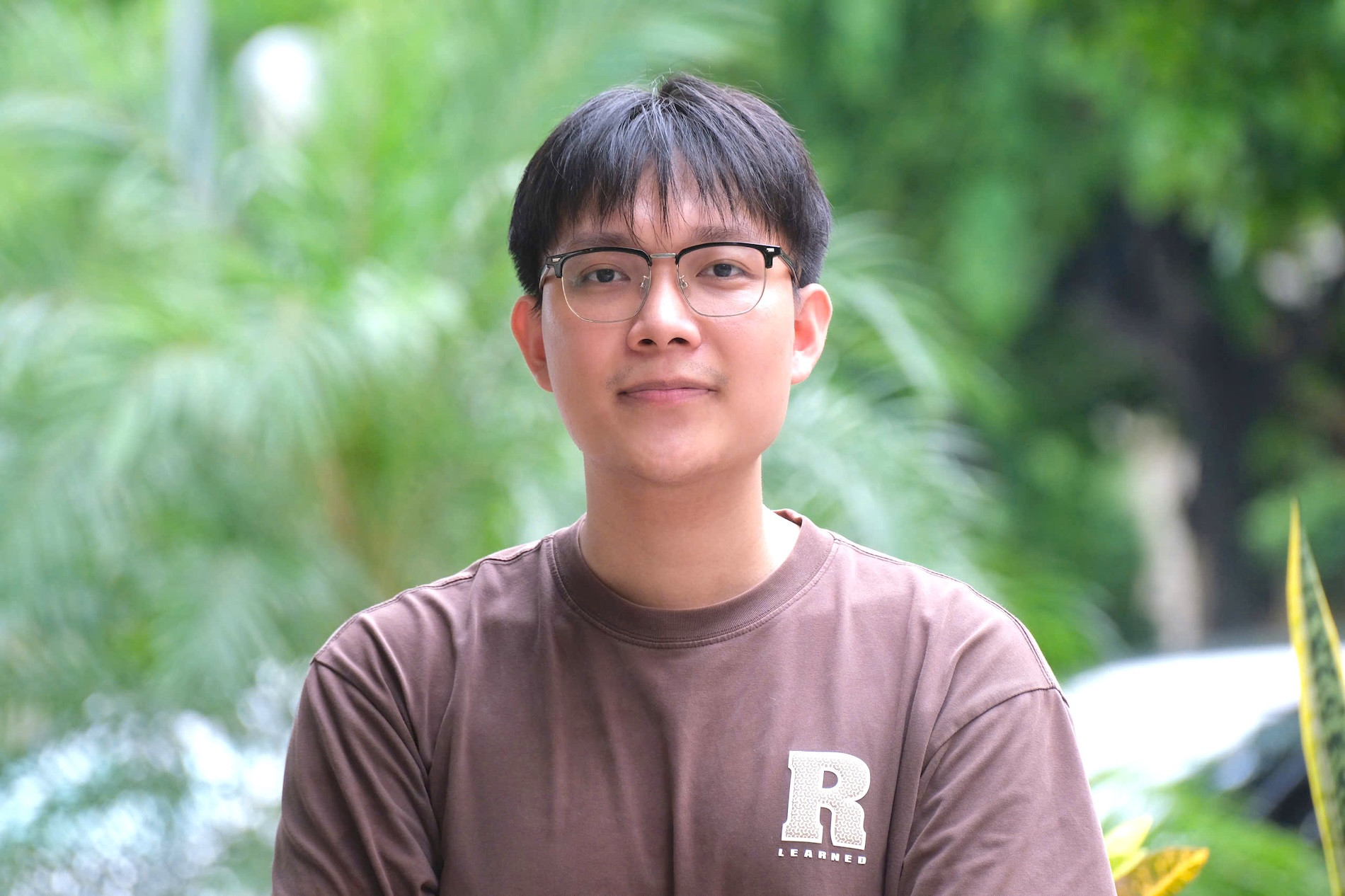
Six years later, he has become the valedictorian of the Medical Residency program in Medicine at Hanoi Medical University.
At this year’s medical residency entrance exam at Hanoi Medical University, Quan, born in 2002, ranked first among more than 1,000 candidates in Medicine, scoring 24.9 out of 30. The exam is considered one of the most competitive at the university, as each medical student is allowed to sit it only once in their lives, in the year they graduate.
Earlier, Quan was also among the top 20 students in his cohort, with a cumulative GPA of 8.21 out of 10.
“Before the exam, my only goal was to make the top 30 so I could choose my preferred specialty. Becoming the valedictorian was a surprise to me,” Quan said.
Math enthusiast, provincial runner-up
Quan’s mother is a secondary school math teacher, but he rarely needed her help with his studies as a child. He developed a habit of studying independently, solving problems on his own and finding learning methods that worked for him.
During secondary school, Quan was a key member of the gifted-student team in the former Anh Son District, Nghe An Province. In ninth grade, he won first prize in the provincial math competition.
He was admitted to the math-specialized class at Phan Boi Chau High School for the Gifted with a very high score. However, because he lived far from the school, he chose to attend Anh Son 1 High School instead. In 11th grade, he won third prize in the provincial math competition for excellent students.
Despite his strength in mathematics, Quan decided early on to pursue medicine because of his passion for the white coat. In 2020, he took the B00-group exam and scored 29.4 points, including perfect 10s in chemistry and biology. The result made him the second-highest scorer in Nghe An and earned him admission to the Medicine program at Hanoi Medical University.
Once he entered university, Quan quickly realized that the volume of knowledge was vastly different from what he had learned in high school.
“It was a whole new world of knowledge. The more I learned, the more I realized how endless it was,” Quan recalled.
He adopted an active approach to learning rather than simply absorbing information. Before each lesson, he would read ahead and ask himself questions such as, “Why is it like this?” After finishing a lesson, if he still had questions, he would continue looking for answers online and in foreign-language materials. He would stop only when he had no questions left.
While his first years at university were mainly about building knowledge, clinical training gave Quan a much clearer sense of the responsibility that comes with being a doctor.
In his fourth year, during his first emergency shift in cardiology, Quan directly assisted with resuscitation and worked alongside the medical team to save a patient. Until then, he had practiced such procedures only on training models at university.
“At that moment, there was no time to panic. That experience made me truly understand the responsibility of a doctor: saving someone who is on the brink of death,” Quan recalled.
According to Quan, clinical training requires quick reflexes. Students may encounter dozens of patients each day with different symptoms and conditions, so they must quickly identify the key issues in each case.
During that period, Quan would read and learn about different diseases as quickly as possible after returning from the hospital so he could continue his clinical training the next day.
‘Learning is a long-distance race’
Quan learned about the medical residency entrance exam in his first year and identified it as a long-term goal.
The medical residency exam consists of three papers covering more than 10 subjects. Quan described this year’s exam as difficult but well-designed. Rather than trying to trick candidates, the questions required them to apply reasoning.
As the top-ranked candidate, Quan became the first student eligible to choose a medical residency specialty this year. However, he has not made a decision yet and wants to research the specialties carefully before making his choice.
“Whatever the result, once you enter residency, you still have to start again from the beginning. I think the most important thing is to keep making an effort to do your job well as a doctor,” Quan said.
Thuy Nga
.svg)
