 Vietnamnet.vn

 Podcast



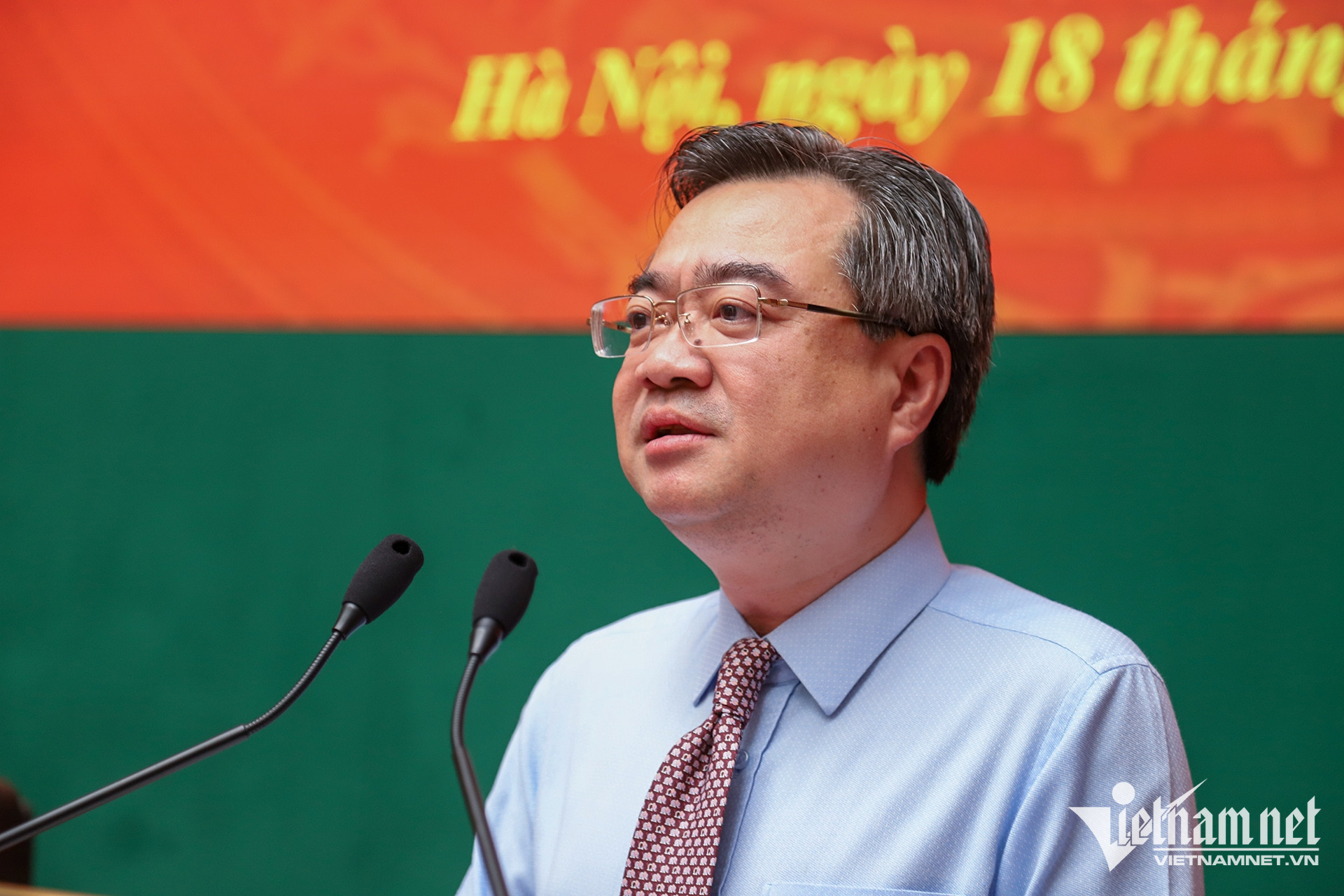
On August 18, the Ministry of Public Security, the Central Policy and Strategy Commission, the Ho Chi Minh National Academy of Politics, and the Central Theory Council jointly organized a national conference titled "New Theoretical Thinking on Comprehensive, Inclusive, and Development-Enabling Security in Modern National Governance, Construction, and Defense of the Socialist Fatherland of Vietnam."
Given rapid, complex, and unpredictable global changes as Vietnam enters a new era of development, national security thinking faces demands for fundamental innovation.
The conference aimed to clarify new perspectives on national security within modern national governance. It analyzed issues across specific national security domains and proposed strategic directions, solutions, and policy recommendations to implement this new theoretical framework.
In his opening speech, Nguyen Thanh Nghi, Head of the Central Policy and Strategy Commission, noted that the conference took place following the Central Committee's issuance of Resolution 19 on innovating Vietnam's development model and Resolution 22 on the National Security Strategy.
These two strategic resolutions supplement and develop the Party's theoretical framework regarding development models and national security in the new era.
Nghi emphasized that modern national governance extends beyond traditional administrative management or risk control. It involves institutional creation, as well as organizing and operating the national system toward a democratic, modern, smart, transparent, effective, and efficient manner. It places citizens at the center, relying on data, the rule of law, and decentralization paired with accountability as primary methods.
Within this governance framework, comprehensive and inclusive security no longer sits outside or behind development. Instead, it integrates seamlessly across all policies, spaces, and stages of development.
Security that enables development means moving from a mindset of "protecting against risks" to one of "building capacity and safe development spaces." Security must go beyond preventing and neutralizing threats to actively create a stable, trustworthy environment, mitigate systemic risks, turn challenges into opportunities, and enhance national autonomy and resilience.
According to Nghi, when security assumes its proper place in national governance, it becomes a strategic resource and a prerequisite for fast, sustainable, and inclusive development.
He said that building and defending the Socialist Fatherland of Vietnam in the new era demands comprehensive, high-level, deep, and innovative theoretical thinking.
Security and development unified under a single strategy
In his keynote remarks, Doan Minh Huan, president of the Ho Chi Minh National Academy of Politics, said the conference topic addressed a major strategic issue amid rapid global changes and growing uncertainty and risks spreading across sectors, which requires a new approach to building national security.
Regarding the new resolutions issued by the Party Central Committee, Huan said that although they approach the issue from different perspectives, they share a common requirement: security, and development must be unified within a structurally integrated strategy rather than treated as two separate aspects.
The new approach requires moving beyond the separation of security and development. Overemphasizing short-term growth while underestimating strategic dependency risks can undermine the very capacity for growth and development and, in the event of a breakdown, may even lead to irreversible damage.
Therefore, security must prevent and contain risks from an early stage and from afar where they could undermine development capacity and national strategic autonomy, while ensuring room for innovation and the normal functioning of socioeconomic life.
He summarized this new perspective through three strategic shifts:
Scope: Moving from localized, fragmented, or sector-specific coordination to a comprehensive, inter-agency, and multi-level framework.
Methodology: Shifting from reactive measures after risks emerge to proactive risk identification, management, and resilience-building from the start, guided by the principle that wherever development begins, security must integrate, and wherever development expands, security must accompany it.
Focus: Transitioning from defending the status quo to protecting choices, expanding strategic leverage, and enhancing future development capacity.
According to the Director of the Ho Chi Minh National Academy of Politics, these shifts do not diminish the role of threat prevention and mitigation. Instead, they position those tasks within a broader framework where protection and creation, stability and innovation, and short-term and long-term interests are addressed simultaneously through a dialectical perspective.
Tran Thuong
.svg)
