 Vietnamnet.vn

 Podcast



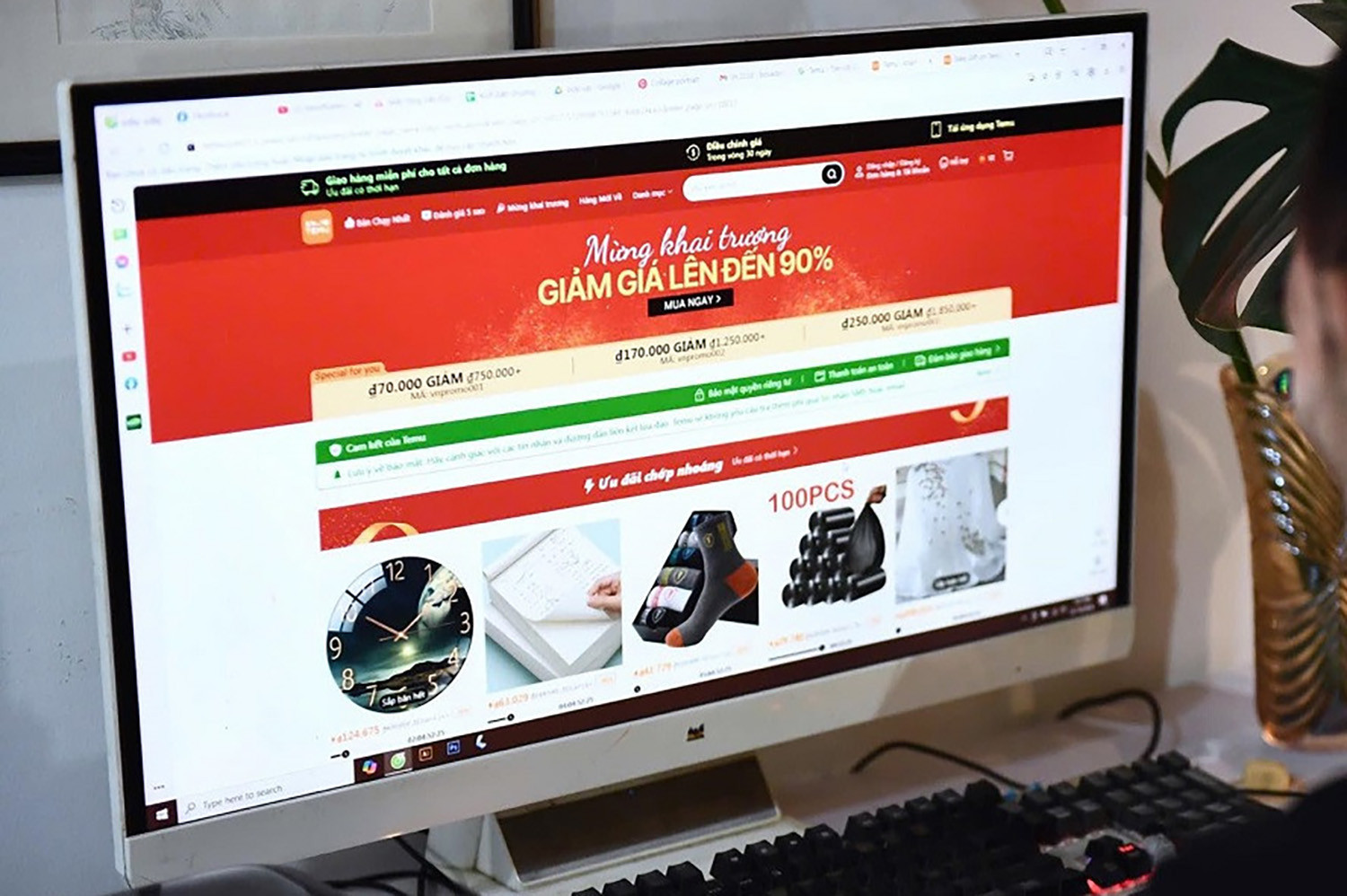
Thanh Mai (28, office worker, monthly income of VND18 million) developed a habit of scrolling through e-commerce livestreams every evening for entertainment.
Initially, she intended to buy kitchen supplies with a budget capped at VND800,000. However, fast-paced livestreams combining flashy visuals, persuasive pitches, discount vouchers, and real-time order alerts prompted her to make purchases without evaluating whether the items were necessary.
During her first week, after purchasing a non-stick frying pan for VND220,000, she impulsively added a 360-degree spice rack for VND115,000 and a mini handheld vacuum cleaner for VND299,000 simply because the host advertised them at half price. Her first-week expenditure reached VND634,000.
The following week, while tuning into home goods and fashion livestreams, she ordered a food storage container set, a thermos that came as a free gift, and discounted t-shirts, spending over VND800,000.
By mid-month, she hunted further deals on an office pillow-blanket set, a plastic shoe rack, and high-ankle socks, spending another VND433,000.
Her spending peaked in the final week when clear-out alerts for an air fryer priced at VND799,000, a skincare gift set, and a decorative night light led her to complete VND1.35 million in transactions during a single session.
Upon reviewing her transaction history, Mai discovered she had spent over VND3.2 million across 13 online orders. Compared to her initial VND800,000 budget, her actual expenditure quadrupled, exceeding planned spending by VND2.4 million.
Instead of accounting for just over 4 percent of her monthly income, these impulsive purchases had consumed nearly 18 percent of her salary.
What was more striking was that throughout the month, Mai had felt like a savvy shopper because she had calculated that discount codes had saved her more than VND1.6 million. In reality, she had spent over VND2.4 million on 13 items that had not been part of her plan at all.
The overspending immediately disrupted her fixed monthly savings target of VND3 million, leaving her with just VND565,000 in savings for the month.
There was another problem. After a month of use, the mini vacuum cleaner had been abandoned because its suction was too weak. The thermos had been relegated to a corner of the cupboard because she already had two at home, while the plastic shoe rack wobbled and could not bear much weight. Mai estimated that the items she had barely used or not used at all after a month were worth around VND1.5 million.
How to curb impulse shopping
Pham Thu Trang, a financial specialist, said every purchase should be evaluated based on actual needs, budget and the likelihood that the item will be used.
One factor that easily prompts people to buy is the feeling that they are saving money. A product originally priced at VND1 million and discounted to VND700,000 may seem like a bargain.
But if the product was never part of the spending plan, VND700,000 remains an out-of-pocket expense. Comparing the original price with the discounted price can cause shoppers to focus on how much they are saving rather than how much they actually have to pay.
Trang advised shoppers to ask themselves, “Would I buy this item if there were no discount code?” before placing an order. If the answer is no, the purchase is likely being driven by the promotion rather than a genuine need.
Consumers should also build in a waiting period before paying. For nonessential items, instead of buying immediately during a livestream, shoppers can add products to a watchlist and review them 24 hours later. If the item is still necessary and fits within the budget, they can then decide whether to buy it.
Setting a shopping budget is another important step. For example, someone earning VND20 million a month could set a fixed limit for nonessential purchases in advance and stop shopping once that budget has been used up.
Separating spending accounts can also help people manage their money. An account for fixed expenses, such as rent, electricity and water bills, food and savings, should be kept separate from the funds allocated to nonessential shopping.
Duy Anh
.svg)
