 Vietnamnet.vn

 Podcast



Covering about 11,000 hectares, the site is a “living museum” preserving geological traces dating back to the Pleistocene epoch while serving as the last major refuge of the critically endangered, endemic Delacour’s langur. To strengthen the nomination, authorities and scientists are working to document and validate its outstanding biodiversity and geological values through scientific research and field evidence.
A karst geological museum
The Van Long–Kim Bang–Tam Chuc complex possesses exceptional geological and ecological characteristics. At its heart lies the Van Long Wetland Nature Reserve, often dubbed the “wave-free bay,” where isolated limestone mountains rise like continental islands amid vast wetlands.
Its uniqueness stems from the interaction between karst topography and wetland ecosystems, creating a rare tropical landscape that supports rich biodiversity. The proposed heritage area encompasses key habitats and preserves an ecological continuum that has remained largely intact since the Pleistocene, making it one of the few such sites in Southeast Asia.
According to Dr La The Phuc from the Vietnam Institute of Applied Geosciences and Mineral Resources, recent surveys have identified several significant geological heritage sites, including prehistoric relics and cultural remains found within limestone caves and rock shelters in Van Long.
Tam Chuc’s cave systems also contain distinctive geological features. Formed over millions of years by water dissolving limestone, they showcase remarkable underground landscapes. Archaeologist Nguyen Thi Mai Huong noted that the caves display exceptional diversity in form and origin, particularly their rare sawtooth-shaped stalactites, found in nearly all surveyed caves.
With dozens of caves already identified, the Van Long–Kim Bang–Tam Chuc complex represents a vast open-air geological and archaeological museum with significant value for scientific research and education.
Miraculous revival of primates
The Delacour’s langur (Trachypithecus delacouri), endemic to Vietnam, is listed as critically endangered by both the International Union for Conservation of Nature (IUCN) and Vietnam’s Red Book. Its successful conservation and recovery underscore the site’s globally significant biodiversity.
According to conservation records, about 87% of the species’ remaining wild population is found in Ninh Binh and adjacent connected habitats. In Van Long alone, the population has increased from around 40 individuals before 2000 to more than 250 today, thanks to coordinated efforts by authorities, conservation organisations, and local communities.
Dr Hoang Van Lam, Vietnam Country Director of Fauna & Flora International (FFI), said current data confirms Van Long’s role not only as the largest habitat for the species but also as a critical genetic reservoir supporting its long-term recovery.
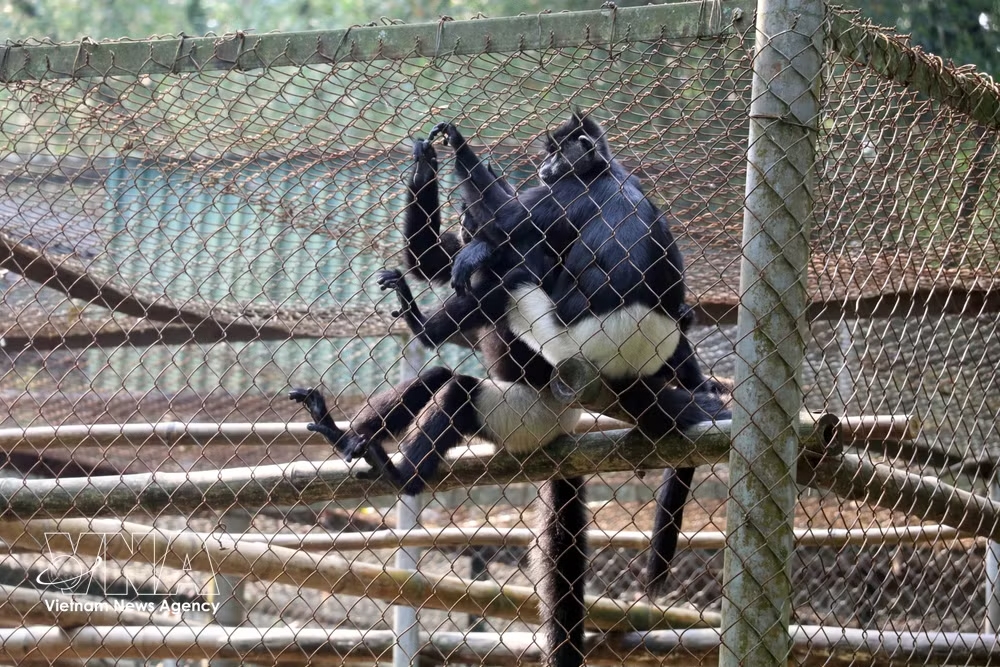
Kim Bang’s limestone forests host the world’s second-largest population, estimated at 120–150 individuals. A third population of 37 langurs was recently recorded in the Dong Thai protective forest, reflecting a positive recovery trend in both population size and distribution.
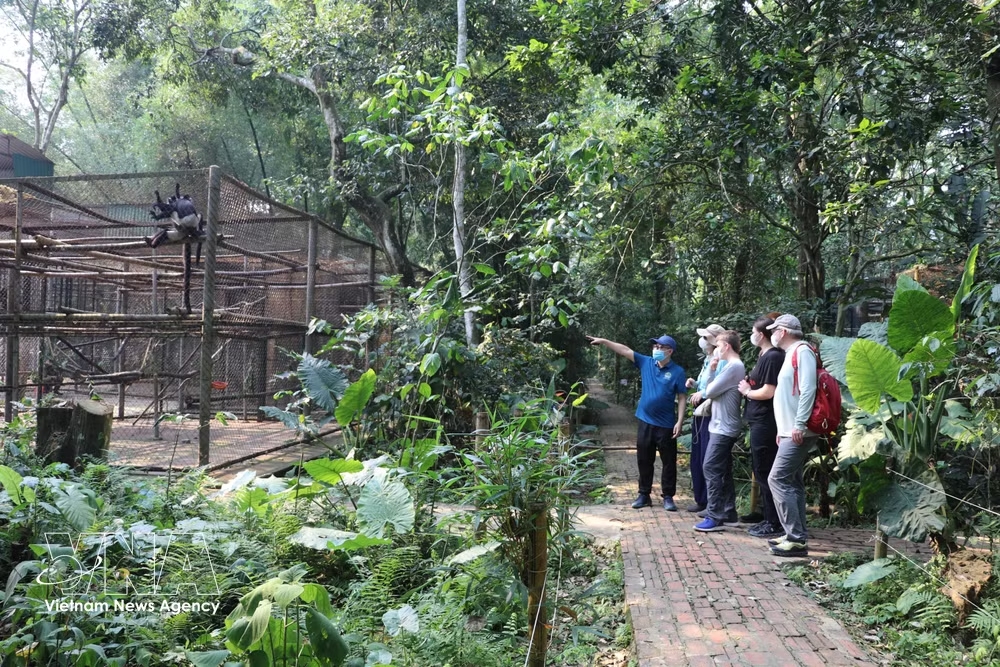
Primate conservation expert Tilo Nadler, who has worked for decades with the Endangered Primate Rescue Centre (EPRC), said the centre operates large semi-wild enclosures where langurs and gibbons develop survival skills before release. In 2025 alone, the centre rescued 18 individuals and recorded the birth of 19 offspring.
Strong forest protection measures, including anti-poaching, resource use, and livelihood support programs for local communities, have protected the endangered primate in the region.
According to Do Van Tinh, Director of the Ninh Binh Special-Use Forest Management Board, these integrated measures have helped safeguard critical habitats.
The revival of the Delacour’s langur population in the Van Long–Kim Bang–Tam Chuc area stands as a major conservation success and provides key scientific evidence supporting the site’s Outstanding Universal Value, strengthening its bid for UNESCO World Heritage recognition./. VNA
.svg)
