 Vietnamnet.vn

 Podcast


Cua Dai Beach in Hoi An Dong Ward, Da Nang, was once named among Asia's 25 favorite beaches by TripAdvisor. But from around 2014, severe coastal erosion began eating away at stretches of its shoreline.
Powerful waves washed away sand, narrowed swimming areas, damaged coastal structures and disrupted tourism businesses and the livelihoods of local residents.
In March 2025, the former Quang Nam province launched the Hoi An Coastal Erosion Prevention and Sustainable Protection Project, with an investment of more than VND 982 billion ($37.8 million).
In April 2026, Da Nang began another emergency project to repair the Thu Bon River embankment in the An Luong area and address coastal erosion along Hoi An's shoreline, valued at more than VND 214 billion ($8.2 million).
Together, the Hoi An coastal protection project and the erosion-control component of the emergency works represent an investment of approximately VND 1.196 trillion ($46 million).
Cua Dai Beach regains its sandy shoreline
Coastal protection structures and beach restoration efforts have helped revive Cua Dai's landscape, creating conditions for tourism and seaside services to recover.
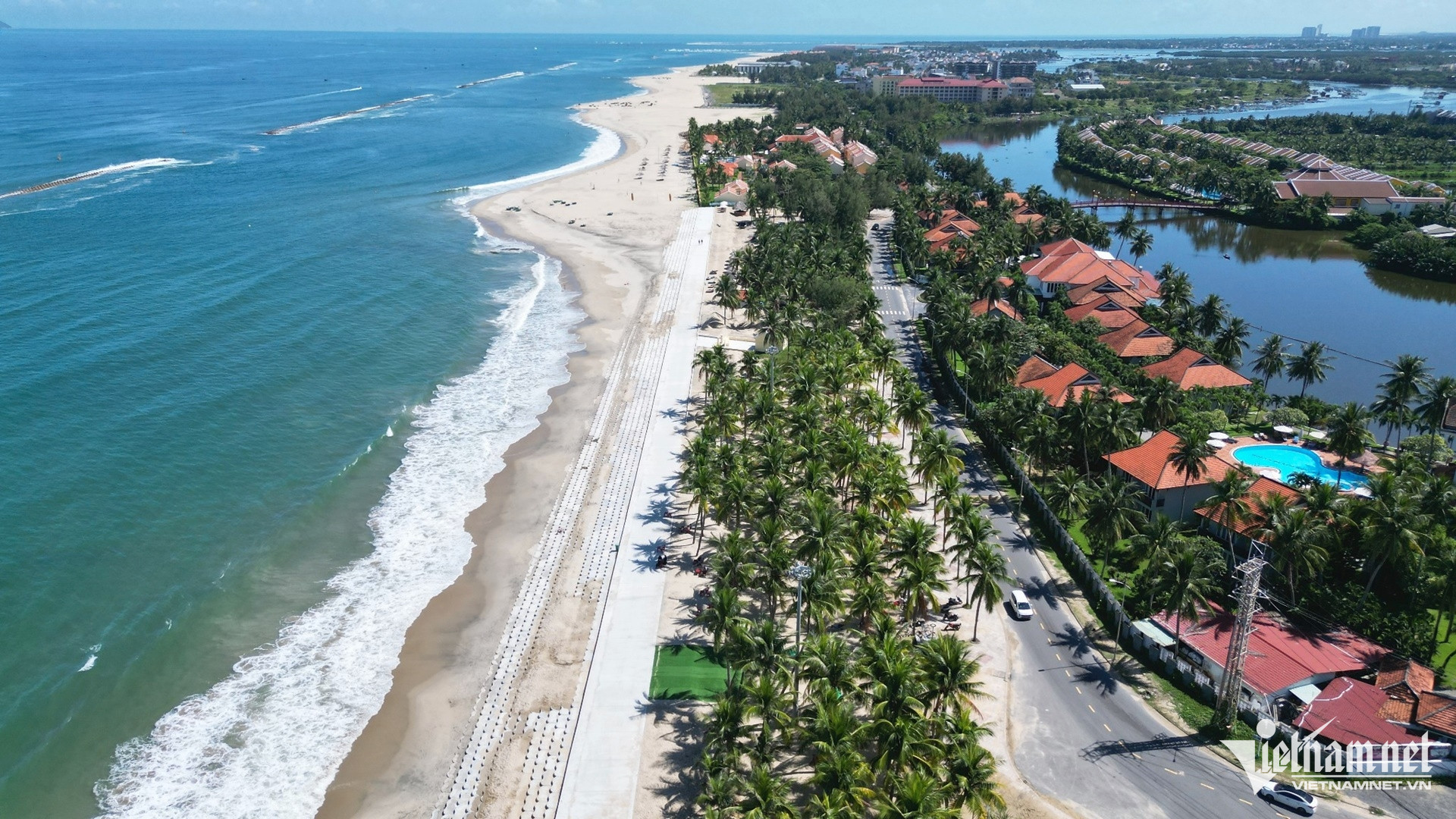
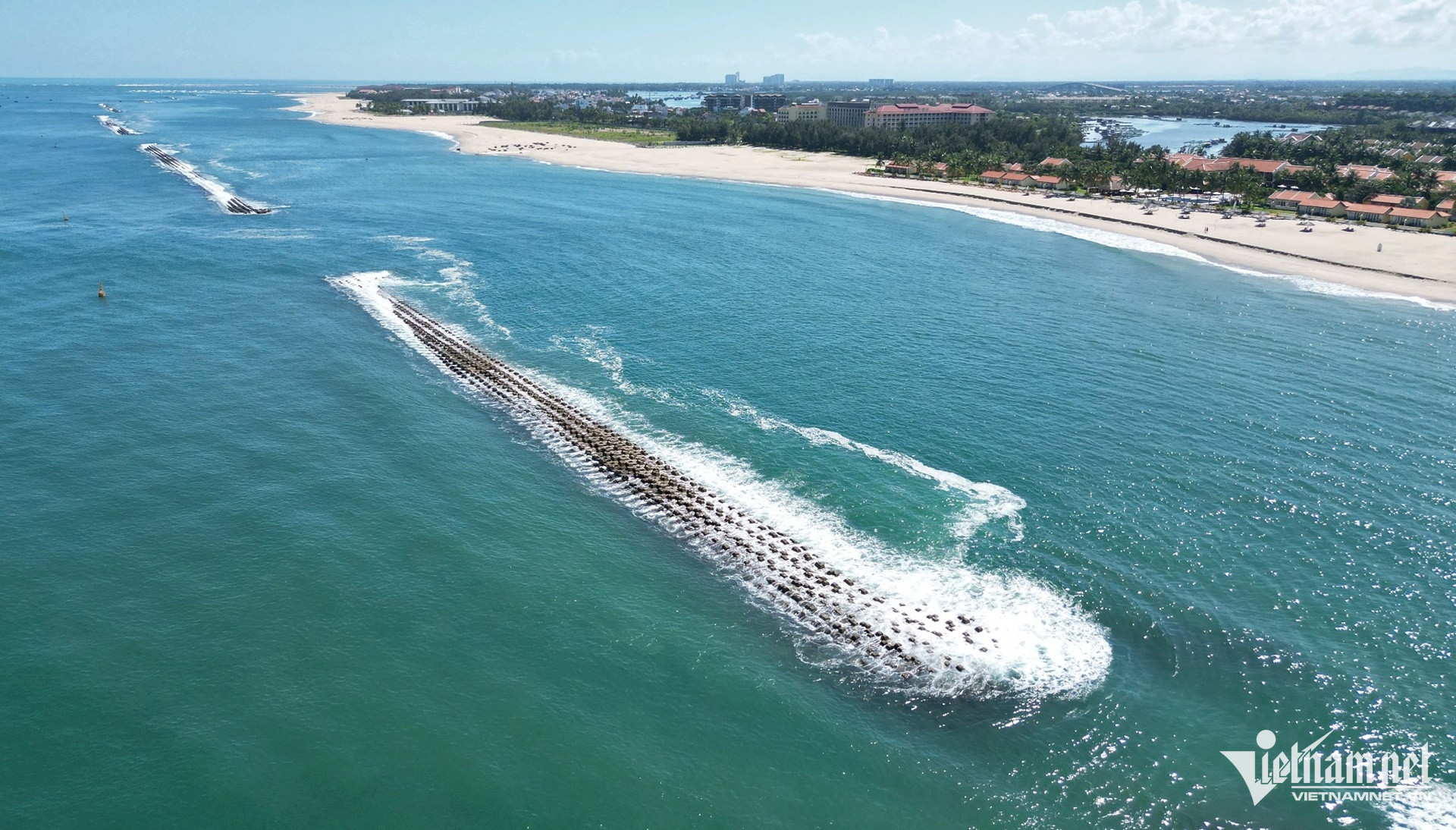
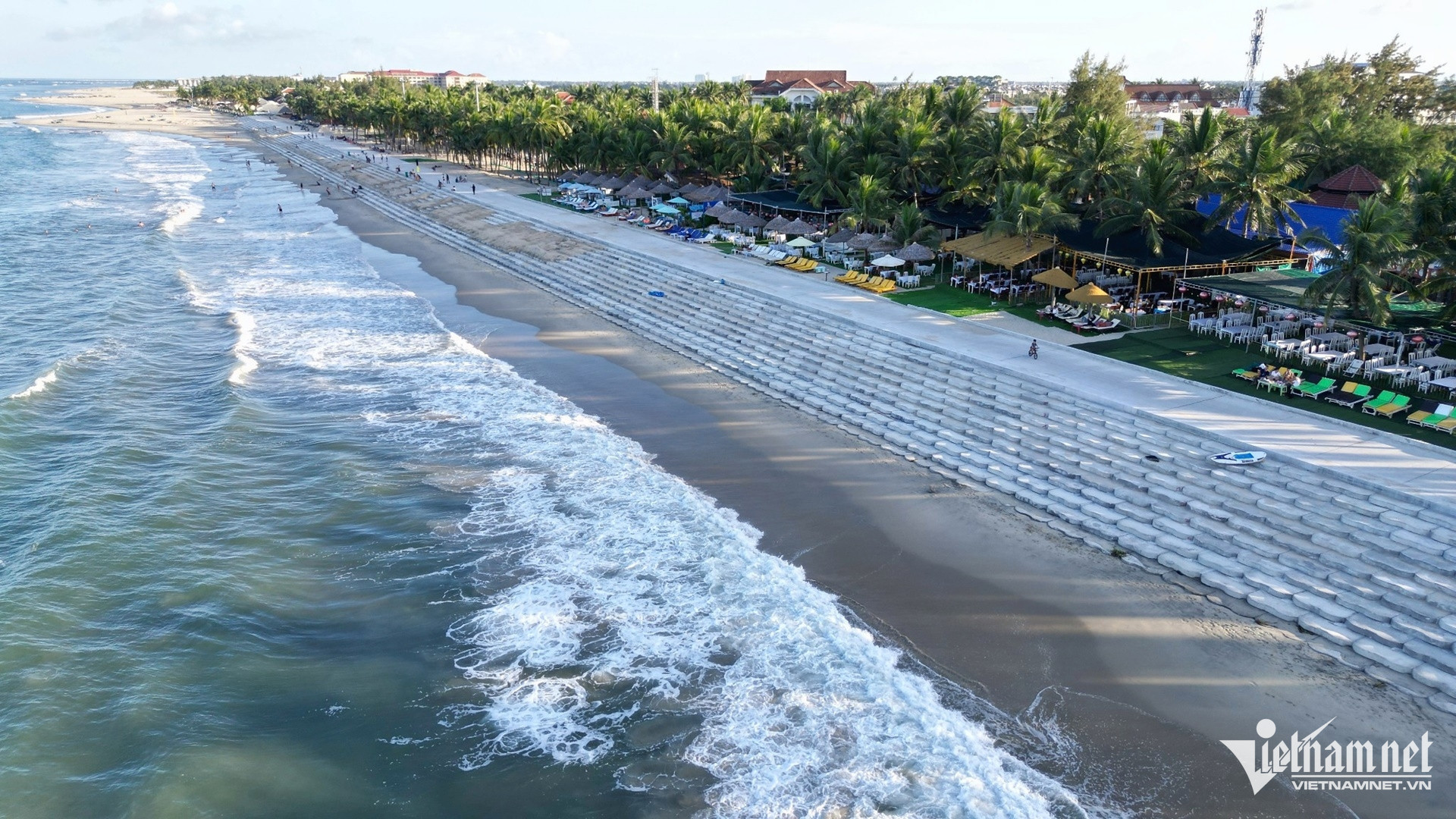
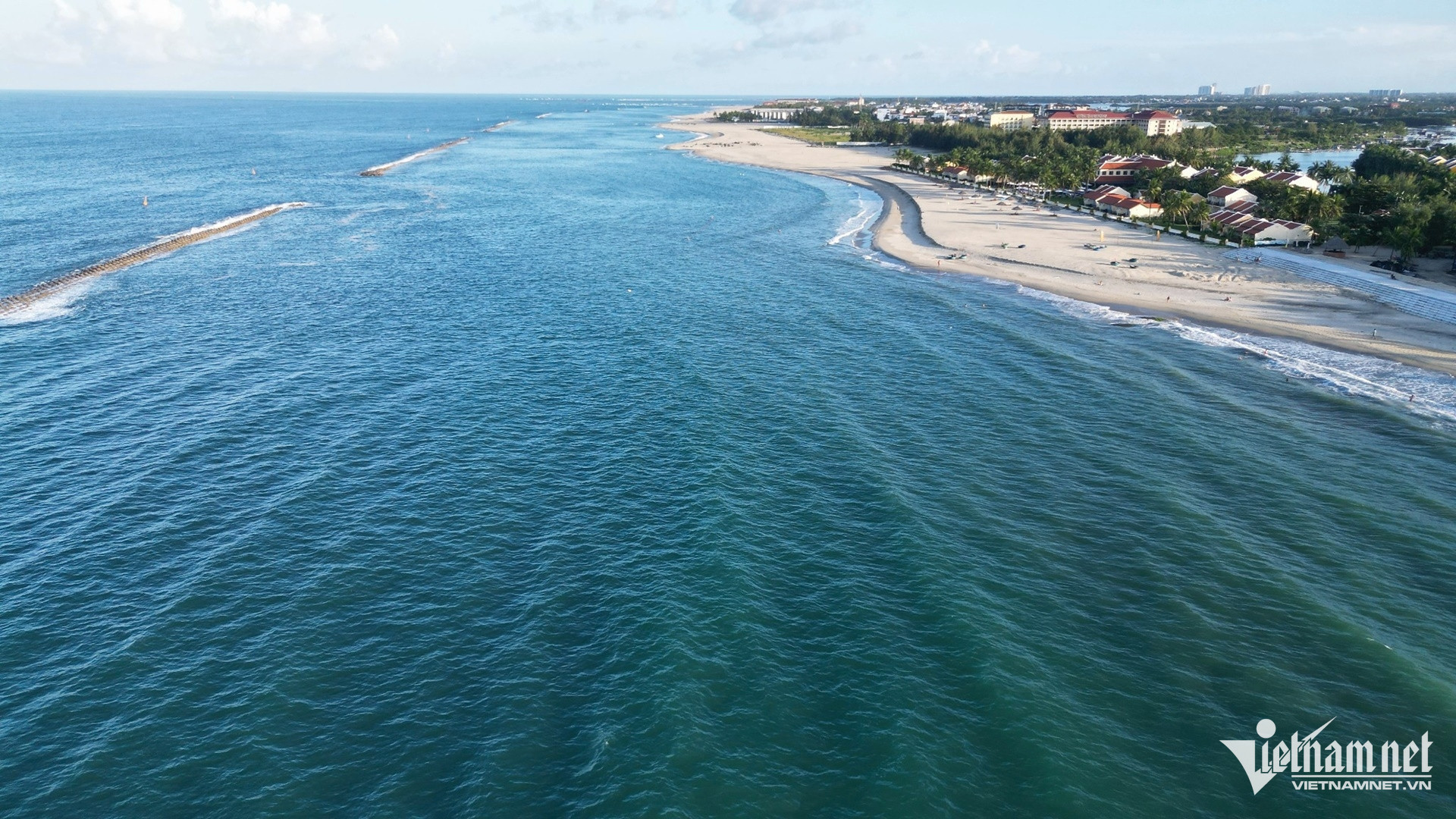
From above, Cua Dai now stretches out as a broad ribbon of sand lined with green coconut palms and beachfront resorts. Offshore, a system of submerged breakwaters has been built to reduce wave impact and help stabilize the shoreline.
Located nearly 300 meters offshore, seven submerged breakwaters extend for more than two kilometers, running parallel to the coast.
The structures are designed to reduce wave energy, prevent sand from being washed away and support the long-term stability of the beach.
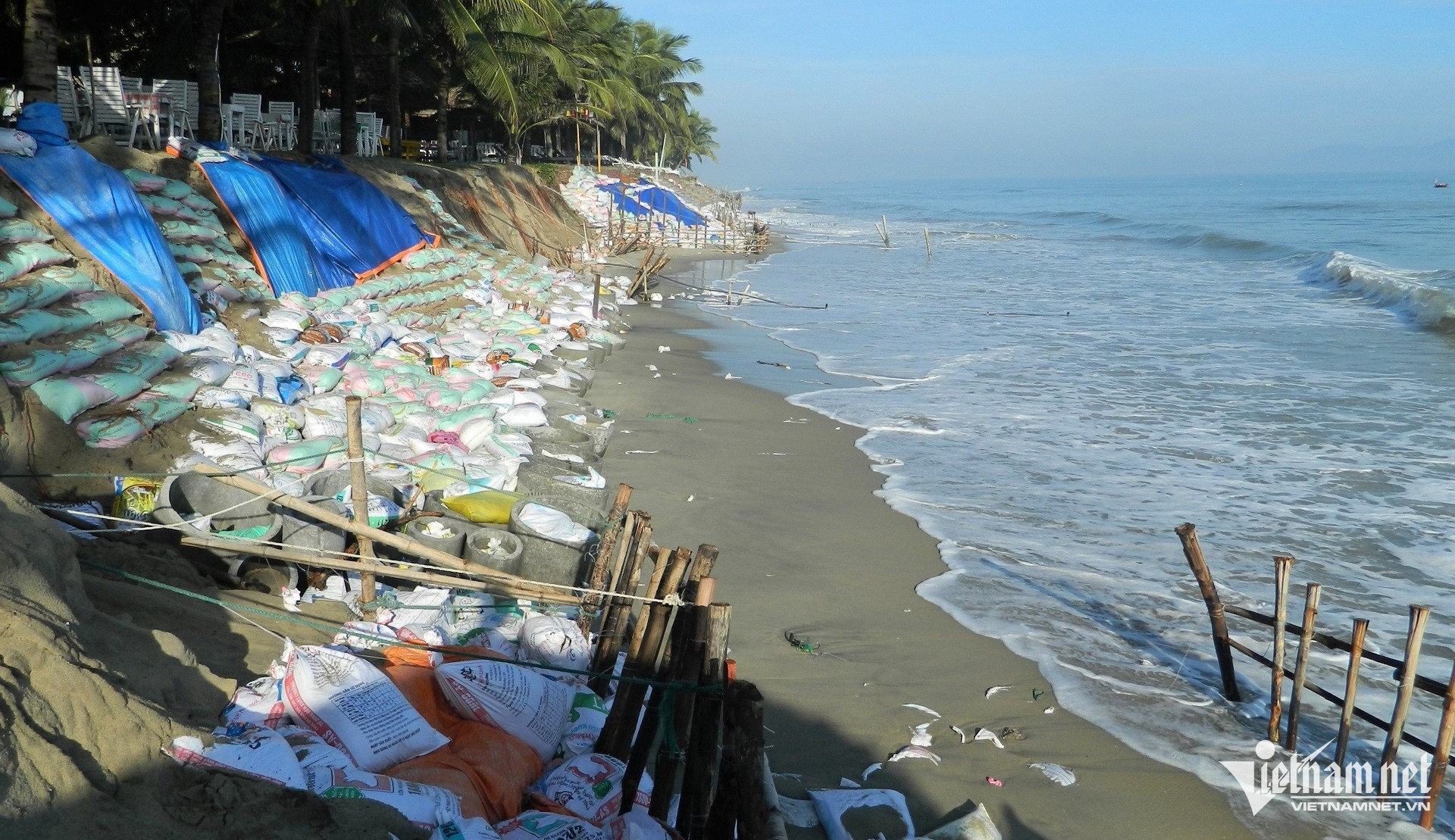
Back in 2015, severe erosion had devastated several sections of Cua Dai's coastline. Beachfront businesses resorted to sandbags, tarpaulins and bamboo stakes in an effort to protect their properties from the advancing sea.
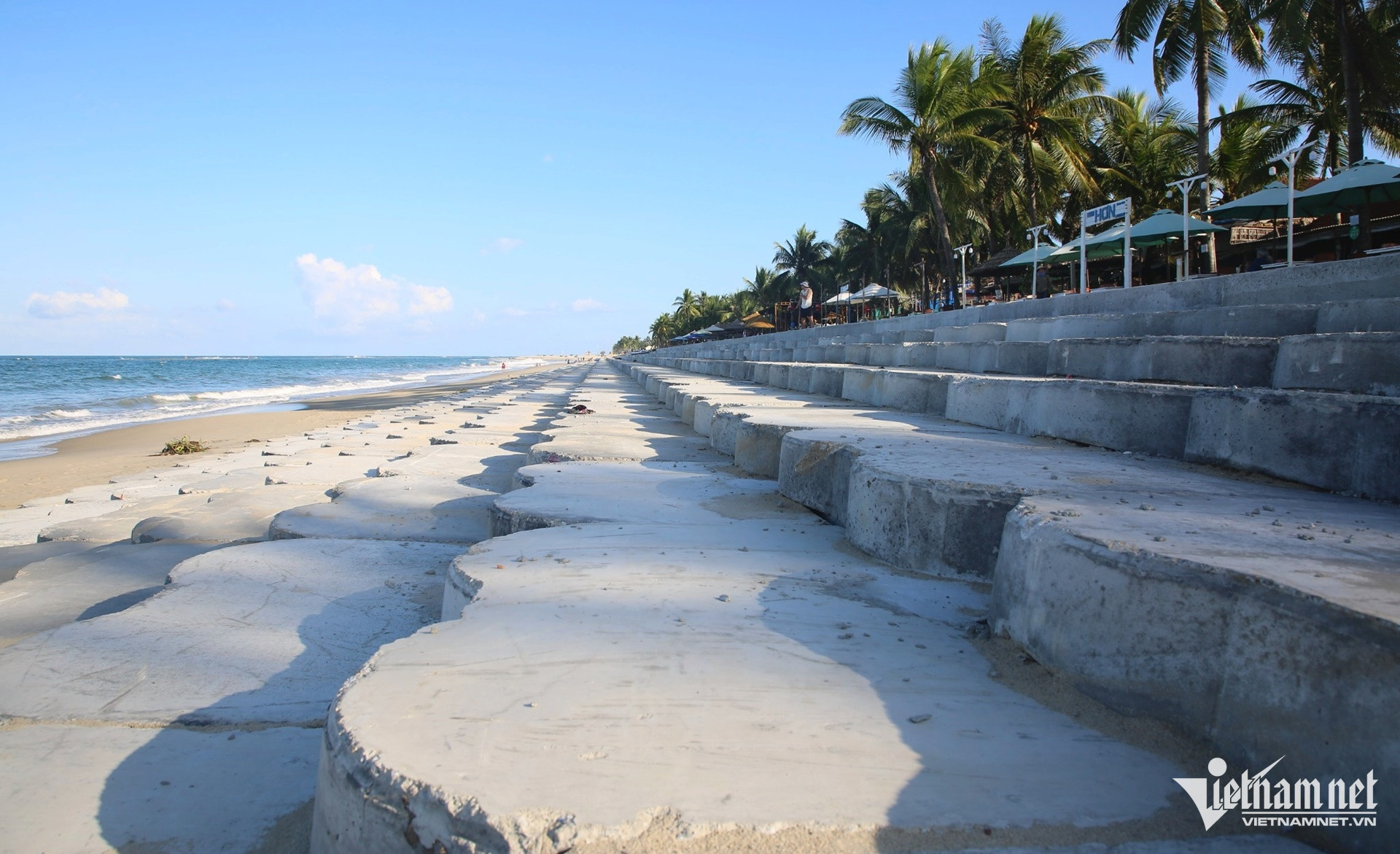
Following the implementation of erosion-control measures, many sections of the shoreline have been reinforced with protective embankments, while the surrounding coastal area has undergone improvements.
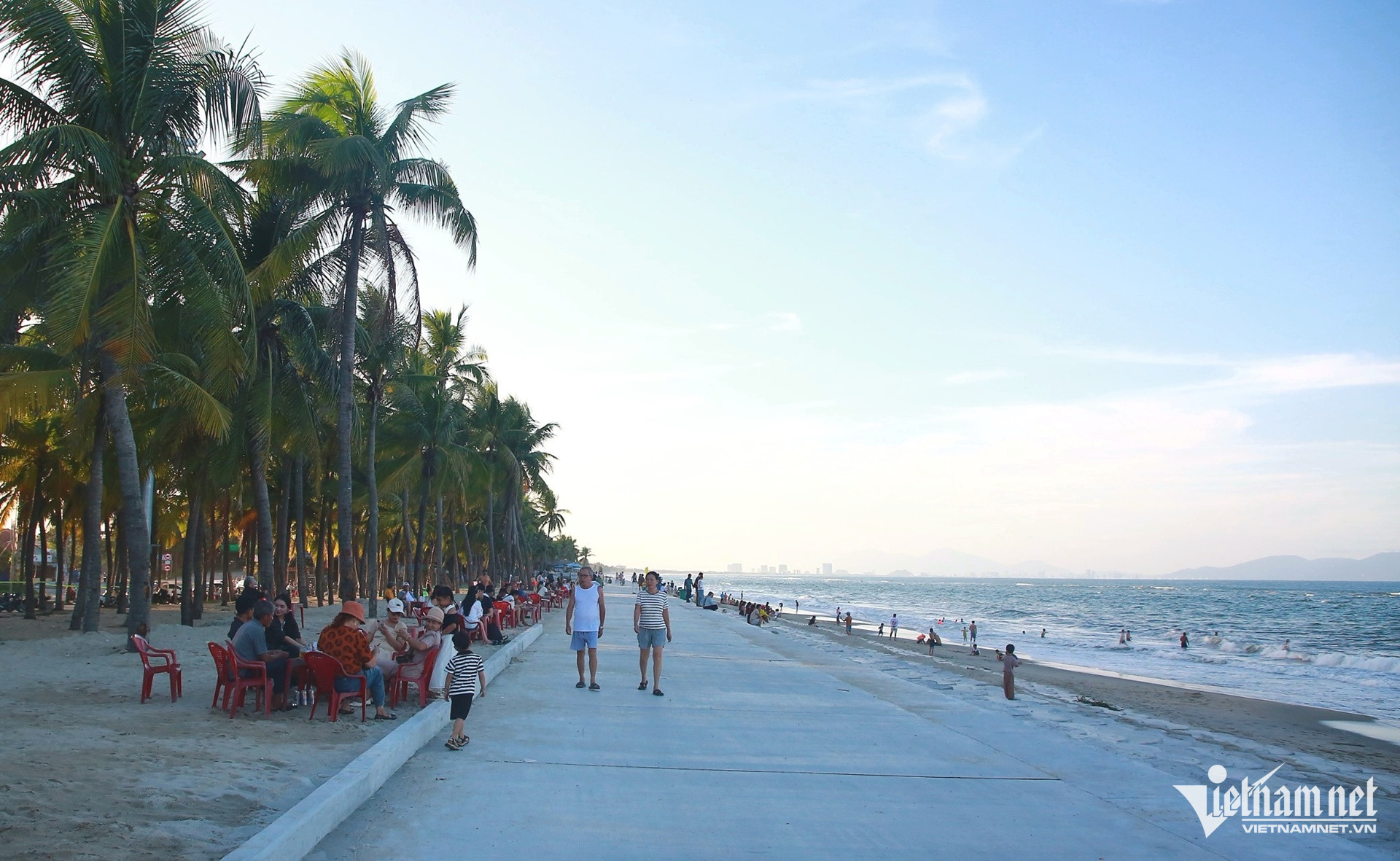
A stepped concrete seawall now runs along the beach beneath rows of coconut palms. Above it, a spacious promenade connects tourism businesses and beachfront resorts.
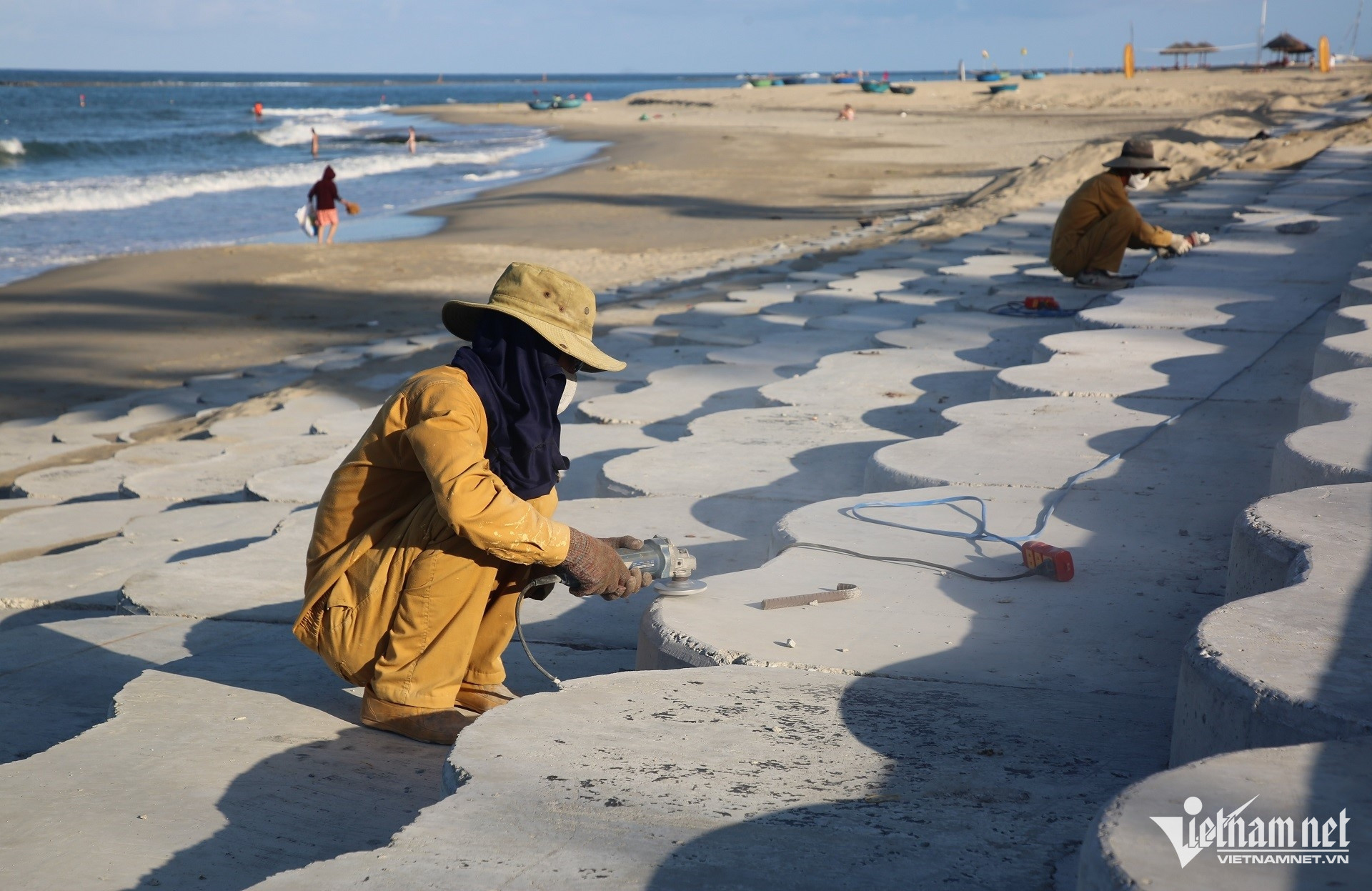
Concrete blocks have been arranged in multiple layers to form the coastal defense structure. Workers are completing the remaining sections ahead of final inspection and handover.
Tourists return as Cua Dai's coastal life picks up
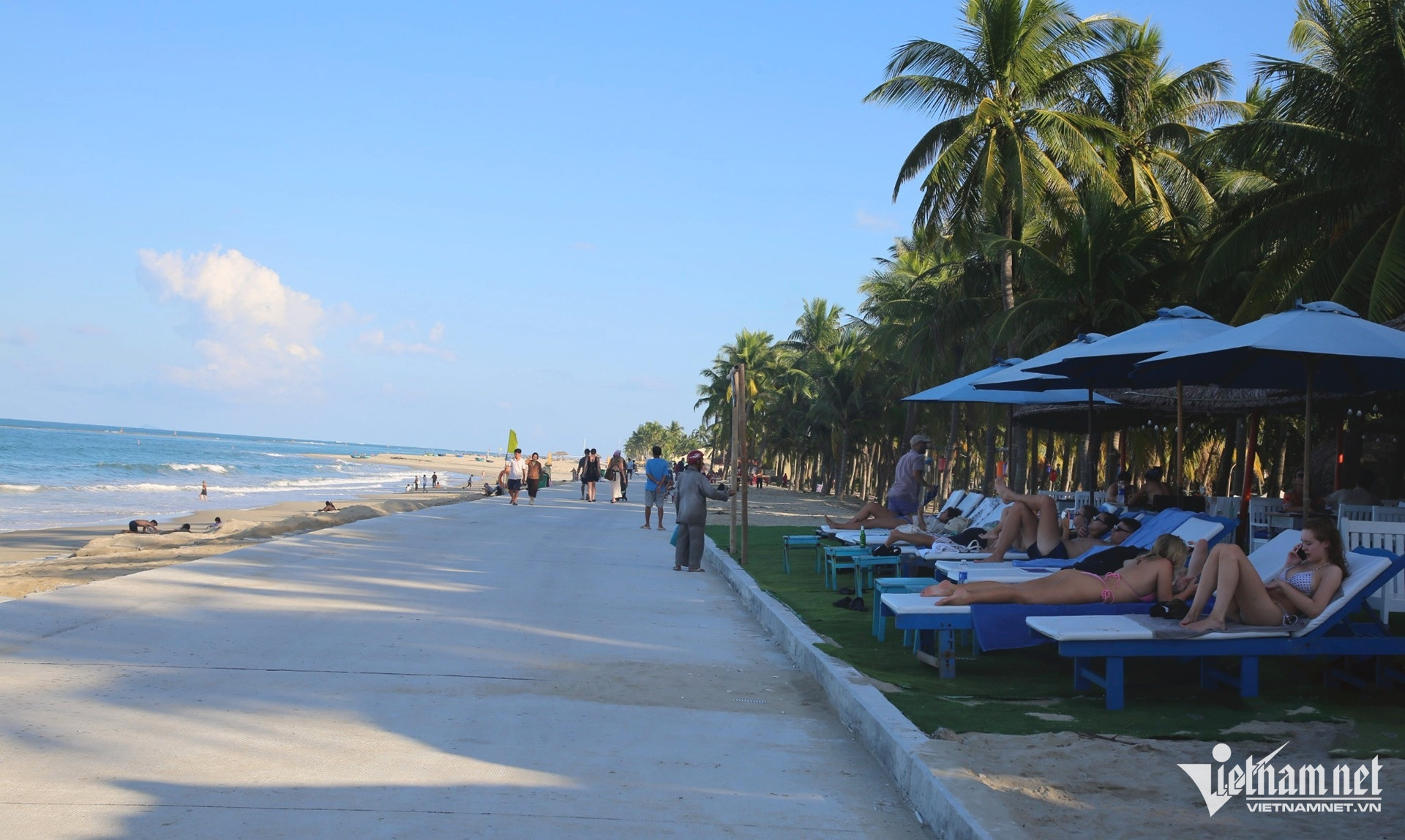
Beneath the coconut trees, the seaside promenade has become a popular place for residents and visitors to walk, enjoy the sea breeze and exercise in the early morning and late afternoon.
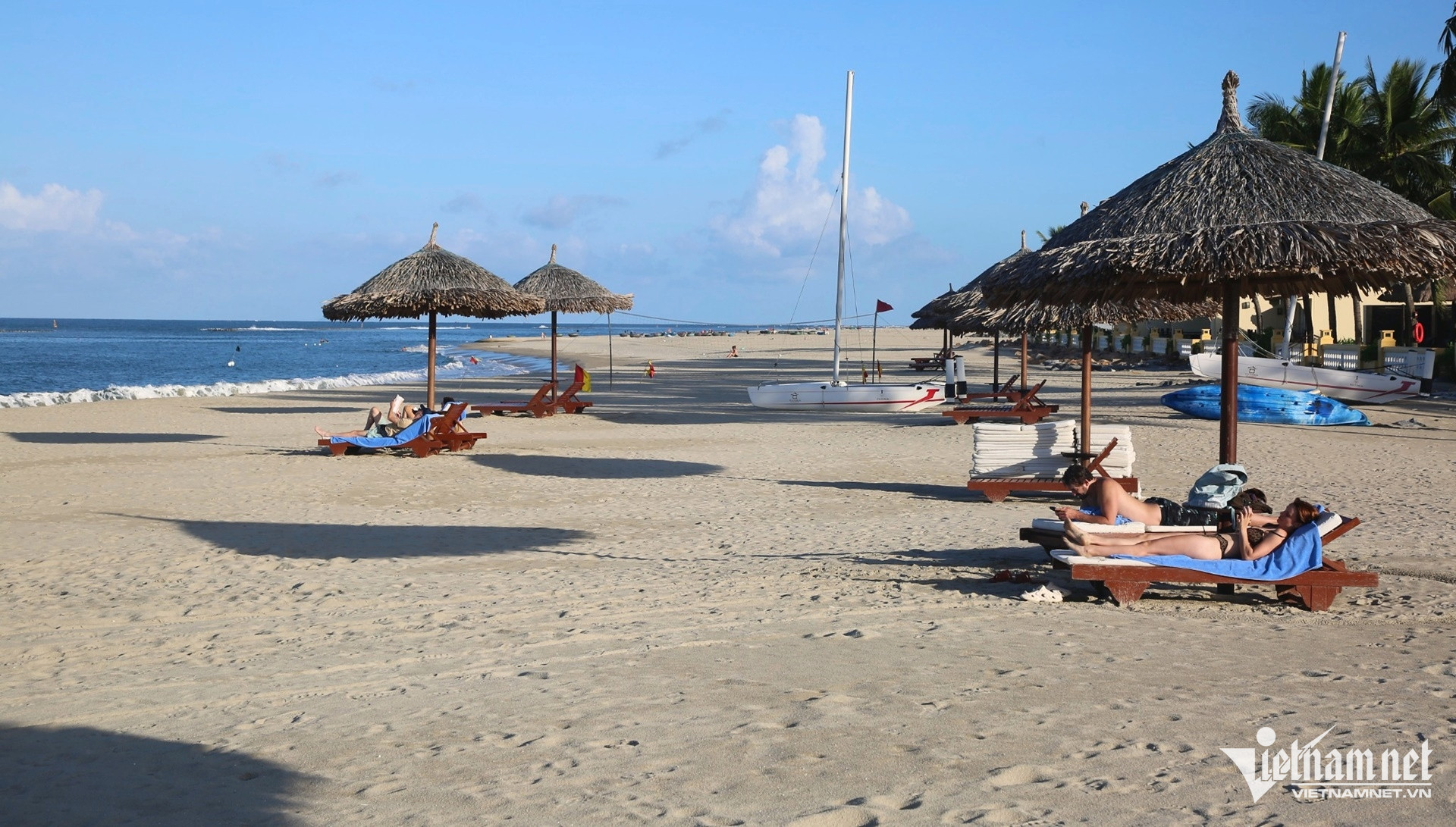
Along the waterfront, foreign tourists relax on sun loungers in the shade of the palms.
Adeline, a visitor from France, said she was impressed by the wide sandy beach, lush coconut trees and peaceful atmosphere.
After learning about the severe erosion that had once affected the area, she was surprised by how much the beach had changed.
"I love walking along the beach, watching the waves and enjoying the fresh air here," she said.
The restored stretches of sand have created more room for visitors to enjoy seaside activities and relaxation.
Sun loungers, thatched umbrellas and equipment for beach sports have been arranged along the shore, offering tourists more ways to spend their time.
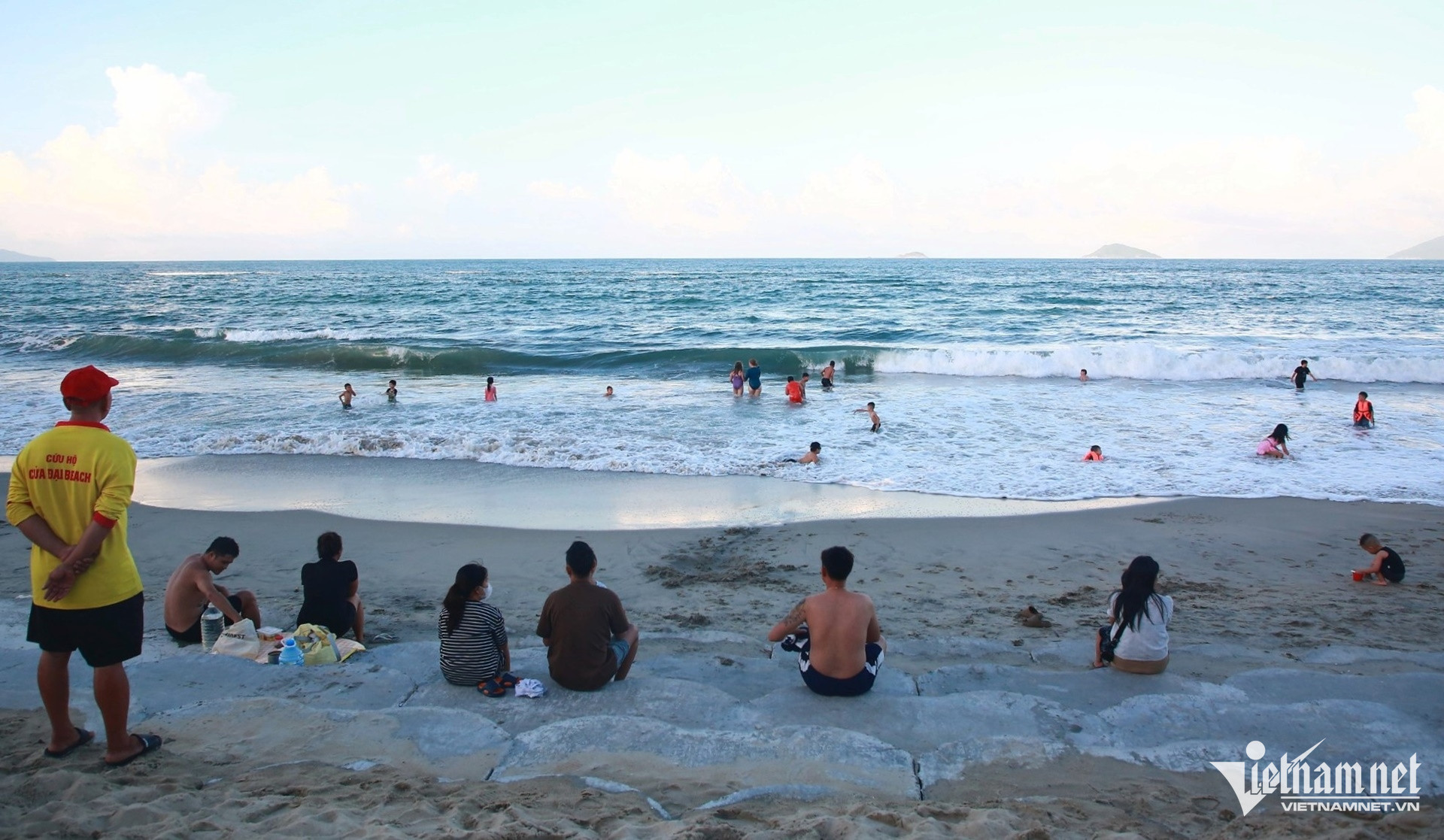
Residents and visitors continue to swim and enjoy the beach even outside the peak tourism season.
Le Hoang Chuong, a member of the Cua Dai Beach rescue team, said the number of beachgoers appeared to have increased since the coastal protection works were implemented.
Businesses providing services along the waterfront have also gradually become more active.
Small-scale trading has returned to the promenade, where vendors offer souvenirs to passing tourists.
Traditional round bamboo basket boats rest on the sand as visitors stroll along the shore, adding a familiar touch of Hoi An's coastal culture to the scenery.
With broad stretches of sand gradually returning and swimming and beachfront services recovering, Cua Dai's revival is bringing renewed hope for local tourism and the livelihoods of residents who depend on the sea.


Ha Nam

