 Vietnamnet.vn

 Podcast



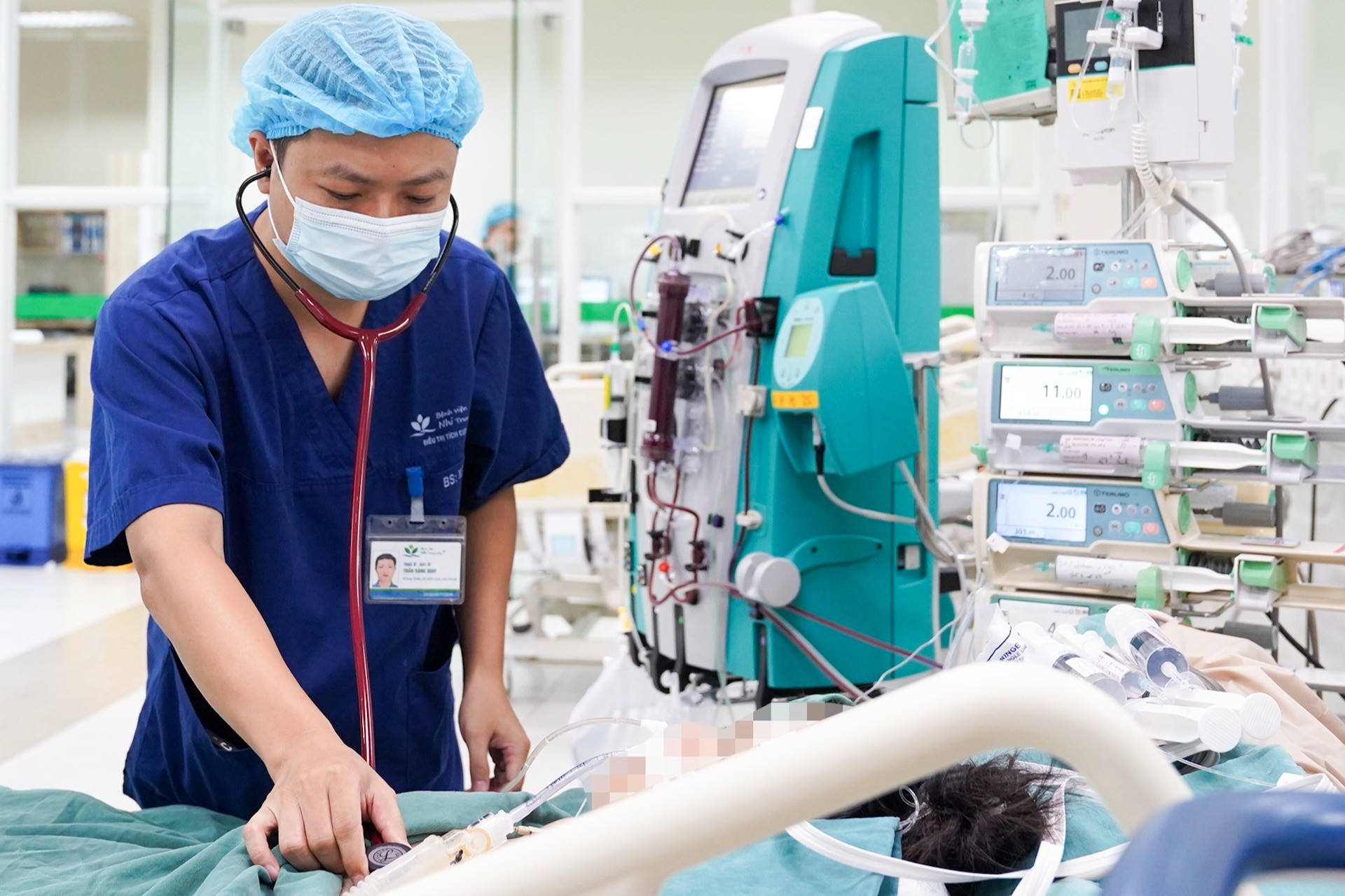
Thuan was speaking on the occasion of World Patient Safety Day on September 17, with the theme “Safe maternal and newborn care.”
“International reports show that for every 10 patients, more than one encounters a medical incident. In low- and middle-income countries, it is estimated there are about 134 million incidents in hospitals each year, resulting in 2.6 million deaths, of which up to half are preventable,” Thuan said.
Not only does it cause health damage, but medical incidents also increase treatment costs, estimated to account for 12-15 percent of total global health spending, equivalent to $1,400-1,600 billion each year.
In the field of pediatrics alone, the Department of Medical Examination and Treatment reported that incidents in the Pediatric Intensive Care Unit (PICU) account for up to 91.6 percent of total pediatric medical incidents. For every six children treated in the PICU, one child encounters at least one medical incident.
The World Health Organization (WHO) estimates that improving care safety could save 1 million newborns each year. For this year's World Patient Safety Day, WHO calls for urgent action to minimize avoidable harm in newborn and young child care.
At the National Children's Hospital, an average of more than 2,100 surgeries are performed each month. All departments implement a pre-surgery safety checklist, helping the hospital record no surgery-related medical incidents. Thanks to standardized procedures and technology applications, many indicators have improved significantly: patient information mix-ups decreased from 15 cases (June-July 2024) to 0 cases (September-October 2024).
A survey at the hospital shows that higher hand hygiene rates lead to lower hospital infection rates. In the first six months of 2025, with 99.6 percent hand hygiene compliance, the hospital infection rate was only 0.24 percent; central line-associated bloodstream infections (CLABSI) decreased to 0.7 percent.
The hospital also implements non-punitive incident reporting, root cause analysis, process improvements, and periodic training.
Thanks to these improvements, patient examination and treatment times have decreased significantly: examination and prescription now take 69 minutes; examination and X-ray take 63 minutes; and examination and hematology testing take 57 minutes. In 2024, the hospital recorded no serious medical incidents. Satisfaction rates among inpatients and outpatients with examination and treatment services were both over 97 percent.
Vo Thu
.svg)
