 Vietnamnet.vn

 Podcast



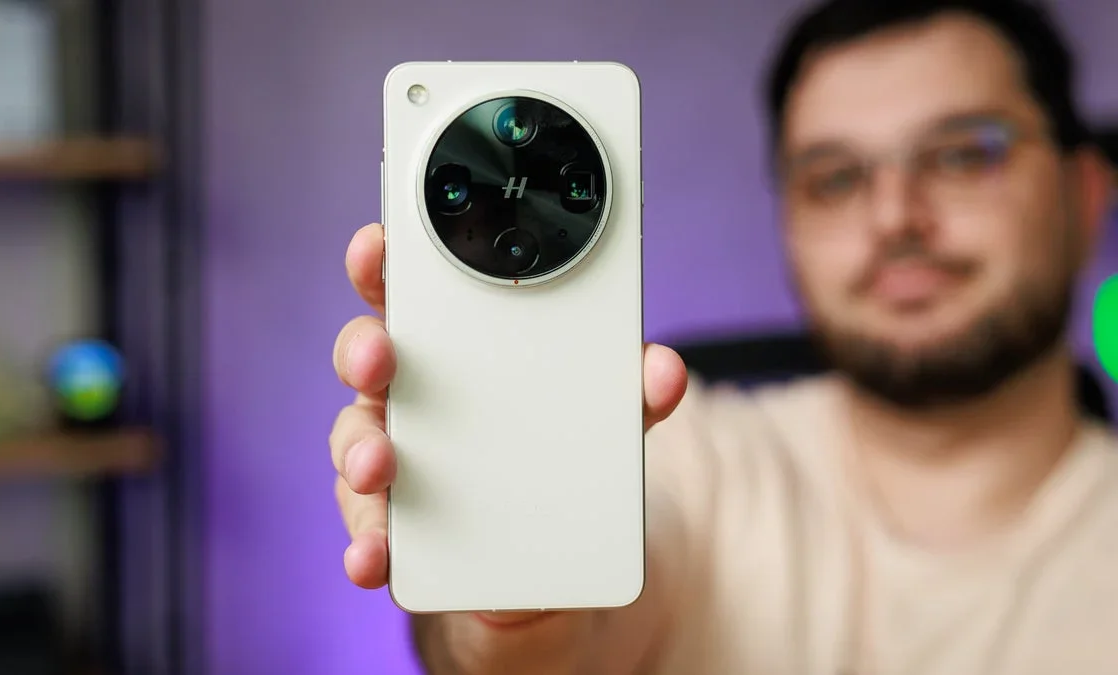
Beyond its familiar design language, the device is drawing attention for what could be a decisive advantage - an exceptionally large battery that may allow it to outpace rivals such as the Vivo X300 Ultra in a key area.
According to industry leaks, Oppo is expected to unveil the Find X9 Ultra on April 21. The newly surfaced images suggest a design that aligns closely with earlier renders. A large circular camera module remains the defining feature on the back, arranged in a “plus” layout. However, the Hasselblad branding has been repositioned to the side, introducing a subtle yet noticeable change.
The overall aesthetic retains a premium, minimalist feel, directing attention toward the camera system. Notably, the lenses appear significantly larger and more pronounced than those on many mid-range devices, hinting at serious optical hardware beneath the surface.
In terms of specifications, the Find X9 Ultra is rumored to feature a 200MP Sony LYT-901 main sensor - the same sensor expected to appear on the Vivo X300 Ultra. Sony claims this sensor delivers superior detail, improved color reproduction, and a wider dynamic range, making it well-suited for high-end mobile photography.
The camera system is also expected to include a 50MP ultra-wide lens and two periscope telephoto cameras. One of these, offering 3x optical zoom, may use the 200MP OmniVision OV52A sensor, while a second lens could provide 10x optical zoom using a 50MP Samsung JN5 sensor.
This setup suggests Oppo is focusing on delivering high-quality zoom across multiple focal lengths. Additionally, a 3.2MP multispectral sensor is rumored to enhance color accuracy, potentially placing the Find X9 Ultra among the best devices for true-to-life color reproduction.
Where the device may truly stand apart is battery capacity. According to leaker Digital Chat Station, the Find X9 Ultra could pack a 7,050 mAh battery, supported by 100W wired charging and 50W wireless charging.
This is a striking figure for a flagship device, particularly one centered on camera performance. By comparison, the Galaxy S26 Ultra is expected to feature a 5,000 mAh battery, while the Vivo X300 Ultra may offer around 6,600 mAh. Although the difference of roughly 450 mAh may seem modest, it could translate into a meaningful advantage in real-world usage, especially when paired with software optimization.
The 100W charging capability further enhances the appeal, significantly reducing charging times. Once accustomed to such speeds, users may find it difficult to return to slower charging standards common on many competing flagships.
Beyond camera and battery, the Find X9 Ultra is expected to align with top-tier Android specifications for 2026. It will likely be powered by the Snapdragon 8 Elite Gen 5 chipset and feature a 6.82-inch AMOLED display with 2K resolution and a high refresh rate.
With its combination of advanced imaging capabilities, standout battery capacity, and flagship performance, the Oppo Find X9 Ultra is emerging as one of the most compelling smartphones of early 2026. If the current leaks hold true, it may not only challenge direct competitors like the Vivo X300 Ultra but also help redefine expectations for premium camera phones.
Hai Phong
.svg)
