 Vietnamnet.vn

 Podcast



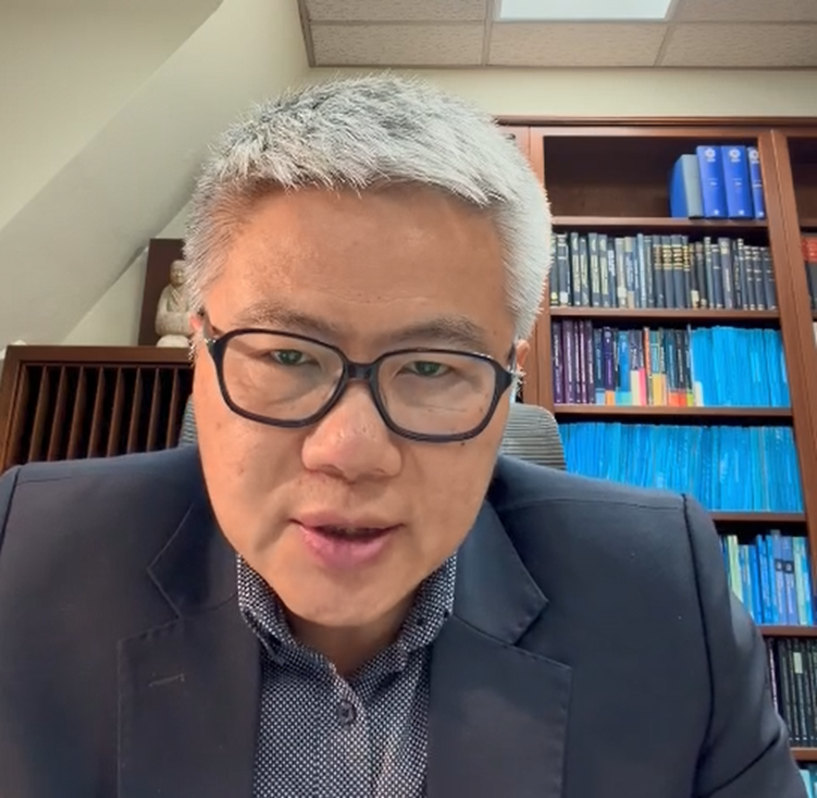
Chau, director of the Vietnam Institute for Advanced Study in Mathematics (VIASM), noted that teaching and learning methods, especially in maths, have always been hot issues among teachers, parents, and society. This has become even more urgent with the rapid advancements in Artificial Intelligence (AI).
"The impact of AI can be highly positive or incredibly detrimental depending on how we use it. On the negative side, we have already seen in schools that a large portion of students rely entirely on AI to complete their homework. Consequently, assigning homework loses much of its meaning. Instead of training skills and thinking through assignments, homework becomes merely a perfunctory exercise rather than a meaningful learning process," Prof. Chau said.
Conversely, Chau noted that AI could become an exceptionally effective and engaging tool for students to conduct independent scientific research if given proper guidance by teachers.
"We must deeply rethink teaching and learning, especially in testing and assessment. We need to ensure that AI serves as a useful tool for students to acquire knowledge and skills, rather than a negative means to evade intellectual labor. Because without labor, progress is impossible," Prof. Chau added.
Students’ dependence on AI
Professor Ho Tu Bao from VIASM also expressed concern: “In teaching, not only in mathematics but in all subjects, students are increasingly relying on AI. We believe this weakens intellectual development and is a serious concern for education in general.”
Bao noted that while AI can answer many human questions effectively, it cannot truly understand concepts the way humans do. In particular, AI lacks the ability to connect mathematical knowledge with real-life situations and stories.
“Certainly, calculations and many other tasks will eventually be performed faster by AI than by humans. But because of that, we need to strengthen what makes us uniquely human. That includes the ability to think critically and ask good questions in order to obtain valuable answers from AI,” Bao said.
Professor Bao said that in teaching students at Foreign Trade University, he has shifted toward oral examinations as a way to limit overreliance on AI.
“We cannot prevent students from using AI, but through oral assessment we can evaluate whether a student truly understands the subject. Through direct questioning, it becomes immediately clear who genuinely understands the issue and who does not,” he explained.
He went on to say that teachers should not merely transmit knowledge but should encourage students to ask their own questions and absorb knowledge through suggestions generated by AI.
Dr. Hoang Anh Duc, director of the Center for Innovation in Teaching and Learning, said that in mathematics specifically, one thing teachers can still do better than AI is evaluating whether a mathematical argument is logically rigorous.
Dr. Ta Ngoc Tri, deputy director general of the Department of General Education under the Ministry of Education and Training, suggested a teaching model in which students explore questions at home beforehand, including with the help of AI, while classroom time is devoted to discussion. Teachers would then ask questions to determine whether students truly understand the material.
“That is a way to limit AI overuse from undermining students’ creativity,” Tri said.
The Center for Innovation in Teaching and Learning of the Vietnam Institute for Advanced Study in Mathematics was established with the aim of becoming a research and application organization built on evidence-based foundations. Its mission is to address contemporary educational challenges while maximizing the opportunities that AI presents for education.
The center operates under an open collaboration model, serving as a bridge connecting researchers, educators, universities, research institutes, and leading technology partners both domestically and internationally to create positive and sustainable impacts on mathematics education.
Through the launch of the Center, the Vietnam Institute for Advanced Study in Mathematics hopes to contribute to the National Key Program for the Development of Mathematics for the 2021–2030 period, particularly in the rollout of the 2018 General Education Curriculum for Mathematics.
Thanh Hung
.svg)
