 Vietnamnet.vn

 Podcast


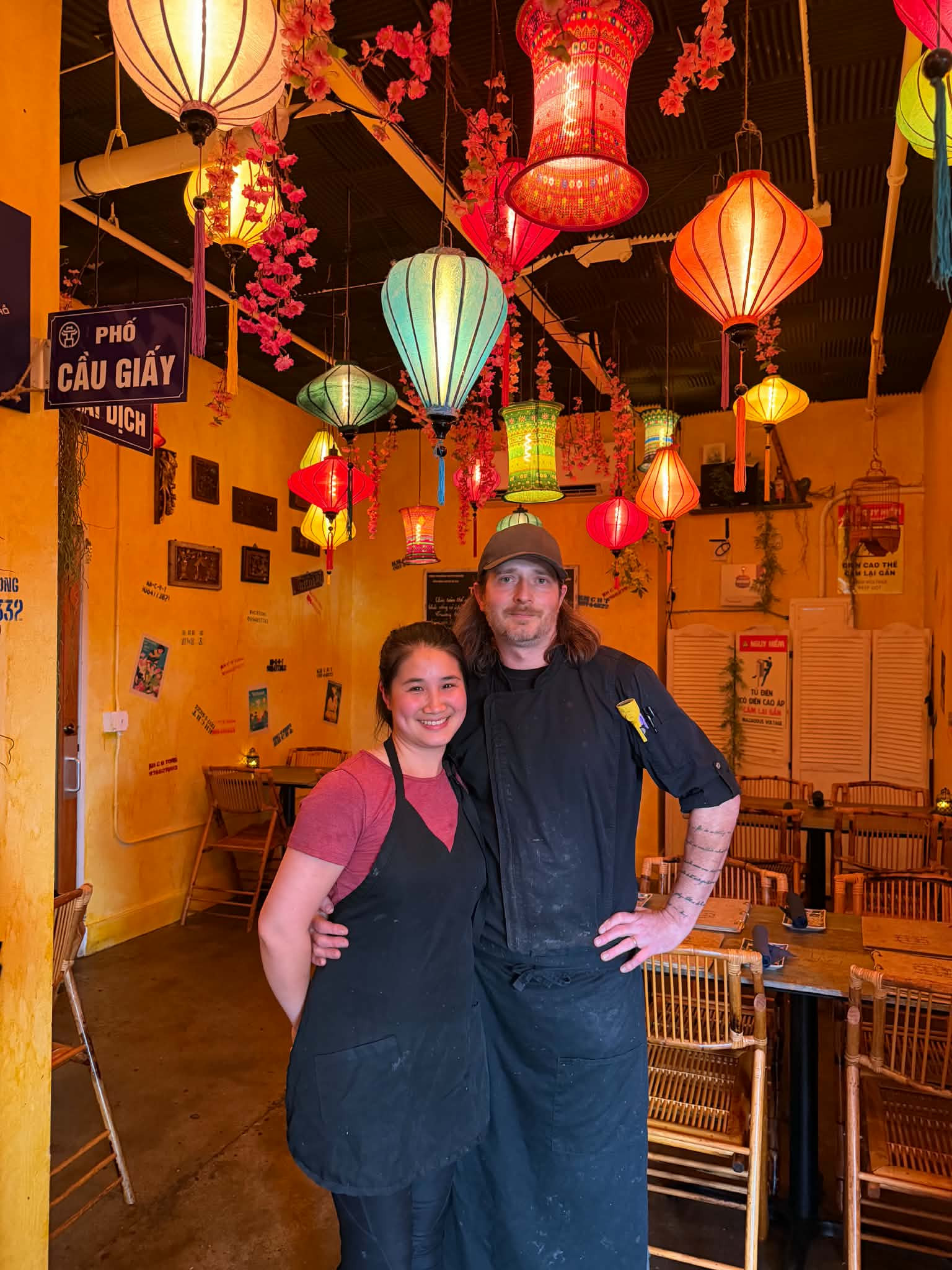
"Every day, we welcome over 300 guests. For evenings and weekends, diners usually book 1-2 weeks ahead to secure a desired table, and sometimes 2-3 months in advance.
"Walk-in customers without reservations typically wait 1-2 hours during peak times," shared Nguyen Quynh (born in 1989, originally from Cau Giay, Hanoi), the co-owner of the restaurant.
The Paper Bridge is the brain child of Quynh and her husband Carlo Reinardy, an American chef boasting over 20 years of culinary experience. The restaurant's menu focuses on Vietnamese specialties such as beef pho, bun dau mam tom (vermicelli with fried tofu and fermented shrimp paste), chao long (offal porridge), doi huyet (blood sausage), Northwest lap xuong (cured sausage), and thit trau gac bep (dried buffalo meat).
Proudly telling the story of Vietnamese cuisine
Quynh and her husband named the restaurant The Paper Bridge, translating the place name ‘Cau Giay’ directly into English, to evoke her hometown and preserve memories of where the couple first met and built their family.
Carlo originally traveled to Vietnam on a 3-month trip. He found a job as a chef and decided to stay. During his 5 years living in Cau Giay, he met and married Quynh, developing a deep affection for Northern Vietnamese culture and gastronomy.
In November 2023, the couple moved to the US and opened The Paper Bridge in Portland in the US state of Oregon, aiming to introduce Vietnamese cuisine, particularly traditional Northern dishes, to local diners.
According to Carlo, Vietnamese food in the US is frequently pigeonholed as cheap fast food, with most international diners primarily familiar with pho and banh mi.
With more than 20 years of kitchen experience, he argued that this narrow perception misses the full richness of Vietnamese cuisine, where many dishes require elaborate techniques, meticulous ingredient selection, and subtle flavor balance.
The couple firmly believes that Vietnamese cuisine possesses depth and sophistication equal to famous culinary traditions like those of France or Italy.
"We explain to guests our labor-intensive prep processes, from simmering broth for 18 hours and making fresh pho and rice noodles from scratch to preparing traditional herbs and condiments. A dish's value lies not only in its ingredients, but in the time, technique, and dedication of the chef," Quynh and her husband shared.
They include details on historical context, origins, and regional characteristics directly on the menu, helping diners gain a deeper appreciation of the dish's roots and Vietnamese food culture.
Meticulous preparation
The Paper Bridge features a core menu of roughly 30 dishes, primarily Northern specialties. Every month, the restaurant introduces three seasonal items, such as cha oc (snail patties), ngan chay toi (pan-seared garlic duck), banh da cua tron (mixed crab rice noodles), banh tom Ho Tay (West Lake shrimp cakes), or bo nuong mo chai (grilled beef wrapped in caul fat).
Instead of sourcing pre-made ingredients, the couple produces many staples in-house, including pho noodles, vermicelli, quay (fried dough sticks), cha com (green rice pork patties), chili sauce, and garlic pickled in vinegar, to maintain authentic flavors from back home.
Quynh said beef pho is exceptionally time-consuming to prepare. To achieve a clear, delicately Northern-style broth, chefs combine two types of beef bones and simmer them for approximately 18 hours. Factoring in ingredient prep, the whole process takes roughly 2 days. Fresh pho noodles are crafted on-site using equipment imported directly from Vietnam.
Even the accompanying quay (fried dough stick) took months of research. According to Quynh, after three months of testing various flour types, the restaurant finally perfected a recipe yielding the ideal airy puff and crunch.
Rather than frying large batches ahead of time, the kitchen shapes and drops dough into hot oil only when ordered. As a result, the fried dough sticks arrive at the table piping hot and crispy.
While beef pho and hot quay demand patience, Northwest regional dishes present unique challenges regarding raw materials and preparation techniques.
Northwest-style lap xuong takes up to five days to complete, spanning marinating, stuffing, air-drying, and oven-roasting. Distinctive spices like mac khen (wild pepper) and hat doi (forest pepper seeds) are imported from Vietnam to retain authentic highland flavor profiles.
For thit trau gac bep, the steepest hurdle was replicating traditional wood-fire smoking within a US commercial kitchen setup.
Linh Trang

