 Vietnamnet.vn

 Podcast



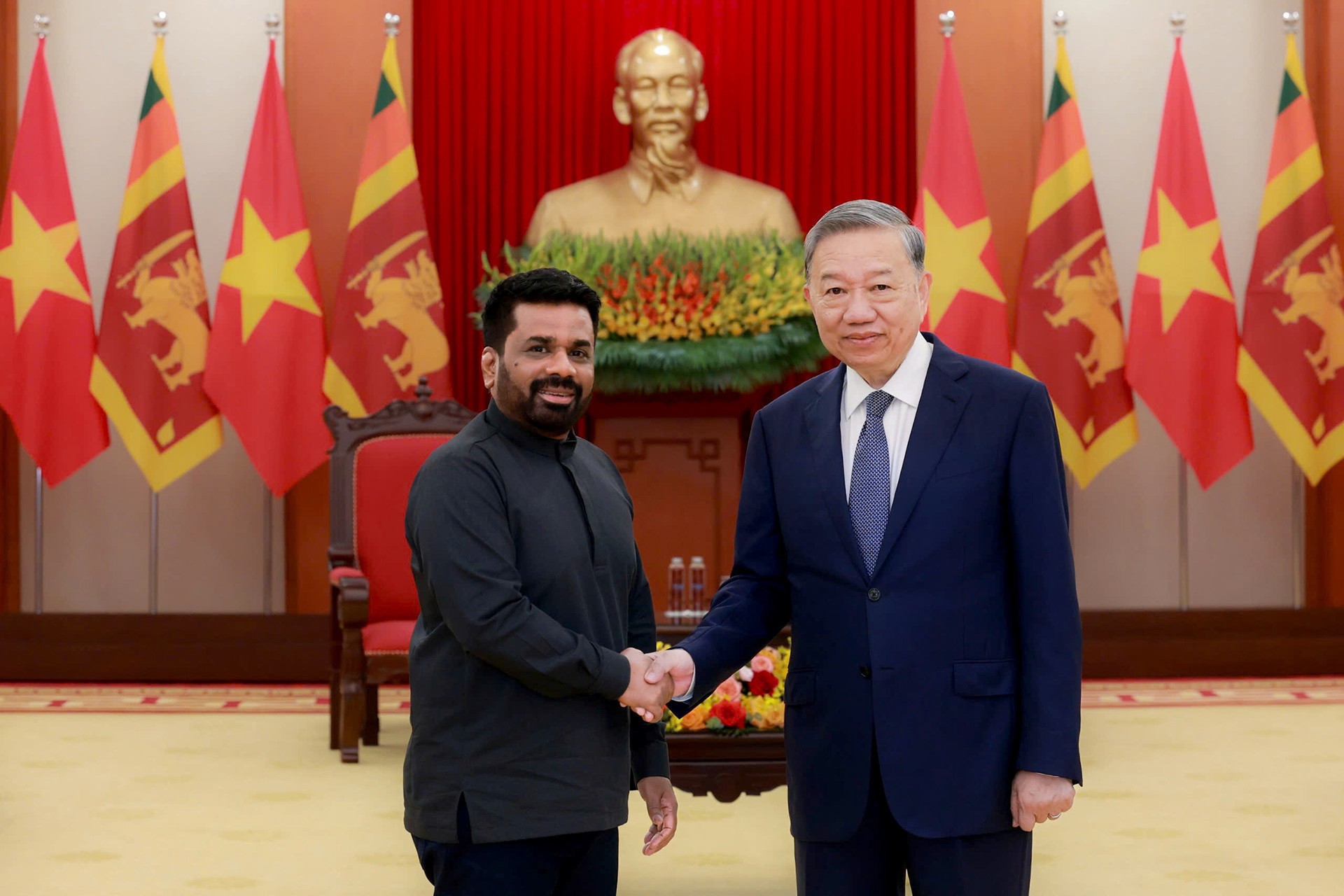
The visit will take place immediately after his trip to India, reflecting Vietnam’s continued diplomatic engagement with South Asia.
In May 2025, President Anura Kumara Dissanayaka paid a state visit to Vietnam and attended the Vesak 2025 celebrations, during which he expressed admiration for Vietnam’s remarkable economic achievements over the past five decades since national reunification. He noted that Vietnam has emerged as one of the fastest-growing economies in the world, with its international standing steadily rising.
Sri Lanka has shown strong interest in learning from Vietnam’s experience in economic development, institutional reform, anti-corruption efforts and national governance.
Vietnam and Sri Lanka established diplomatic relations on July 21, 1970, and have since maintained a traditional friendship with multifaceted cooperation. Political parties in Sri Lanka hold Vietnam in high regard, viewing it as a successful model for economic development. Sri Lanka has also recognised Vietnam as a full market economy.
Bilateral trade reached approximately US$215.5 million in 2024 and rose to around US$260 million in 2025, marking a 20% increase year-on-year. By March 2026, two-way trade had reached about US$50 million.
Sri Lanka currently has 34 active investment projects in Vietnam, with total registered capital of US$43 million, ranking 64th among 154 countries and territories investing in the country. Most of this investment is concentrated in the processing and manufacturing sector, accounting for 95% of total registered capital.
In the cultural sphere, Sri Lanka has expressed interest in revitalising and updating the memorandum of understanding on cultural cooperation signed between the two countries in 2009, with potential collaboration in areas such as archaeology and cultural exchange.
Religious ties, particularly in Buddhism, have also seen steady development through delegation exchanges, participation in international religious events and increased opportunities for monks and nuns to study in Sri Lanka.
The two countries continue to coordinate closely at regional and international forums.
The Vietnamese community in Sri Lanka numbers around 200 people, including women married to locals, Buddhist clergy studying at religious institutions, contract workers and individuals engaged in service industries.
Despite challenges, the community remains closely connected to the homeland, actively participating in charitable activities and initiatives organised by the Vietnamese embassy.
Tran Thuong
.svg)
